BioTester
Biaxial Testing Machine
A benchtop biaxial testing machine and planar biaxial testing system for soft tissue and soft synthetic material mechanical testing
- Planar biaxial testing machine for soft tissue and anisotropic biomaterials
- Equibiaxial and non-equibiaxial protocols with displacement or force control
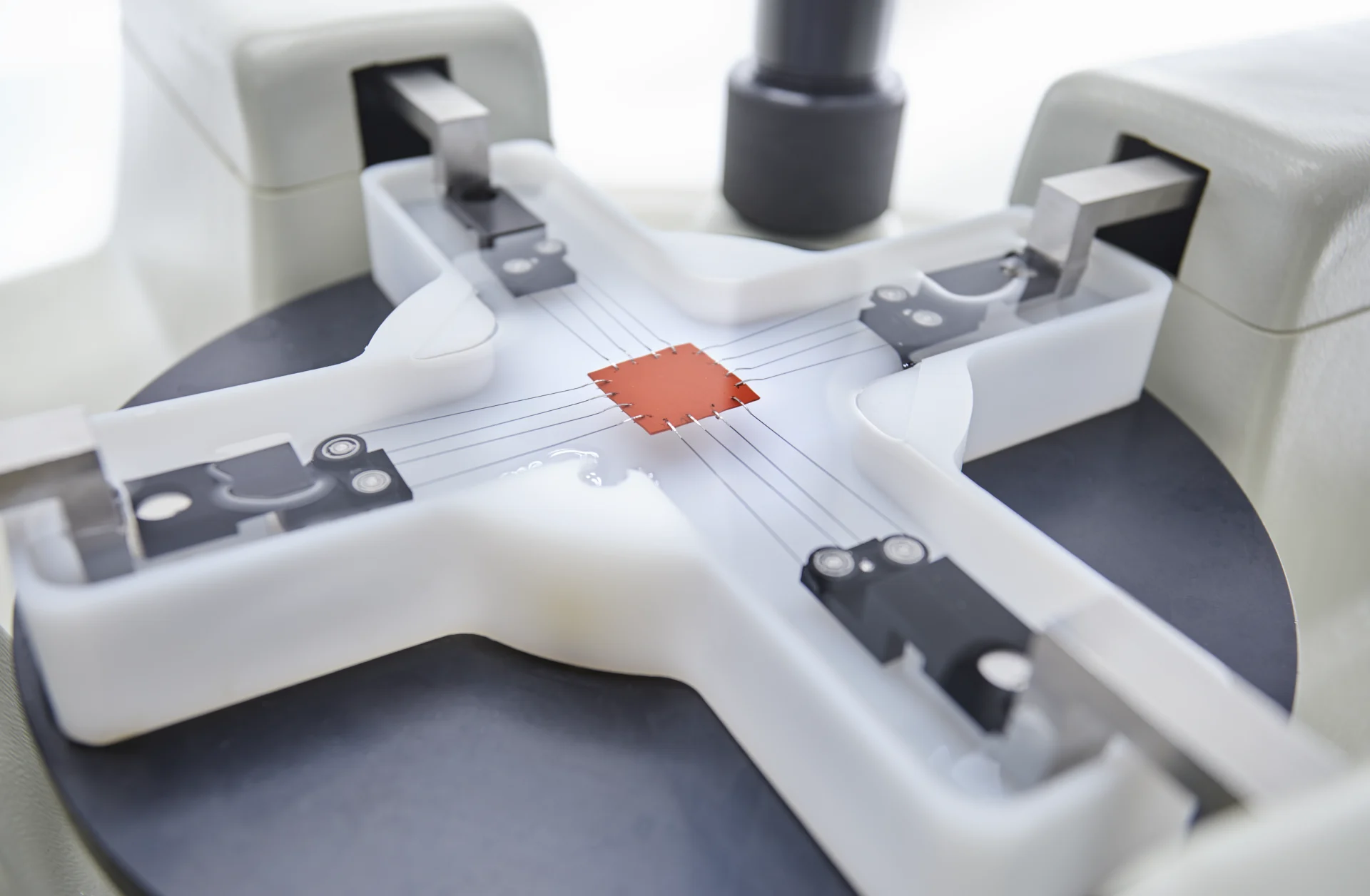
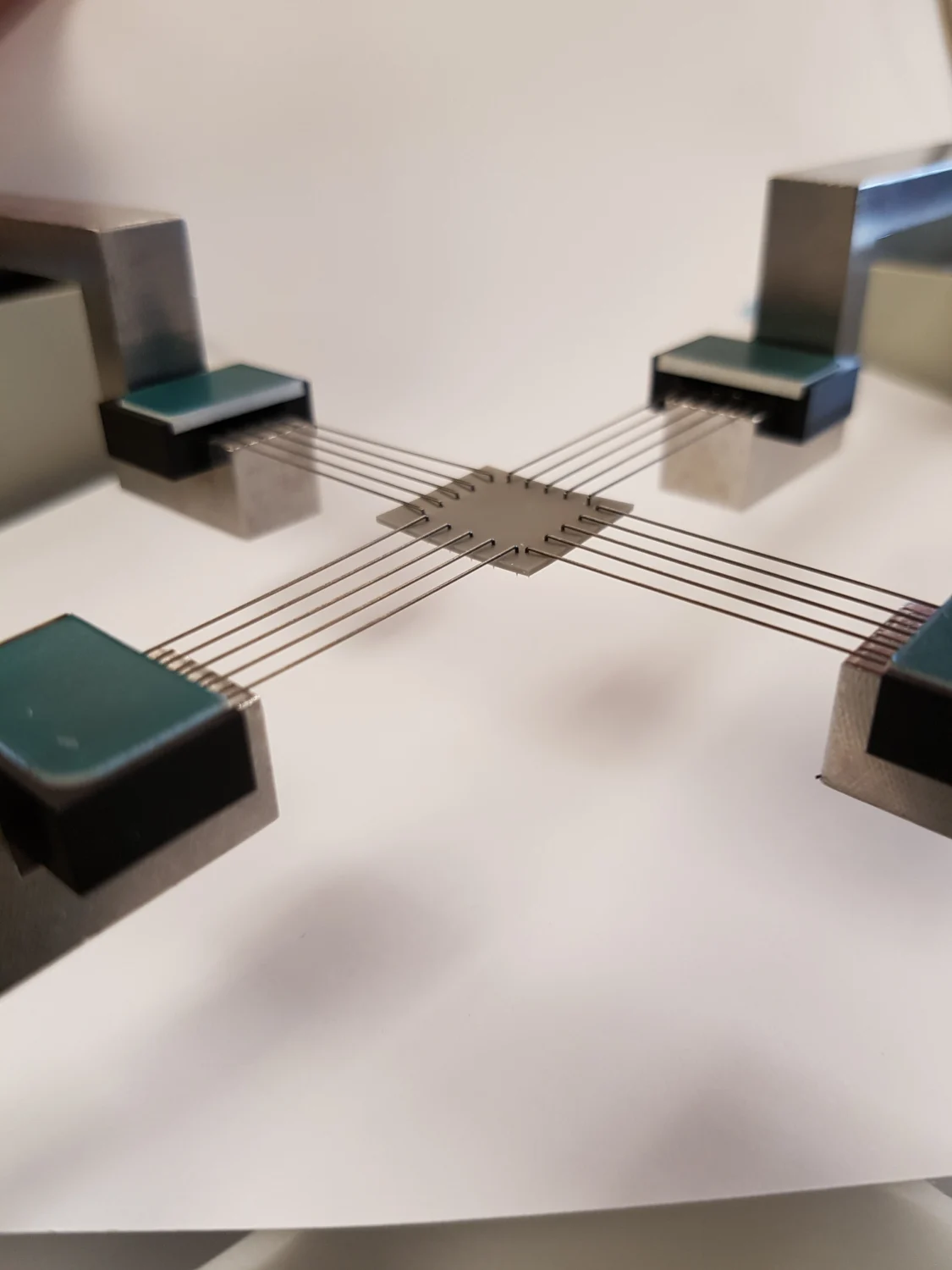
- Purpose-built soft tissue mounting options including patented BioRakes
- Imaging-enabled strain measurement for real-time tracking and DIC
- Hydrated, temperature-controlled media bath capabilities
“When I found one and put my hands on it, it was a dream come true.”
Michel Labrosse, PE, PhD in Mechanical Engineering – Research Associate, Division of Cardiac Surgery and Associate Professor, Mechanical Engineering at the University of Ottawa, Canada.
BioTester Overview
Planar Biaxial Testing System for Soft Tissue Biomechanical Testing
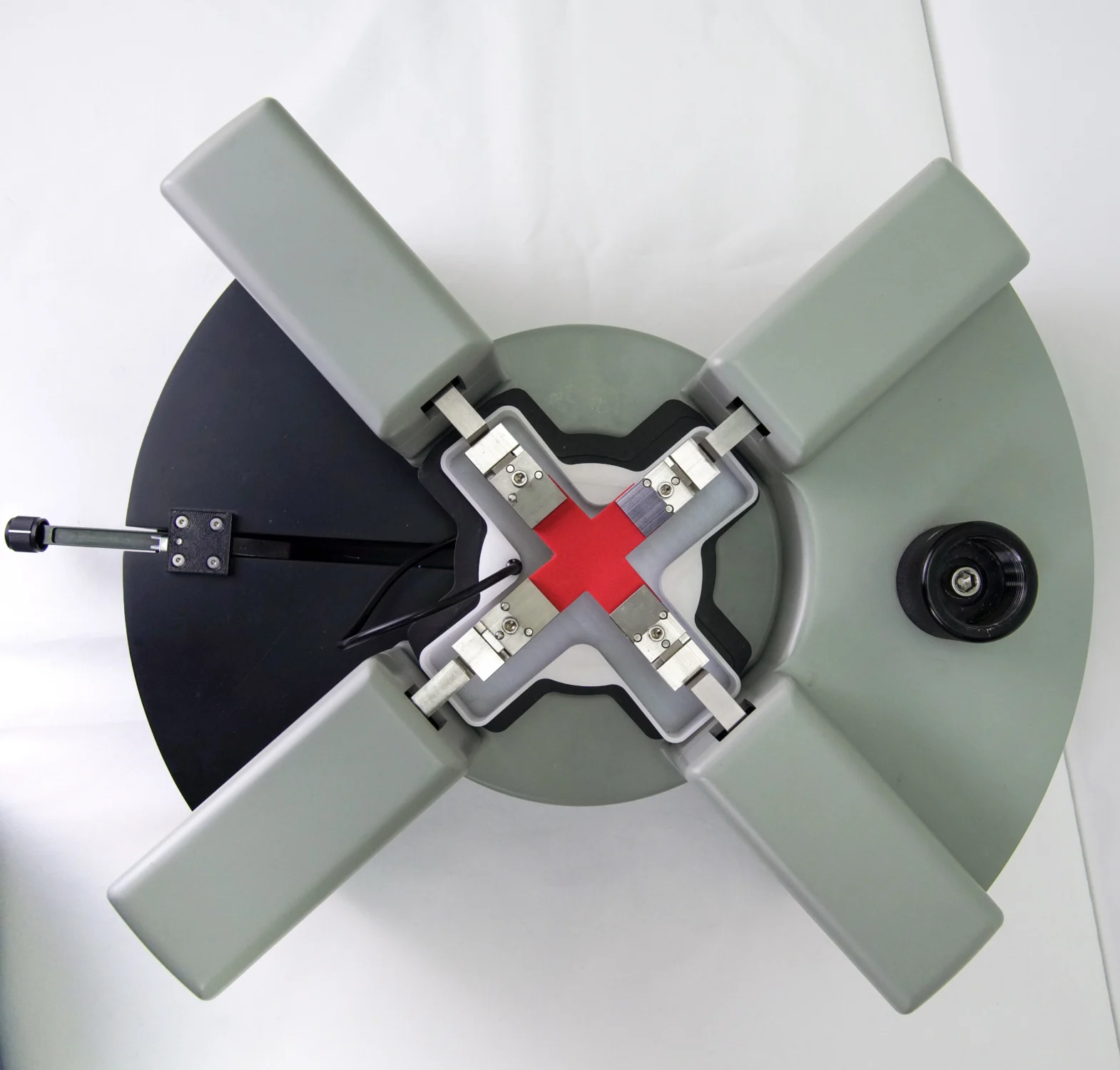
The BioTester biaxial testing machine is a dedicated platform for planar biaxial testing of soft tissues, biomaterials, and synthetics that exhibit direction-dependent structure. Originally designed for soft tissue biomechanical testing, the BioTester combines synchronized actuation, specimen mounting options, imaging-based strain measurement, and temperature-controlled media capabilities to support repeatable biaxial protocols without building custom equipment. Our patented BioRakes feature quick and reliable sample attachment for repeatable results.
Many biomaterials and biological tissues are anisotropic, non-heterogeneous, and sensitive to handling. A planar biaxial testing system helps quantify direction-dependent mechanics and coupling effects that may be missed in uniaxial tests. The BioTester platform is a biaxial testing machine series engineered specifically for tissue biomechanics testing, with fixtures and workflows intended to reduce setup variability and improve comparability across specimens and cohorts.
What The BioTester Is Designed For
- Equibiaxial or non-equibiaxial protocols, imaging-based strain measurement, and hydrated test environments
- Soft tissues with direction-dependent microstructure (skin, vascular tissue, valves, pericardium, cartilage-derived tissues, etc.)
- Engineered tissue constructs and scaffolds where biaxial loading is physiologically relevant
- ECM and decellularized matrix mechanics studies with regional variability
- Biomaterials that require reliable mounting and imaging-based strain measurement
Typical Experimental Environments
- Standardized soft tissue mounting workflows using BioRakes to improve repeatability across cohorts and reduce setup variability
- Hydrated testing with bath and temperature control (often PBS, saline, or media near 37°C), so biaxial tissue testing workflows can be repeated without drying or temperature drift during equibiaxial and non-equibiaxial runs
- Imaging-based strain measurement during planar biaxial tests to check what the tissue is doing in the gauge region and to compare direction-dependent behaviour across anisotropic tissues and engineered constructs
- Multi-phase soft tissue biomechanics protocols that include preconditioning cycles plus ramps and holds to capture viscoelastic and time-dependent response (including stress relaxation where needed)
When the UniVert or MicroTester is a Better Fit
- If you only need uniaxial tension or compression, the UniVert is usually simpler
- If specimens are micro-scale and forces are micro-Newton to milli-Newton, the MicroTester is more appropriate
- If you need inflation testing of vessels or pressure-based protocols, consider dedicated pressure testing workflows like with the UniVert
BioTester Models and Core Specifications
The BioTester is available in three models to match specimen size, force capacity, environmental control, and imaging needs. The BioTester 3000 & 5000 are commonly used up to 23 N force per axis, while the BioTester 6000 extends force capacity up to 200 N for larger specimens and higher-load protocols.
BioTester
3000
The BioTester 3000 is a compact, modular planar biaxial testing system with optional access for imaging and fixtures. It is commonly selected by labs that want biaxial capability with flexible upgrade paths.
BioTester
5000
The BioTester 5000 biaxial testing machine includes imaging and a media bath in the standard system, with long stroke supporting up to 80 mm grip separation. It is a common choice for routine soft tissue biomechanical testing with imaging and temperature-controlled bath workflows.
BioTester
6000
The BioTester 6000 extends force capacity (to 200 N from 23 N on the other models) for larger specimens and higher-load protocols while maintaining the same core workflow for biaxial tensile tester studies, imaging-based strain analysis, and hydrated testing. It also allows adjustable actuator placement for larger specimens and maximum grip distances.
| Specification | BioTester 3000 | BioTester 5000 | BioTester 6000 |
|---|---|---|---|
| Dimensions (cm) | 46 x 46 x 13 | 60 x 60 x 80 | 84 x 84 x 80 |
| Weight (kg) | 6 | 18 | 35 |
| Force Capacity (N) | 10 (23 optional) | 23 | 200 |
| Load Cell / Force Sensor Range (N) | 0.5 – 10 (23 optional) | 0.5 – 23 | 0.5 – 200 |
| Max Grip Separation (mm) | 50 | 80 | 300 (90 mm stroke) | Max Velocity (mm/s) | 20 | 20 | 20 |
| Max Data Rate (Hz) | 100 (100 optional) | 100 | 100 |
| Media Bath | Optional | Standard | Standard |
| Imaging (Hz) | Optional | Standard | Standard |
| Imaging Frequency | Optional (5 or 15) | 15 | 15 |
| Test Control Modes | Displacement (Force optional) | Force & Displacement | Force & Displacement |
Mechanical Testing Capabilities
The BioTester supports biaxial protocols and related soft tissue biomechanics workflows, including imaging-based strain measurement and hydrated testing. Each capability summary below links to the dedicated Testing Methods page for deeper technical detail.
Biaxial Testing
With the BioTester: Planar biaxial tests with two-axis actuation, run in displacement or force control, with optional image-based strain control for equibiaxial and non-equibiaxial loading. Equibiaxial loading applies the same strain or displacement in both axes, while non-equibiaxial loading applies different ratios to match physiology or isolate anisotropy.
For biomaterials: Soft tissues rarely respond the same way in every direction. Loading both axes at once can change the curve, compared with pulling only one axis. A planar biaxial testing system captures that behaviour on the biaxial testing machine in a single run.
Example specimens: skin, pericardium, heart valve leaflets, vascular tissues, engineered tissue constructs.
- Related Research Applications:
- Heart Valve Tissue Engineering
- Vascular Tissue Engineering
Tensile Testing
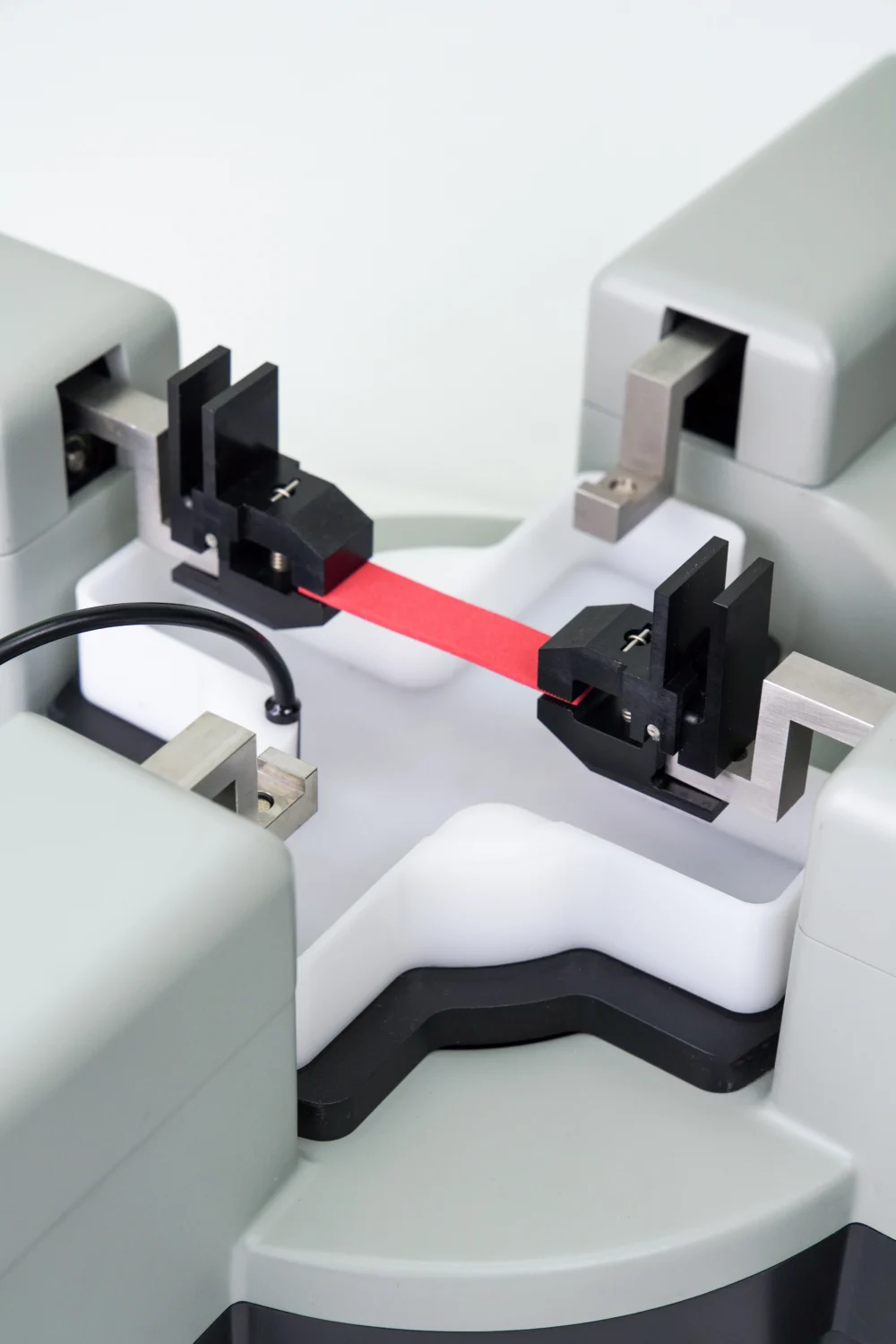
With the BioTester: Strip-style tensile testing workflows and controlled tension protocols for soft tissues, biomaterials, and general materials when planar biaxial loading is not required.
For biomaterials: Tensile tests remain important for screening, method development, and comparisons across conditions. A biaxial tensile tester’s mounting and imaging workflows can improve repeatability in soft, slippery, or heterogeneous specimens.
Example specimens: tissue strips, elastomer samples, engineered matrices, membranes.
- Related Research Applications:
- ECM & Decellularized Matrix Mechanics
- Skin & Wound Healing Biomechanics
Hydrated and Temperature-Controlled Testing
With the BioTester: Hydrated testing in a temperature-controlled media bath for biaxial mechanics studies under controlled conditions.
For biomaterials: Soft tissues change quickly if they warm up or dry out. Keeping the bath and temperature consistent helps when you are comparing groups in soft tissue biomechanical testing and other tissue biomechanics testing workflows.
Example specimens: vascular tissues, heart valve tissues, pericardium, hydrogels, engineered constructs.
- Related Research Applications:
- Cardiac Tissue Engineering
- Fibrosis & Tissue Remodeling
Digital Image Correlation (DIC)
With the BioTester: Non-contact strain measurement and strain field mapping for planar deformation using imaging-based workflows.
For biomaterials: Biaxial tests often produce non-uniform strain due to anisotropy, regional structure, and attachment effects. DIC-based approaches help quantify accurate specimen strain and support defensible comparisons and modeling.
Example specimens: corneal tissue, valve leaflets, engineered tissues, ECM-derived materials.
- Related Research Applications:
- Mechanotransduction
- Ophthalmic Biomechanics
Viscoelastic and Time-Dependent Testing
With the BioTester: Time-based steps in biaxial or uniaxial runs, including ramps, hold periods, and cycling to show hysteresis and rate effects. Includes stress relaxation testing.
For biomaterials: In many soft materials, timing matters as much as peak load. Matching timing and test conditions (and using real-time imaging), supports cleaner comparisons across cohorts and formulations.
Example specimens: skin, musculoskeletal tissues, ECM-derived materials, hydrogels, gastrointestinal tissues, tendons and ligaments
- Related Research Applications:
- Tendon & Ligament Tissue Engineering
- Skin & Wound Healing Biomechanics
Selecting a Force Range & Configuration
The BioTester is configured with inline load cells (AKA force transducers or force sensors) on each actuator to support precise force measurement during mechanical tests (for biaxial tensile tester protocols, for example). Selecting the smallest load cell range that comfortably covers expected peak loads improves sensitivity for soft tissues and compliant materials.
Load cell selection for soft tissues and higher-load protocols
- Multiple load cell capacities are available (from 0.5 N to 200 N) so the system can be matched to the expected force range of your specimens. The BioTester 3000 and 5000 have a 23 N force capacity, while the 6000 supports the full range of force-sensing options (up to 200 N) with additional clamp mounting (while maintaining the same protocol design and imaging workflow).
Practical guidance for selecting a configuration
- Choose load cell capacity based on expected peak loads and desired resolution (this will inform model choice)
- Match attachment method (choose BioRake size; add sutures or clamps if needed) to tissue thickness, toughness, and failure mode
- Use hydrated and temperature-controlled testing when hydration state or physiologic temperature is relevant
- Use imaging-based strain measurement (with the Scientific Imaging System) when attachment compliance or regional strain gradients influence results
- For experiments involving synchronized peripherals, consider the sync pulse & COM port upgrade to support external trigger/synchronization outputs
Specimens and Mounting
Specimen mounting is often the limiting factor in soft tissue biomechanical testing, especially when samples are anisotropic, slippery, or prone to tearing at attachment sites. The BioTester comes with BioRakes, and has multiple mounting approaches to improve consistency, reduce setup time, and support repeatable tissue biomechanics testing and planar biaxial testing system workflows.
Specimen preparation for repeatability
- Many labs standardize specimen geometry before mounting to improve cross-specimen comparability. Fixed-size specimen cutters are commonly used to prepare consistent sample dimensions for repeatable planar biaxial protocols.
BioRakes Sample Mounting System
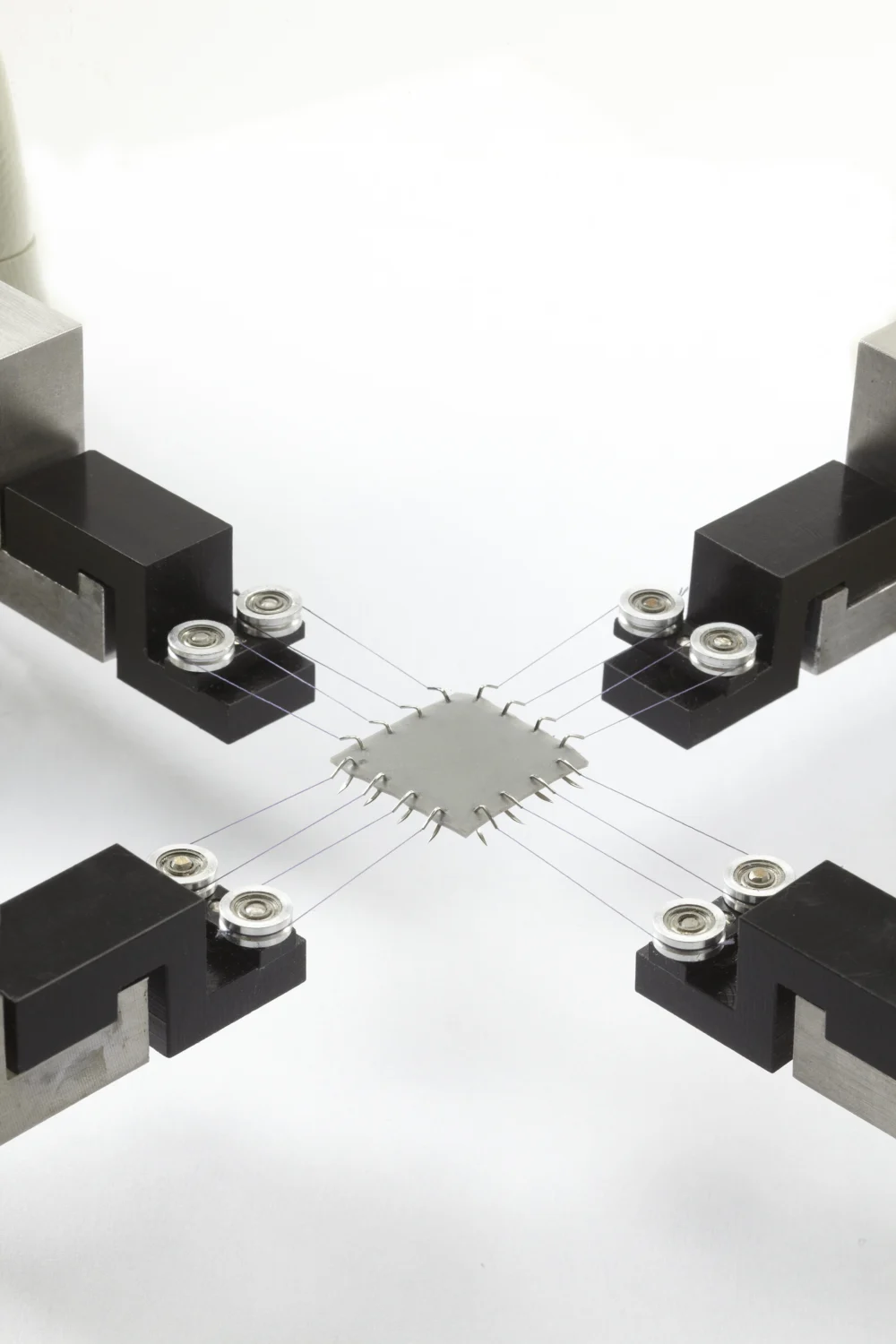
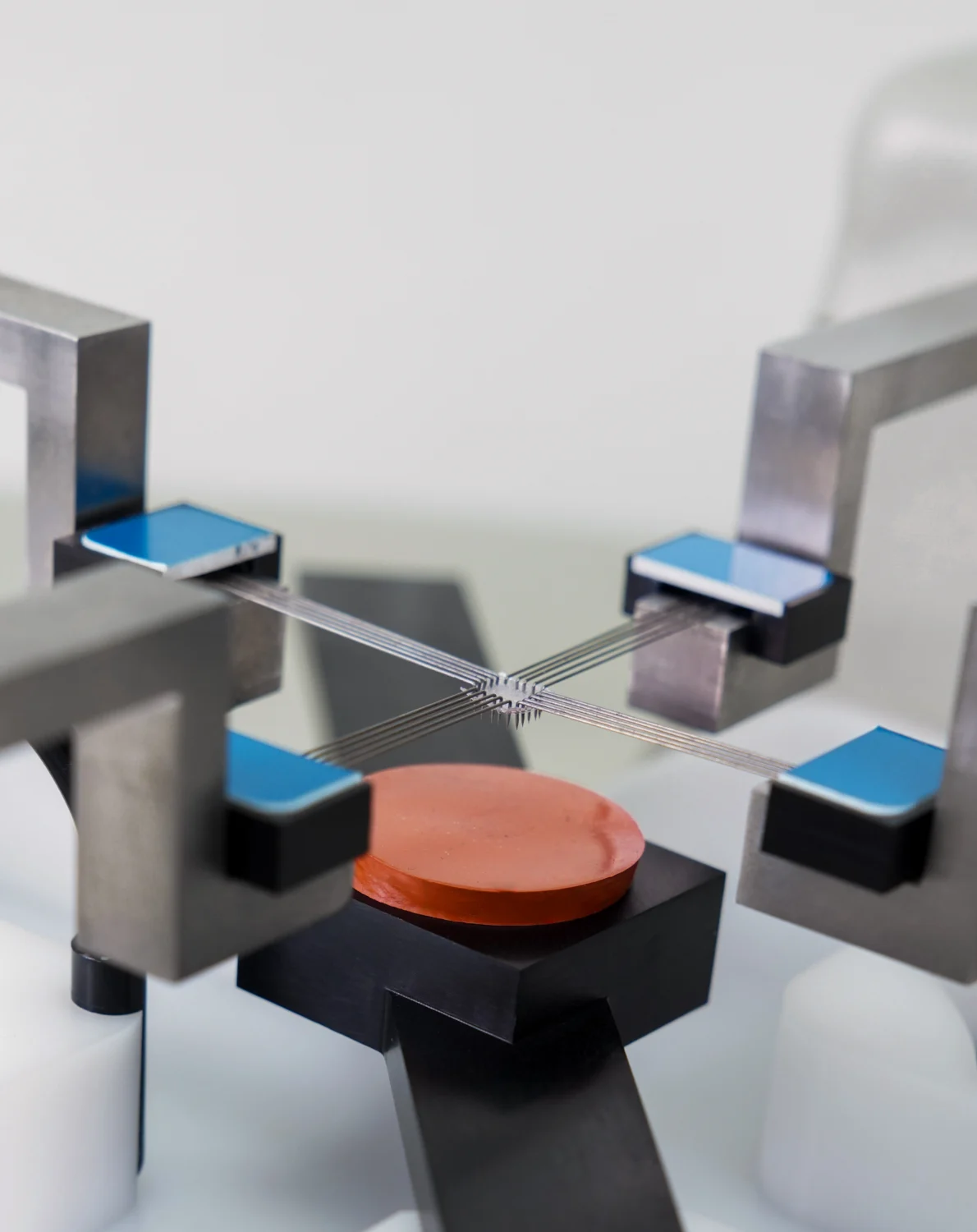
BioRakes are patented electrochemically sharpened tungsten wires, designed for fast and repeatable attachment to soft tissues and biomaterials using multi-point mounting. This mounting style keeps the attachment spacing consistent from sample to sample and helps the setup go faster when you are running a cohort.
Recommended for: soft tissues and biomaterials where quick mounting and consistent attachment spacing matter
- Key features:
- Multi-point specimen mounting system for fast, repeatable attachment
- Compatible with load cells up to 23 N
- Available in multiple spacing options to match common specimen sizes
- Larger and custom sizes available to match specimen size
Balanced pulley suture mounting
-
Force-balanced suture mounting is also available to support multi-point attachment with zero shear stress. It is useful when suture-based attachment is preferred for delicate specimens.
Recommended for: delicate tissues and studies where balanced loading across attachment points improves repeatability
Clamp mounting for testing to failure
-
If you require force range above 23 N (up to 200 N), additional mounting clamps are provided to support secure fixation. These are particularly useful for testing to failure, such as for cruciform-style samples where attachment regions are separated from the gauge area.
Recommended for: failure-oriented protocols and specimens that require robust clamping surfaces
- The BioTester Catalogue has a complete list of system configurations and available fixtures and accessories
Custom Fixtures and Experimental Setups
When specimen geometry or protocols are non-standard, CellScale can design custom fixtures, control approaches, or environmental accommodations to support defensible research outcomes.
Imaging: Strain-Controlled Mechanical Testing
Planar biaxial testing often requires strain measurement that reflects true specimen deformation rather than actuator motion. The BioTester supports imaging-enabled workflows for visualization, strain tracking, and, when configured, image-based strain control.
Real-time strain control from image tracking
Image-based strain tracking can be used to follow prescribed strain profiles derived from features on the specimen surface. This is valuable when attachment compliance, slip, or non-uniform strain would otherwise reduce comparability across tests.
Integrated imaging for visualization and reporting
Synchronized imaging provides context for attachment behaviour, failure modes, and specimen heterogeneity. This is commonly used for method development and publication figures.
Digital Image Correlation (DIC) for advanced strain measurement
For experiments that require non-contact strain measurement and strain field mapping tools, DIC workflows can be integrated into the imaging pipeline (configuration dependent).
Environmental Control: Hydrated Mechanical Testing
The BioTester is commonly used for hydrated testing of soft tissues and biomaterials. Temperature-controlled media bath configurations support physiologic temperature workflows and improve consistency in time-dependent protocols.
Temperature-controlled media bath
A temperature-controlled bath helps stabilize test conditions for samples where hydration state and temperature influence stiffness and viscoelastic response.
Designed for multi-phase biological protocols
Hydrated workflows pair naturally with preconditioning cycles, holds, and recovery phases, allowing soft tissue biomechanical testing that is closer to in vivo conditions.
Software: Data Workflow and Data Analysis
LabJoy, the BioTester software that is included with the system (lifetime licence), is designed for efficient protocol setup and repeatable execution. Test parameters can be defined in a table-based format, saved as templates, and reused across experiments. During setup and testing, the interface provides real-time imaging and updates on force, position, and temperature.
Typical outputs:
- force and displacement per axis
- stress calculations
- strain measurement in the gauge region (from imaging)
- complex strain fields and principal strains (with DIC configuration)
- hysteresis, stiffness vs cycle, and relaxation time constants (protocol dependent)
Protocol control for biaxial and time-dependent workflows
Configure force, displacement, and image-based strain control with multi-step sequences for preconditioning, viscoelastic testing, creep, and relaxation protocols.
Data export and analysis
Export datasets into our Data Analysis software (also included with a lifetime licence) for modeling, comparisons across cohorts, and reporting.
Common BioTester Research Applications
- Tissue Engineering & Soft Tissue Biomechanics
- Biomaterials and Advanced Materials
BioTester in Journal Publications
The BioTester is referenced in hundreds of peer-reviewed studies across tissue engineering, mechanobiology, and biomaterials research where biaxial tissue testing workflows and image-based strain measurement are used.
Comments From Real Researchers
“When I found one and put my hands on it, it was a dream come true… I was waiting for this machine for many years, and I tried also some models that didn’t work… The amount of customization that you can do—you can control every aspect of what you’re doing—and that’s great… There’s a lot of processing that’s already done by the [LabJoy] software, but then you can use MATLAB or whatever you want to process things exactly your way… It works so great for all the cardiovascular tissue that we use—you name it, it can handle it in a very, very robust way.”
Dr. Michel Labrosse
PhD, PE. Research Associate, Division of Cardiac Surgery and Associate Professor, Mechanical Engineering at the University of Ottawa, Canada.
“The CellScale BioTester offers great flexibility with planar biaxial testing, providing compact and robust hardware setup paired with flexible and capable software. Attachment systems are quick and easy to use, making the device particularly attractive for testing large numbers of specimens…”
Dr. Alexey Kamenskiy
PhD. Professor and Director, Center for Cardiovascular Research in Biomechanics at the University of Nebraska at Omaha, USA.
“It’s a great system that offers all the capabilities and specs I needed for performing the type of research in my lab… This is the system with the best value on the market… In the past two years we were able to carry out a bunch of important research projects.”
Dr. Chung-Hao Lee
PhD. Associate Professor of Bioengineering at the University of California, Riverside, USA. Former Assistant/Associate Professor of Mechanical Engineering at the University of Oklahoma, USA.
BioTester Videos
Short videos demonstrate setup, specimen mounting, and real-world research uses for the BioTester biaxial testing machine.
4:35
1:22
0:21
3:46
3:46
3:46
3:46
BioTester Biaxial Mechanical Testing System Demonstration
End-to-end demonstration of the BioTester biaxial mechanical testing system, including specimen preparation, mounting, test execution, and image-based strain analysis.
Biaxial Tensile Testing of an Electrospun Polymer Using BioRakes
Biaxial tensile testing of an electrospun polymer using BioRakes for multi-point specimen attachment.
BioTester Demonstration: Suture and Pulley Mounting for Biaxial Testing
Demonstration of suture and pulley-based specimen mounting for force-balanced, zero-shear biaxial testing using the BioTester.
Quantifying Heart Valve Tissue Mechanics to Improve Pediatric Cardiac Surgery
Quantitative mechanical testing of heart valve repair tissues to support pediatric cardiac surgery.
Biaxial Testing and Computational Modeling of Heart Tissue | University of Ottawa
Biaxial mechanical testing and finite element modeling of heart tissue to improve computational simulations for cardiovascular research and surgery.
Cardiovascular Tissue Mechanics for Aneurysm Diagnosis | KU Leuven
Biaxial mechanical testing of human cardiovascular tissues to improve aneurysm diagnosis and biomechanical modeling.
Downloads
Download technical resources for the BioTester biaxial testing machine.
Related CellScale Mechanical Testers
UniVert
MicroTester
FAQs About the BioTester
What is the BioTester used for?
The BioTester is used when you need to mechanically characterize a soft specimen in two directions at the same time. It is a planar biaxial testing system for soft material and soft tissue biomechanical testing, where one-axis pulls do not tell the whole story. Labs use it to compare how a tissue behaves in physiologic-like conditions, and to run time-based routines under two-axis loading.
What makes the BioTester unique?
The BioTester is the first of its kind biaxial testing machine designed specifically for planar tissue samples. It combines synchronized two-axis loading with mounting tools (including the patented BioRakes) that keep setup consistent from sample to sample, and it supports image-based strain measurement when actuator motion is not a reliable proxy.
What sample types can I test with the BioTester?
The BioTester is used with planar soft tissues such as pericardium, valve leaflets, vessel wall samples, and skin. It is also used for engineered patches and scaffolds, soft polymer films, tissue-mimetic biomaterials prepared as flat specimens, as well as soft polymers and other general-purpose materials.
Does the BioTester include imaging options?
Yes. The BioTester can be paired with imaging so strain can be measured in the gauge region. That is useful when grips, compliance, or non-uniform stretch make actuator displacement a poor stand-in for specimen strain. Imaging is also used to spot edge effects and confirm the deformation pattern during a run.
What is the difference between planar biaxial testing and uniaxial testing?
A uniaxial test pulls in one direction. Planar biaxial testing loads two axes, so you can see whether the response changes when both directions are engaged. For tissues with aligned fibers, that two-axis condition often looks different than a set of separate one-axis pulls.
Can the BioTester run equibiaxial and non-equibiaxial protocols?
Yes. You can match the axes for equibiaxial runs, or you can set a ratio between axes to bias loading toward one direction. Many users do both, depending on whether they are trying to reproduce a loading state or compare directions.
Can the BioTester perform viscoelastic tests such as stress relaxation or creep?
Yes. Users run ramps and holds, stress relaxation, and creep-style routines in biaxial loading. These tests are commonly done in a hydrated bath, and imaging can be used when you want to confirm what the gauge region is doing during the hold.
How do I choose BioTester 3000 vs BioTester 5000 vs BioTester 6000?
Choose based on peak force and specimen size. The BioTester 3000 and 5000 support up to 23 N force capacity, which covers many common soft tissue studies with standard planar samples. Move to the BioTester 6000 when you expect higher loads or larger specimens (the 6000 has up to 200 N force capacity). If you plan to use imaging and media bath, include that in the configuration decision.
When is the BioTester not the best fit?
The BioTester is not the right choice if you only need single-axis tension or compression. In that case, the UniVert is usually the simpler route. For micro-scale specimens with micro-Newton to milli-Newton forces, the MicroTester is the better match.
Talk to an Applications Specialist
If you share your specimen type and target outputs, we will recommend a BioTester configuration that matches your workflow and supports repeatable soft tissue biomechanics experiments.


