

Decellularized and
Extracellular Matrix Mechanics

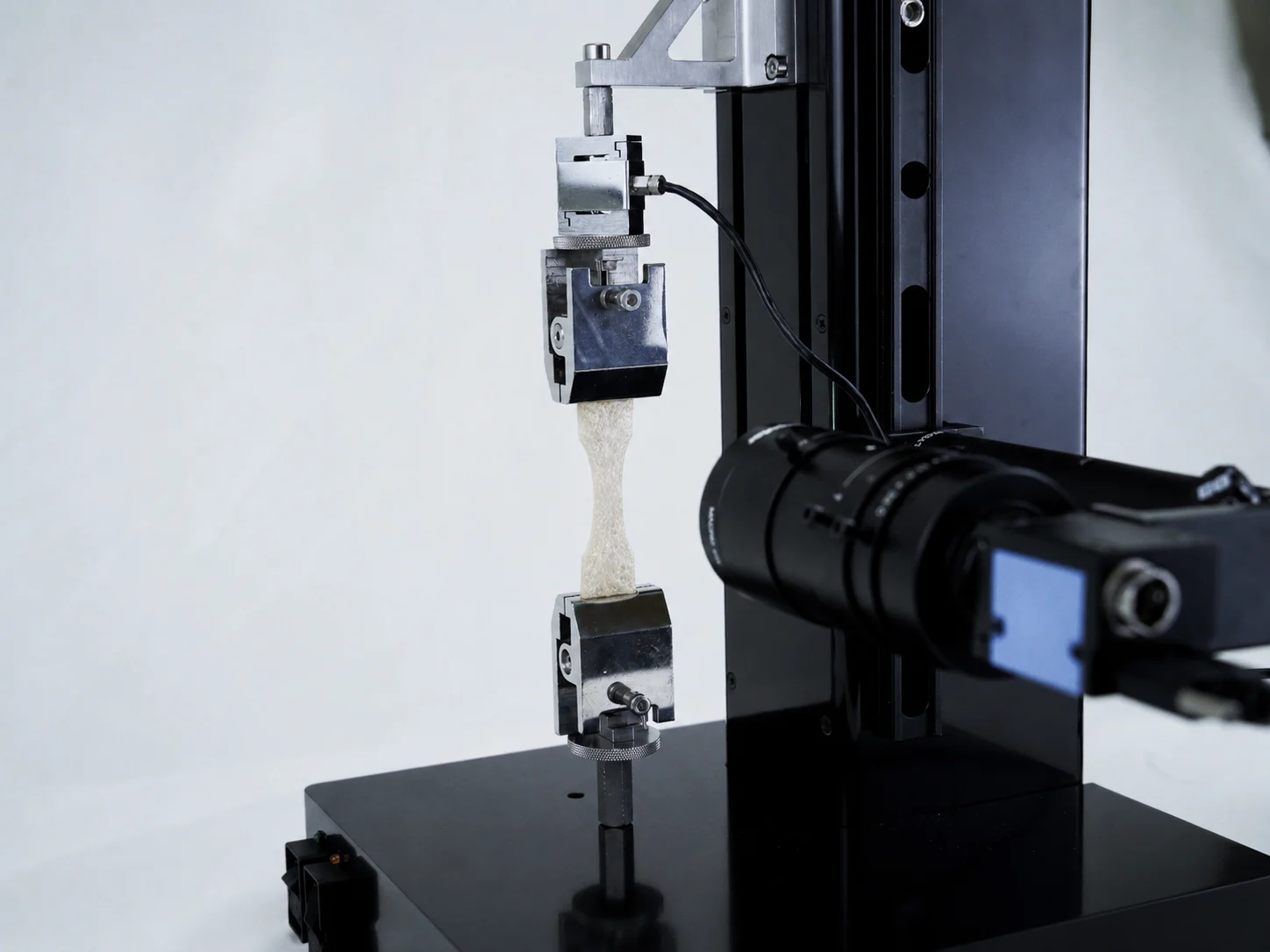
Extracellular matrix mechanics regulate cell behaviour, tissue integrity, and regenerative outcomes. Mechanical testing quantifies stiffness, anisotropy, and remodeling behaviour in native ECM, decellularized tissues, and ECM-based biomaterials.

Overview of
Extracellular Matrix Mechanics and Decellularized Tissues
The extracellular matrix provides the structural and mechanical framework that governs tissue function and cellular response. ECM composition, collagen architecture, crosslinking density, and hydration state collectively determine stiffness, anisotropy, and time-dependent mechanical behaviour.
- Mechanical testing supports research in:
Decellularized matrices are produced by removing cellular components while preserving native ECM structure. These materials are widely used as scaffolds in tissue engineering, disease modeling, and regenerative medicine because they retain biologically relevant mechanical and biochemical cues. Mechanical mismatch between decellularized matrices and native tissues can significantly influence integration, remodeling, and functional performance.
Importance of Mechanical Testing in ECM and Decellularized Matrix Research
Across published ECM and decellularized matrix studies, mechanical testing is used to benchmark scaffold properties, quantify remodeling during recellularization, and assess mechanical degradation or reinforcement during disease and regeneration processes.
Mechanical testing enables researchers to:
- Quantify mechanical effects of decellularization protocols
- Compare native tissue ECM to decellularized scaffolds
- Assess scaffold suitability for tissue engineering applications
- Evaluate stiffness changes during cell-mediated remodeling
- Characterize anisotropy and regional heterogeneity
- Study viscoelastic behaviour relevant to physiologic loading
- Generate parameters for computational and mechanobiology models
Quantitative ECM mechanics provide a foundation for reproducible and translational scaffold design.
Recommended CellScale Instruments for ECM Mechanical Testing
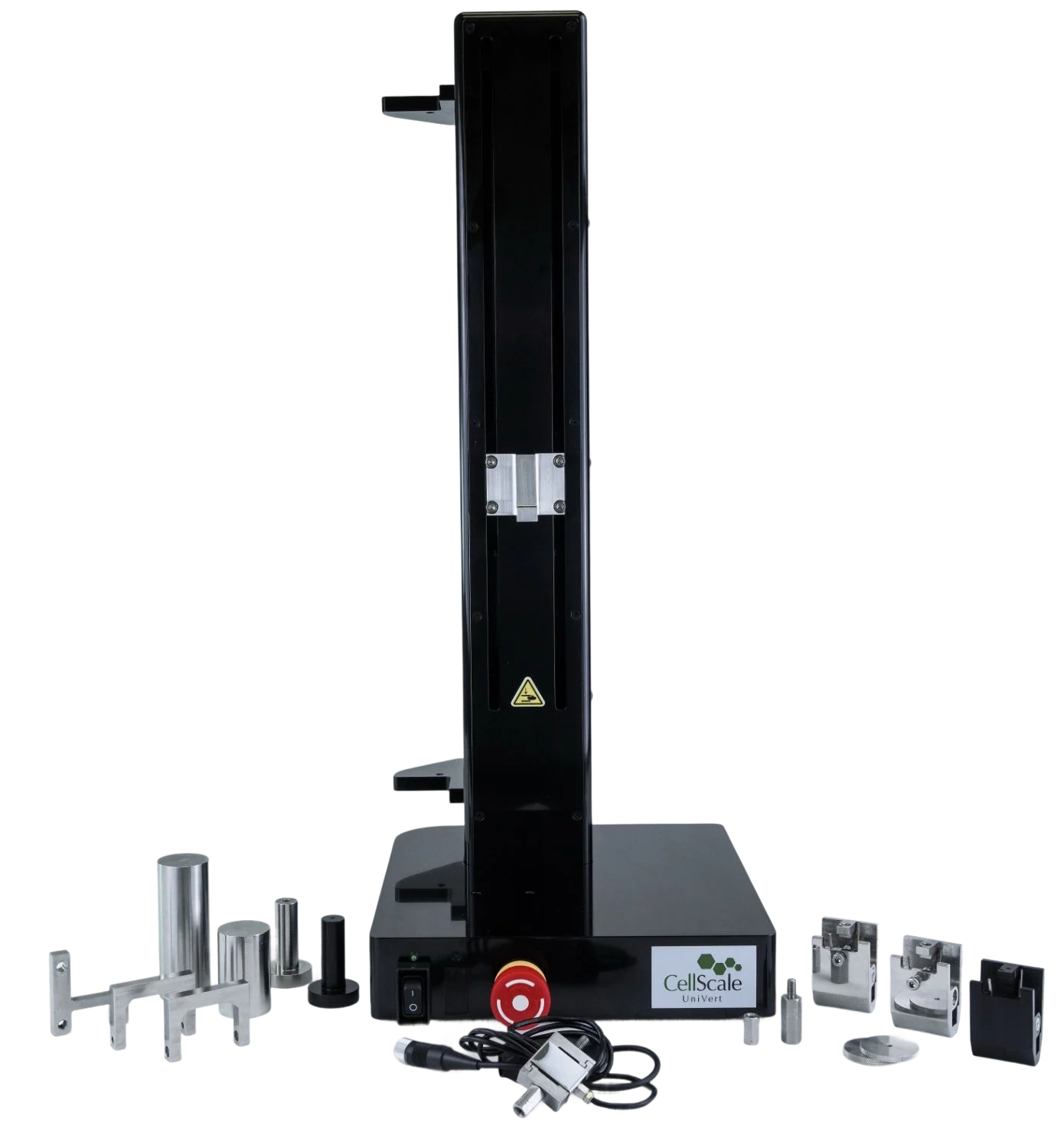
UniVert
Used for uniaxial tensile and compression testing of ECM samples, decellularized tissue strips, and scaffold materials across a wide range of stiffnesses.
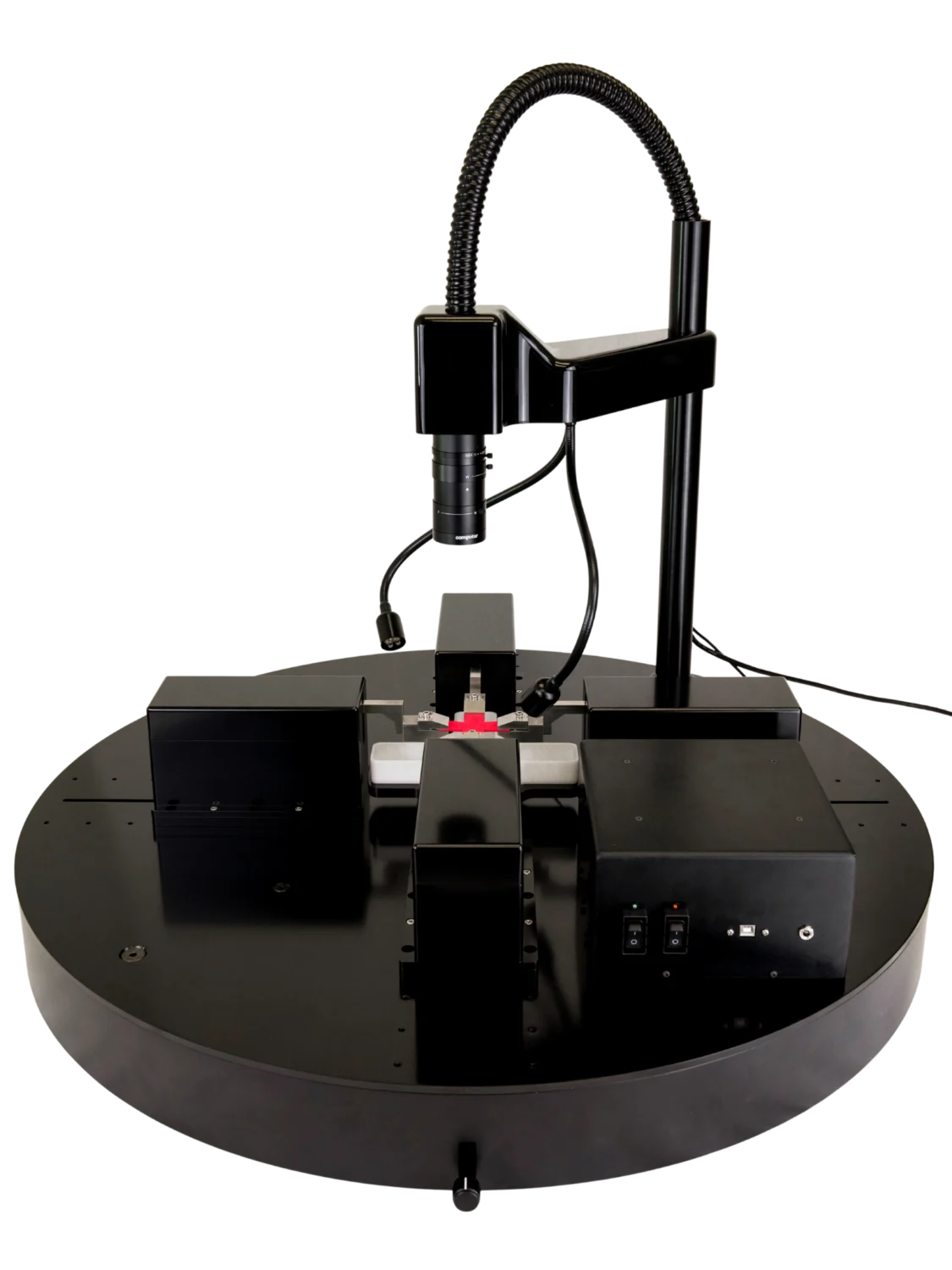
BioTester
Supports biaxial testing of planar decellularized matrices and sheet-like ECM samples where anisotropy and in-plane mechanics are critical.
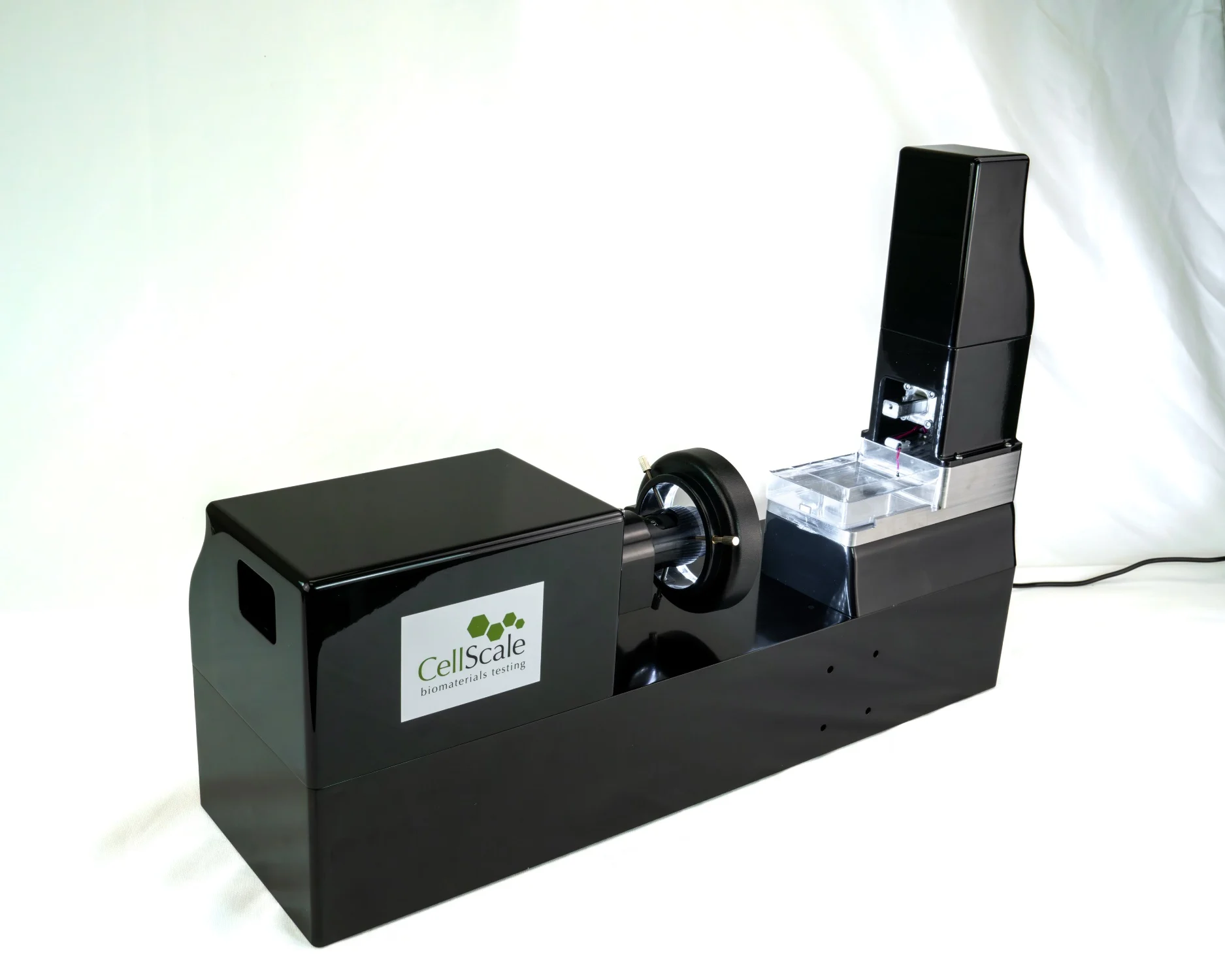
MicroTester
Ideal for low-force indentation and micro-compression testing of thin ECM layers and small decellularized constructs.
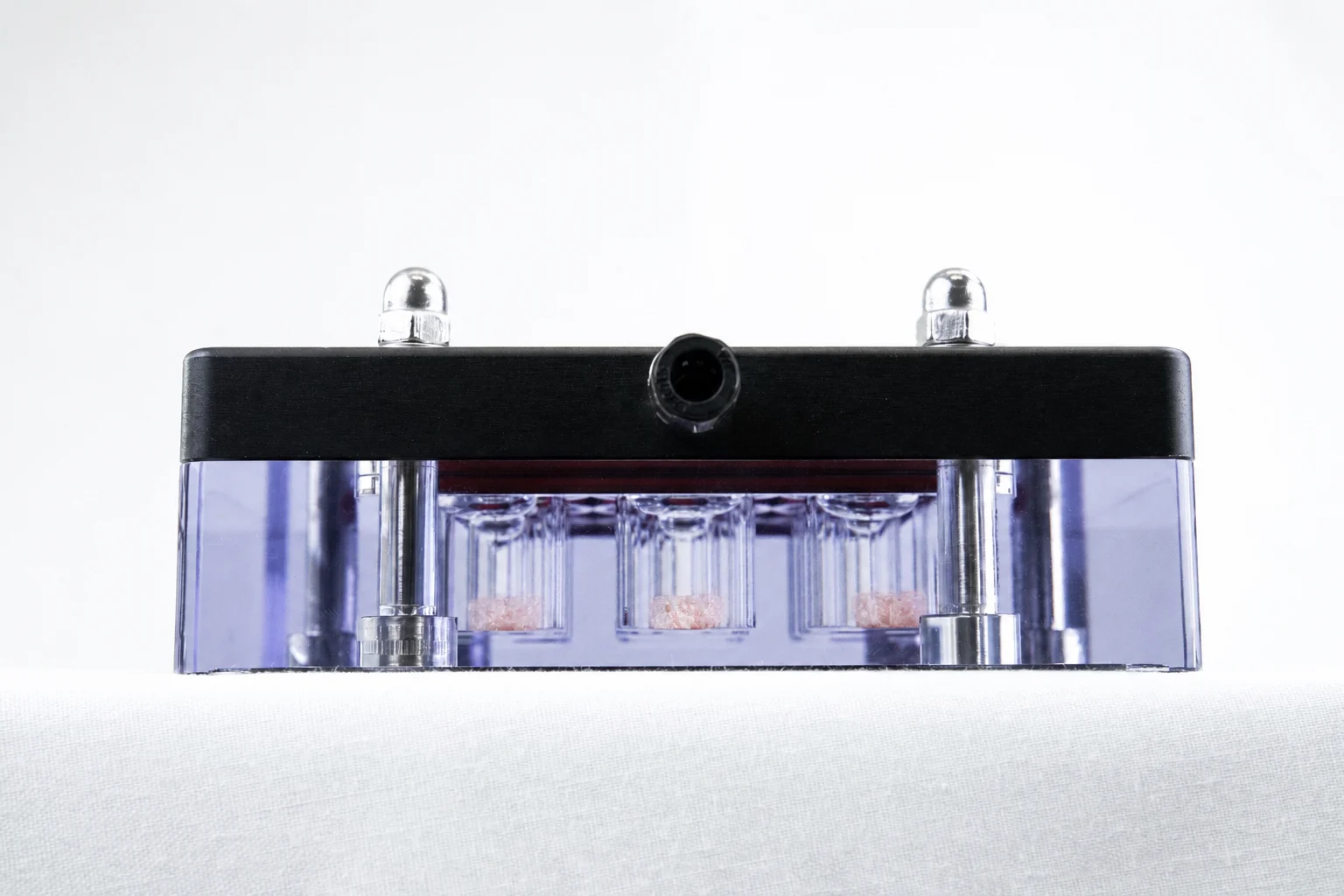
MechanoCulture TR
Applies hydrostatic pressure stimulation to ECM-based constructs to investigate mechanical conditioning, remodeling, and mechanobiology.
Testing Methods for ECM and Decellularized Matrix Mechanics
Tensile Testing
Characterizes stiffness, extensibility, and failure behaviour of ECM samples
Biaxial Testing
Evaluates anisotropy and multiaxial mechanical response
Compression Testing
Assesses bulk deformation and load-bearing capacity
Creep Testing
Quantifies time-dependent deformation under sustained compressive or tensile loading
Hydrated & Temperature Controlled Testing
Preserves physiologic ECM properties during testing
Representative Sample Types in ECM Mechanics
Native extracellular matrix samples
- Collagen-rich tissue ECM
- Basement membrane analogs
- Tissue-specific ECM preparations
Decellularized tissue matrices
- Decellularized heart, lung, skin, and vascular tissues
- Decellularized corneal and musculoskeletal matrices
- Sheet-based and scaffold-form decellularized constructs
ECM-based biomaterials
- ECM-derived hydrogels
- Composite ECM scaffolds
- Reinforced or crosslinked matrix materials
Remodeling and disease models
- Recellularized ECM constructs
- Fibrosis-associated matrix stiffening models
- Degradation and remodeling studies
Selected Publications in ECM and Decellularized Matrix Mechanics
Advance Your Extracellular Matrix Mechanics Research
CellScale systems support extracellular matrix mechanics, decellularized tissue testing, and ECM-based scaffold characterization requiring sensitive force control and physiologic testing conditions. Contact our team to identify the ideal platform for your ECM mechanics workflow.
