

Hydrated Mechanical Testing
& Temperature Controlled Testing

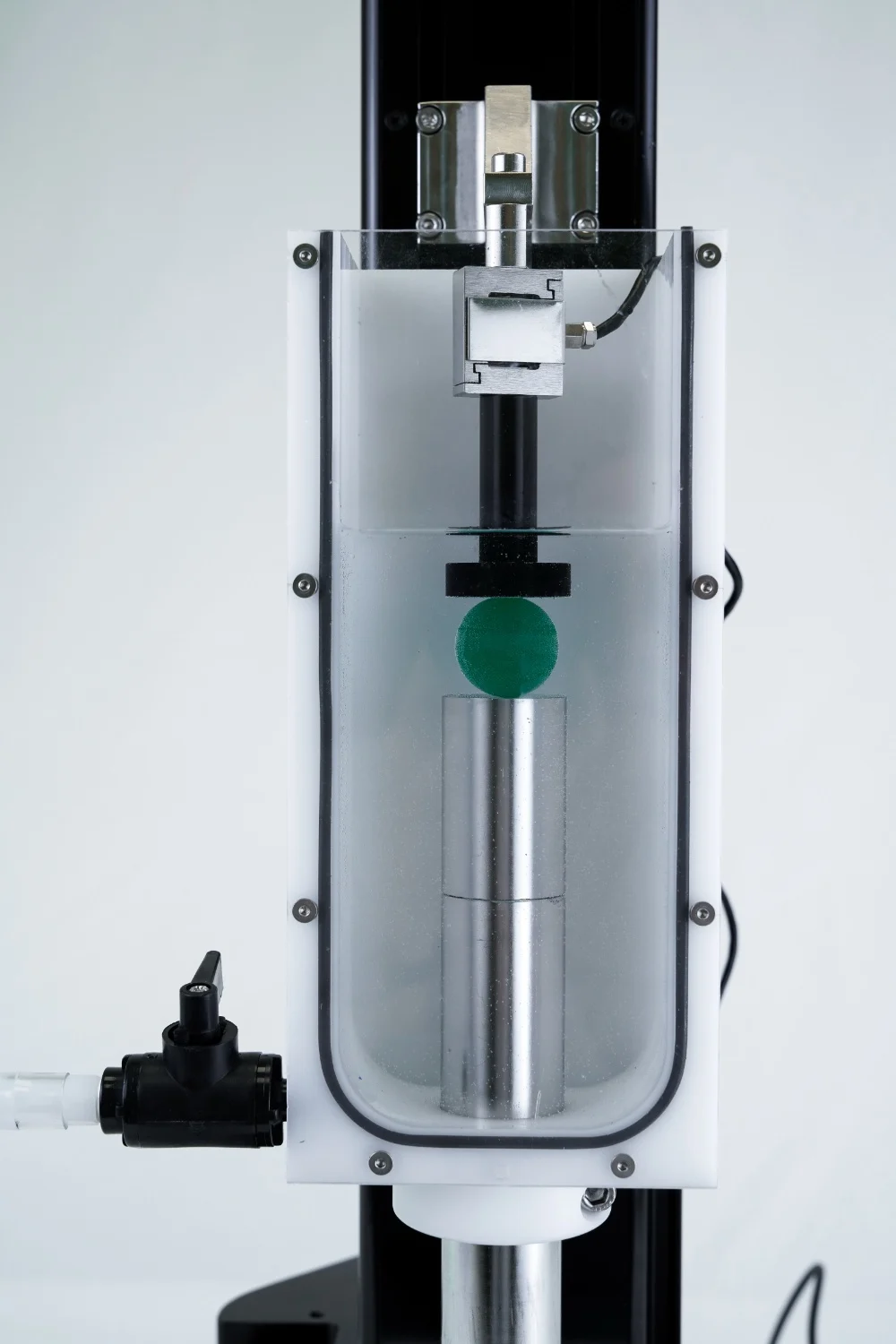
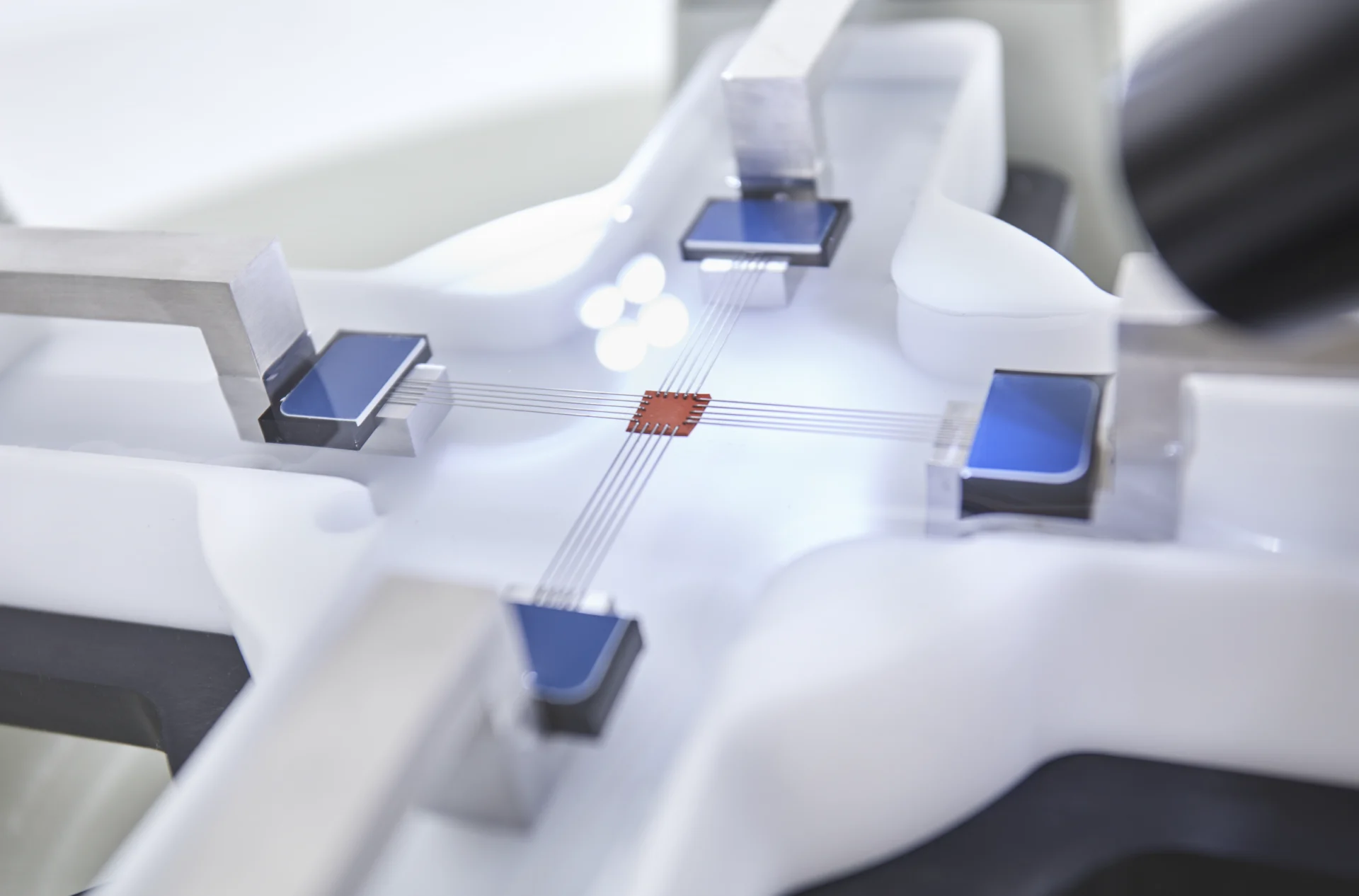
Hydrated mechanical testing ensures that soft tissues, hydrogels, and biomaterials are evaluated under physiologically-relevant fluid and temperature conditions, preserving native mechanical behaviour and preventing dehydration artifacts. Many biological materials are highly sensitive to hydration state, making submerged and temperature-controlled testing essential for accurate mechanical characterization.

What Hydrated Mechanical Testing Measures
Hydrated mechanical testing captures mechanical responses while the sample remains fully immersed or temperature regulated. This supports:
Measurement Examples
- Accurate measurement of hydrated gel mechanics
- Preservation of tissue stiffness and viscoelastic behaviour
- Prevention of drying and surface hardening
- Stable testing environments for multi hour experiments
- Repeatable results across physiologic temperatures
- Realistic mechanobiology and biomaterial responses
This approach is useful when material behaviour changes rapidly outside of fluid or physiologic temperature. It’s also essential for accurately characterizing hydrated gel mechanics, where stiffness and viscoelastic behaviour depend on swelling equilibrium.
Hydrated and Temperature Controlled Testing in Biomaterials Research
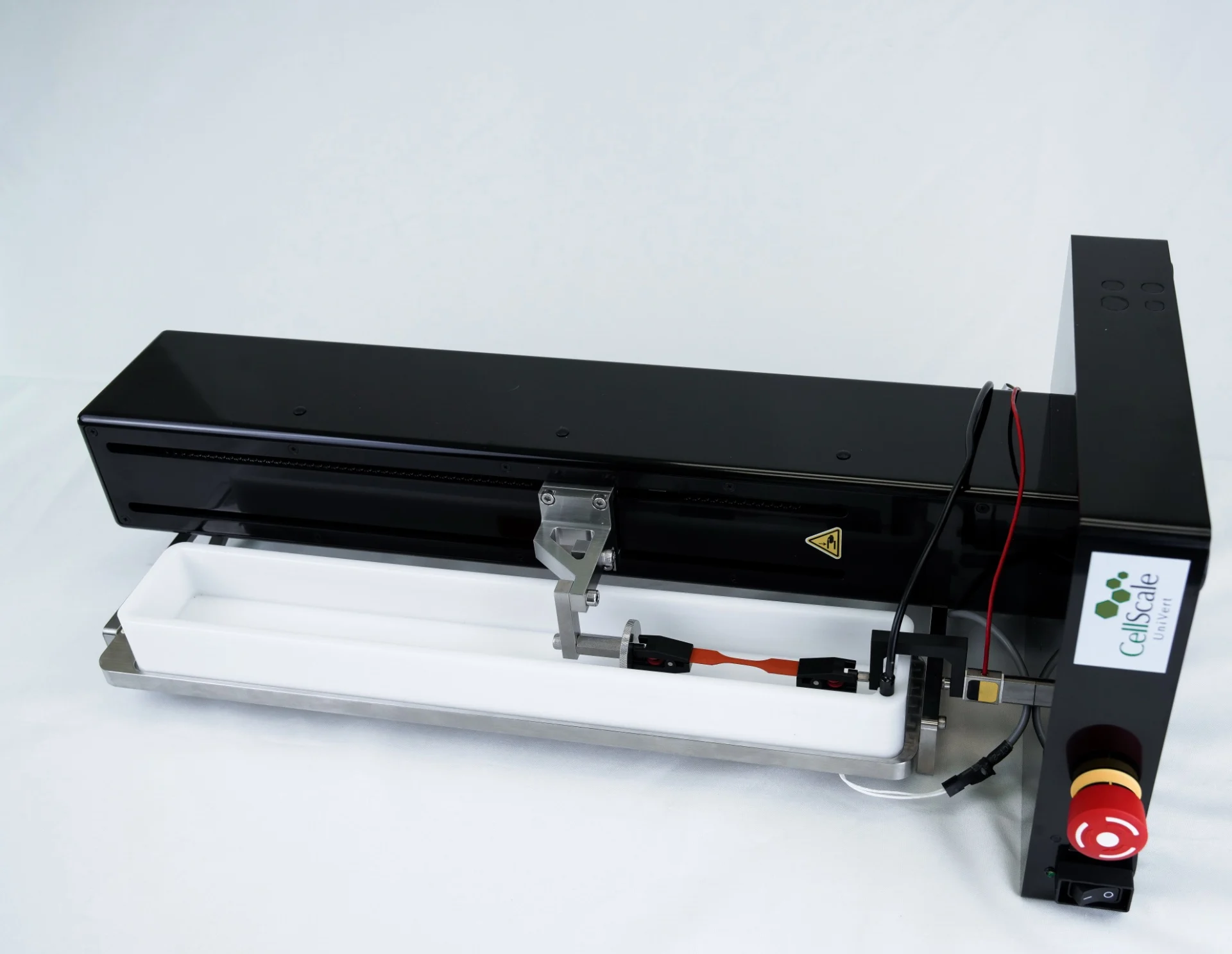
Biomaterials and soft tissues often change mechanical behaviour when removed from fluid or exposed to non-physiologic temperatures. By enabling biomaterial testing in fluid, these methods preserve native structure and prevent dehydration-induced artifacts. Hydrated mechanical testing enables researchers to:
- Evaluate hydrogels in physiologic media
Hydrogel stiffness, swelling behaviour, and viscoelasticity depend strongly on hydration.
- Maintain tissue integrity during testing
Cartilage, vascular tissue, cardiac membranes, and ocular tissues rapidly dehydrate when exposed to air.
- Support long duration experiments
Creep tests, stress relaxation tests, and cyclic loading may require several hours of stable environmental conditions.
- Perform mechanobiology studies under biological culture conditions
Cells respond differently under temperature controlled and hydrated environments compared to dry testing setups.
- Improve reproducibility across labs
Physiologic testing conditions reduce variability caused by environmental factors such as humidity or air exposure.
Common Sample Types for Hydrated Testing
- Hydrogels and viscoelastic polymer networks
- Cartilage and osteochondral tissues
- Cardiac, vascular and valve tissues
- Ocular tissues including cornea and sclera
- Engineered tissues and cell laden constructs
- Membranes and thin films sensitive to hydration
- Thermoplastic elastomers and biomaterials with temperature dependent mechanics
- Micro-scale constructs that require moisture retention
How Hydrated / Temperature Controlled Testing Works
Hydrated mechanical testing uses chambers, media baths, or sealed environments to maintain fluid and temperature conditions throughout testing.
Submerged Mechanical Testing
Submerged mechanical testing immerses specimens in buffer or media baths to maintain hydration and replicate physiological loading environments.
Temperature Controlled Testing
Temperature controlled mechanical testing maintains conditions near 37C for biological samples or defined temperatures for polymer and biomaterial characterization.
Hydrated Gel Mechanics
Hydrogels are tested in fluid filled chambers to prevent dehydration and preserve swelling equilibrium.
Extended Duration Testing
Stress relaxation, creep, and cyclic loading are executed under stable fluid and temperature conditions for several hours to ensure accurate time dependent data.
Imaging in Hydrated Environments
Transparent chambers and optical access support real-time visualization during testing.
Recommended CellScale Instruments for Hydrated Mechanical Testing
Many CellScale systems support hydrated mechanical testing within fully submerged and temperature-controlled environments for physiologically relevant material characterization.
UniVert
BioTester
MicroTester
MechanoCulture TR
Relevant Research Applications
Hydrated and temperature-controlled mechanical testing supports research across:
Recent Publications Using Hydrated Testing
Related Testing Methods
Hydrated testing environments support accurate physiological mechanics.
Ready to Perform Hydrated Mechanical Testing?
CellScale instruments support submerged and temperature-controlled environments for accurate, physiologically relevant testing of soft tissues and biomaterials. These systems are designed to replicate physiological testing environments required for accurate soft tissue and biomaterial evaluation.