

Tensile Testing
Machine Methods for Biomaterials and Soft Tissues

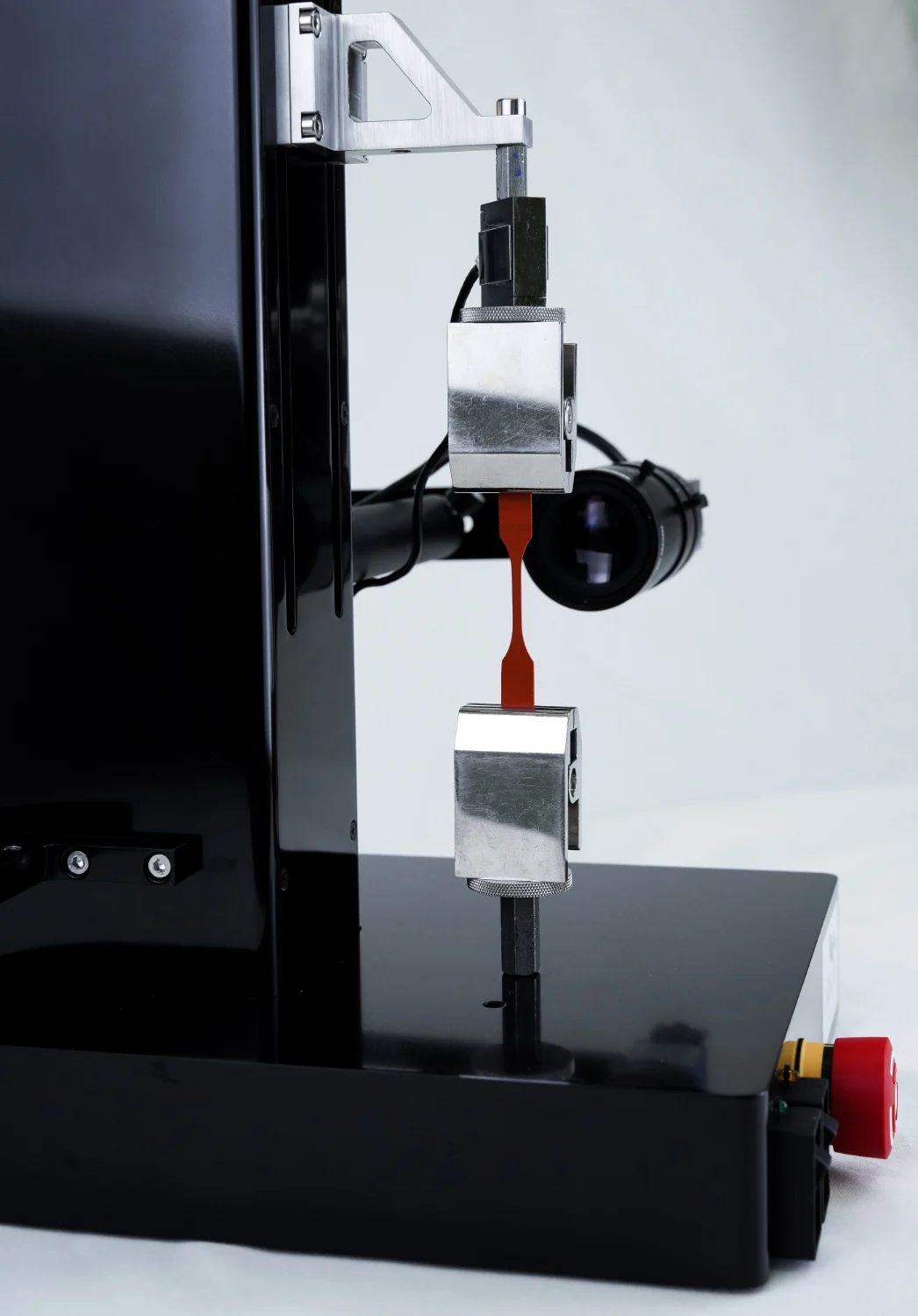
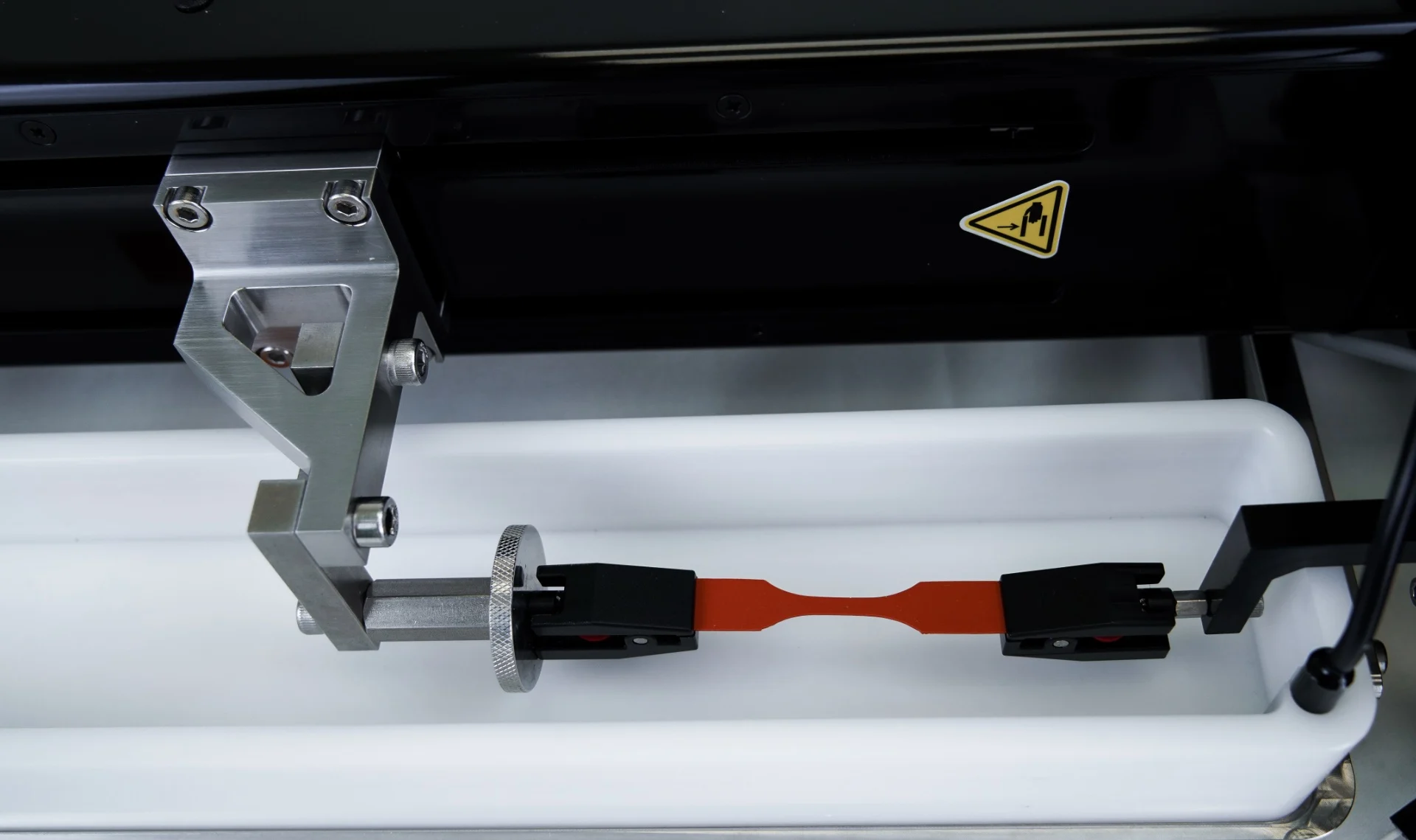
A tensile testing machine is used for multi-axial and uniaxial tension test configurations involving hydrogels, soft tissues, polymers, and engineered constructs. These systems generate tensile measurement data for applications such as tensile strength testing and soft materials tensile testing at macro- and micro-scale.

What a Tensile Testing Machine Measures
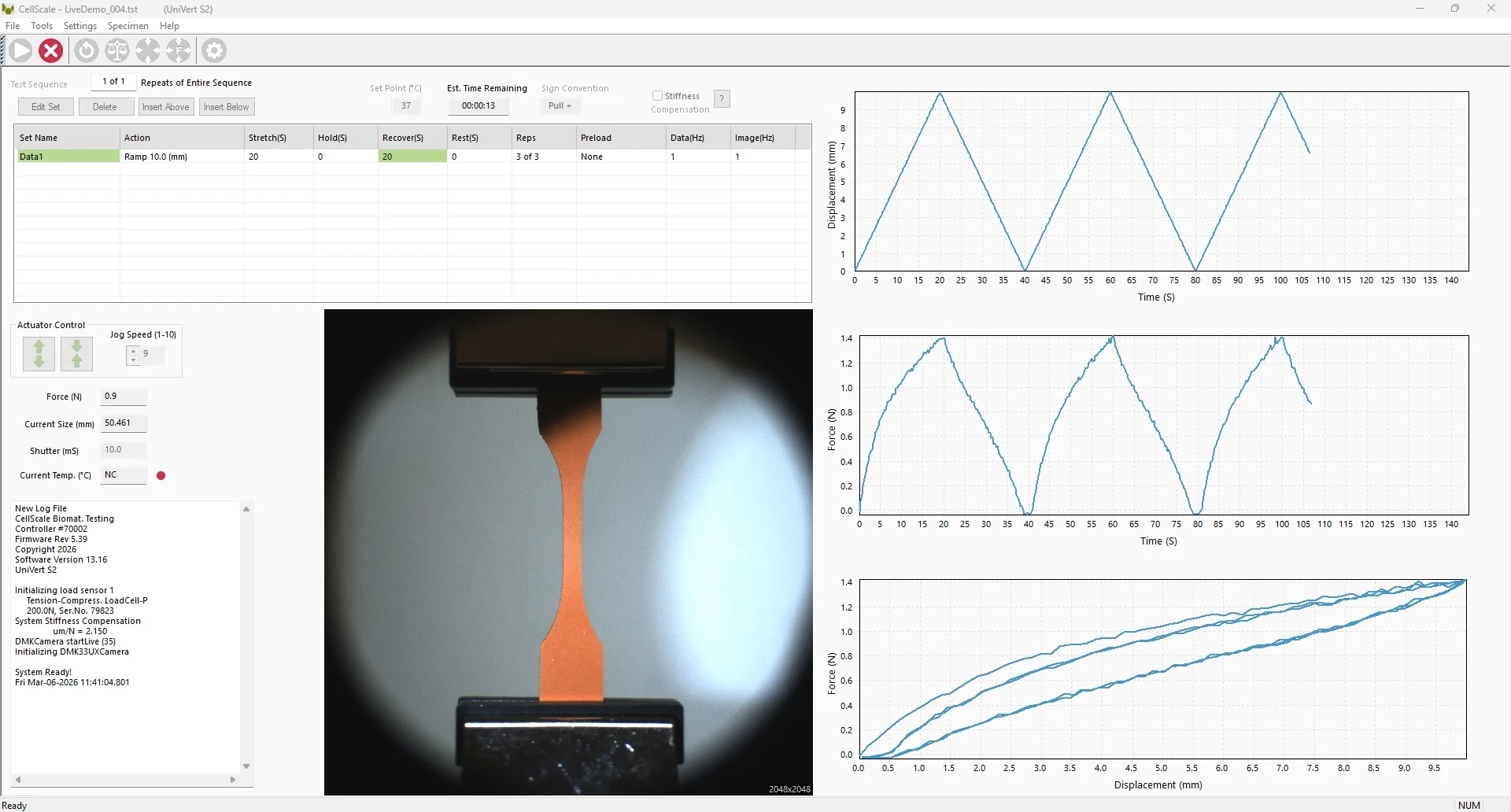
A tensile testing machine is used for tension tests and tensile pull tests on biomaterials, soft materials, and for general-purpose materials testing. These tests generate tensile measurement data such as force–displacement and stress–strain relationships for tensile strength testing.
What Tensile Testing Enables
- Young’s modulus, elastic modulus, and stiffness evaluation
- Tensile strength testing including peak load and failure strain
- Nonlinear and rate dependent responses
- Viscoelastic or time dependent tension behaviour
- Soft materials tensile testing for gels, films and biomaterials
These experiments are most commonly performed as a uniaxial tension test, where deformation is applied along a single loading axis.
Tensile Testing in Biomaterials Research
Tensile testing is used in a large range of research areas, including:
- Soft tissue and engineered construct mechanics
- Scaffold and fibre characterization
Aligned scaffolds, electrospun fibres, and woven biomaterials require tensile testing to evaluate anisotropy and load-bearing performance.
For a great example, read Miniaturized heart valve design at neonatal scale to see how tensile testing was used in mechanical characterization of electrospun TPU scaffolds.
- Hydrogel and ECM-based material development
- Mechanobiology and strain-driven cell response
- Failure and durability assessment
Common Sample Types for Tensile Tester Systems
- Soft hydrogels
- Collagen, fibrin, and ECM-based materials
- Cell laden hydrogel strips
- Engineered tendon, ligament, or muscle-like constructs
- Scaffolds with aligned microstructures
- Thin films and membranes
- Electrospun or woven fibers
- Microtissues and spheroids using micro-grip fixtures
Tensile Pull Tests: How It Works
A tensile pull test grips a specimen at both ends and applies controlled extension using a tensile testing machine while force and displacement are recorded. Throughout loading, force and displacement measurements are used to generate tensile measurement curves.
Specimen gripping and alignment
Grips must prevent slippage without introducing stress concentrations or damage, especially for soft and hydrated samples.
Force and displacement control
Tensile testing machines operate under displacement- or force-control to generate reproducible stress–strain curves. Precise control of these parameters is critical for accurate tensile measurement, particularly in compliant and viscoelastic materials.
Load cell and force resolution selection
Low-force sensors are essential for soft materials tensile testing to avoid signal noise and saturation. This capability is especially important for soft materials tensile testing, where forces are low and deformation is large.
Hydrated and environmental testing
Submerged chambers and temperature control preserve material behaviour during tensile measurement of biological samples.
Imaging and strain measurement
Non-contact imaging enables direct strain measurement, reducing artifacts caused by grip compliance or slippage.
Recommended CellScale Instruments for Tensile Testing
Many CellScale systems support tensile testing machine configurations for tension testing and tensile stimulation of soft tissues, hydrogels, and engineered biomaterials.
UniVert
BioTester
MechanoCulture J1
Relevant Research Applications
Tensile testers are used in many areas of biomaterials and tissue engineering research, including:
Publications Using Our Tensile Testing Machines
Related Testing Methods
Tensile testing is often combined with other methods to fully characterize soft material mechanics.
Ready to Begin Tensile Testing?
CellScale tensile testers support reproducible, low-force mechanical characterization of biological tissues, hydrogels, and soft engineered materials.