

Scaffold Mechanical Testing
for Tissue Engineering & Biomaterials


Overview of
Scaffold Mechanical Testing
Scaffolds provide the structural framework for many tissue engineering and regenerative medicine strategies. They may be porous foams, electrospun fiber networks, decellularized matrices, hydrogel-based constructs, composite scaffolds, or 3D printed architectures. In each case, mechanical performance influences handling, implantation, cell response, remodeling, and long-term function.
- Mechanical testing of scaffolds supports research in:
Accurate scaffold mechanical testing helps translate material design into functional performance in bone, cartilage, tendon, skin, nerve, cardiac, vascular, and other tissue engineering applications.
Importance of Mechanical Testing in Scaffold Research
Scaffold mechanical testing is used to understand how scaffold architecture, porosity, fiber alignment, crosslinking, hydration state, and material composition affect deformation and load transfer. Mechanical testing of scaffolds supports research in:
Researchers use scaffold mechanical testing to:
- Quantify scaffold stiffness testing across material formulations
- Measure compressive modulus and structural stability in porous constructs
- Evaluate tensile behaviour in fibrous, electrospun, or membrane-like scaffolds
- Assess local heterogeneity using indentation or micro-mechanical methods
- Study how hydration, temperature, or culture conditions affect mechanics
- Compare printed scaffold mechanics across pore geometries and infill patterns
- Characterize degradation-driven softening or reinforcement over time
- Benchmark engineered scaffolds against native tissues or established biomaterials
These measurements guide scaffold design, optimization of architecture and composition, and selection of materials for tissue engineering workflows. If you’ve got soft materials but aren’t sure what mechanical workflow you need, see our page on Soft Materials Testing Systems.
Recommended CellScale Instruments for Scaffold Mechanical Testing
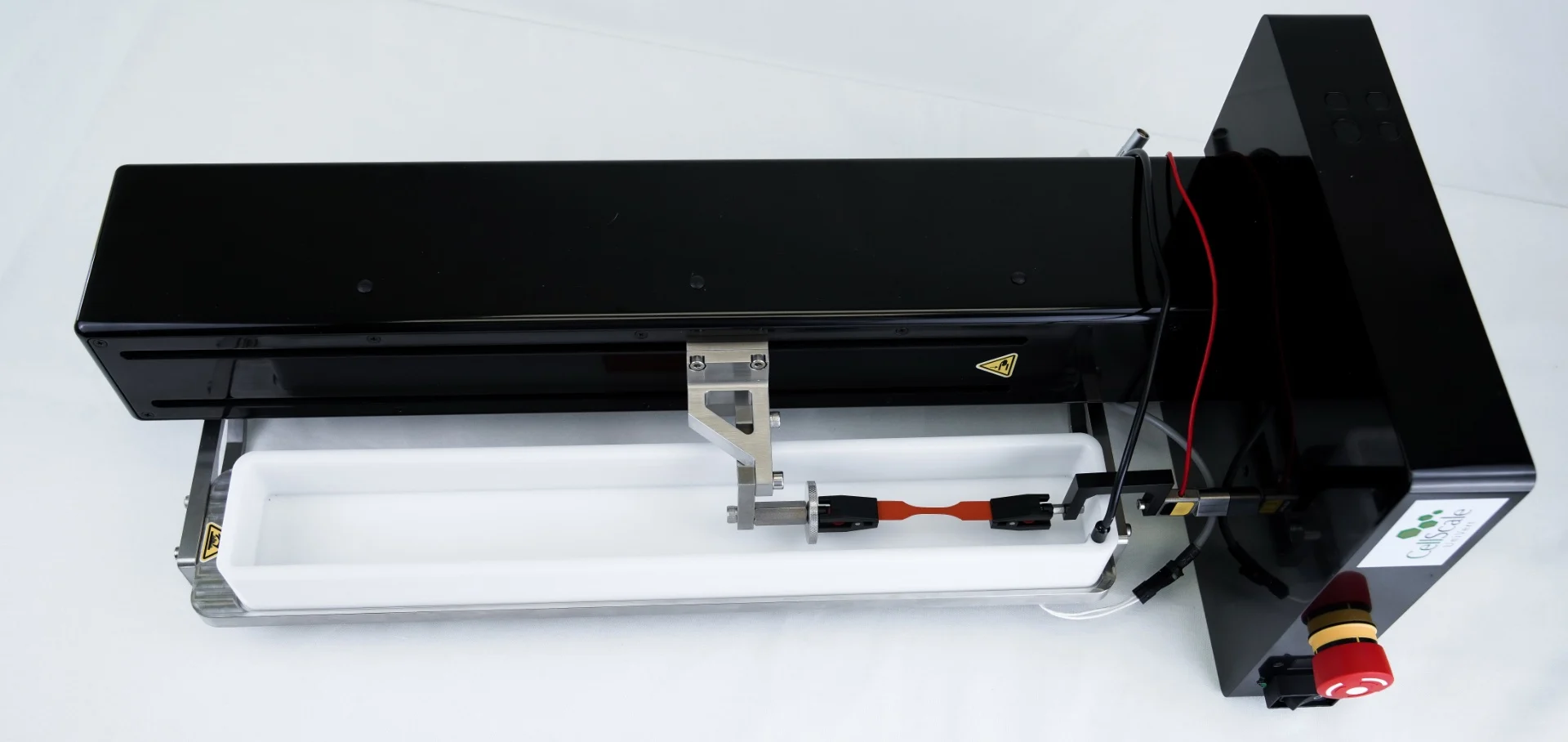
UniVert
Used for tensile and compression testing of scaffold biomaterials, including porous scaffolds, fibrous scaffolds, printed constructs, and composite tissue engineering materials. It is especially useful for scaffold stiffness testing, compressive modulus measurements, and failure testing across a broad force range.
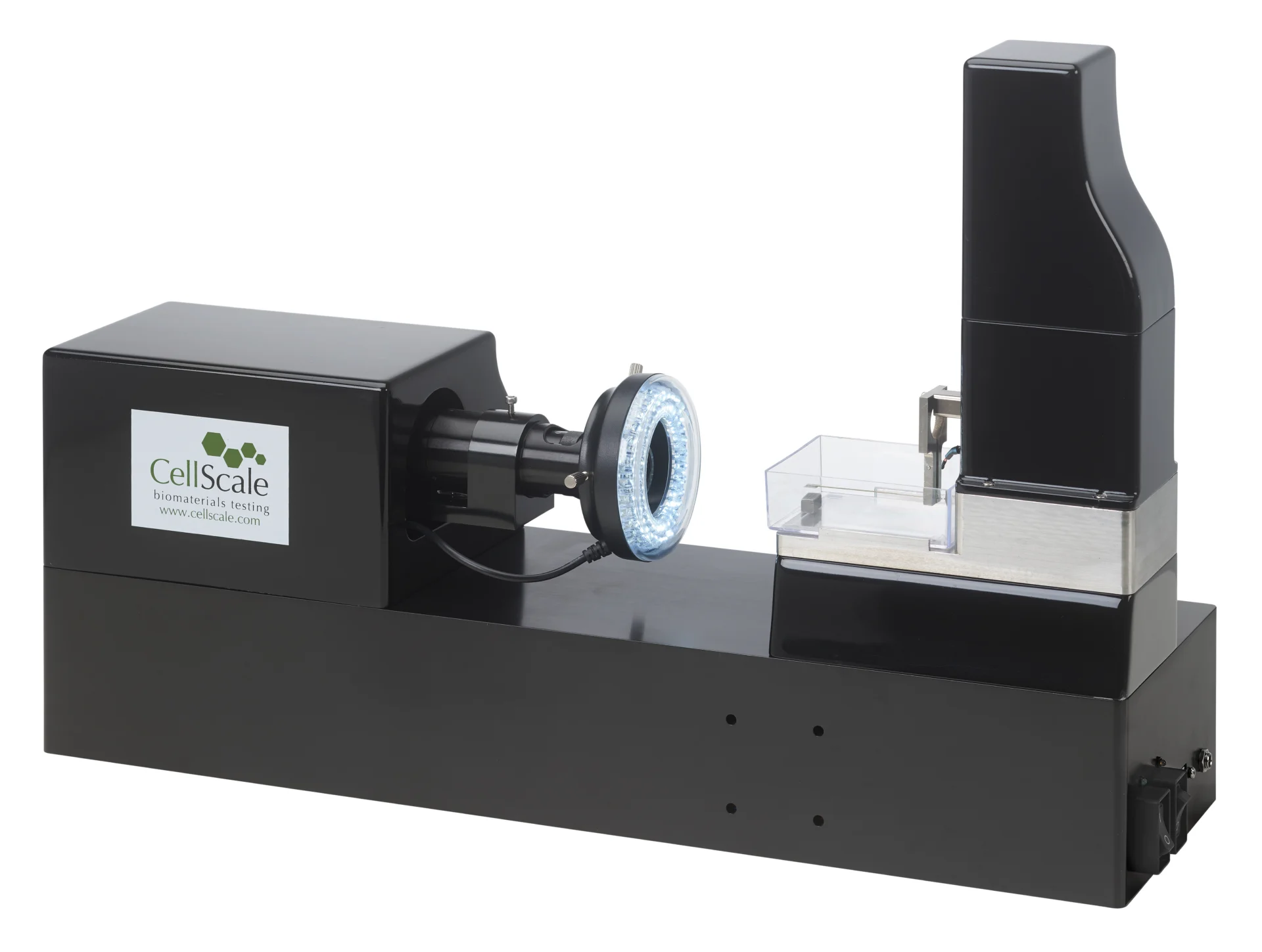
MicroTester
Ideal for low-force scaffold mechanical testing, including micro-compression, indentation, and tensile testing of small scaffolds, thin fibrous constructs, delicate hydrogel scaffolds, and localized regions within heterogeneous materials.
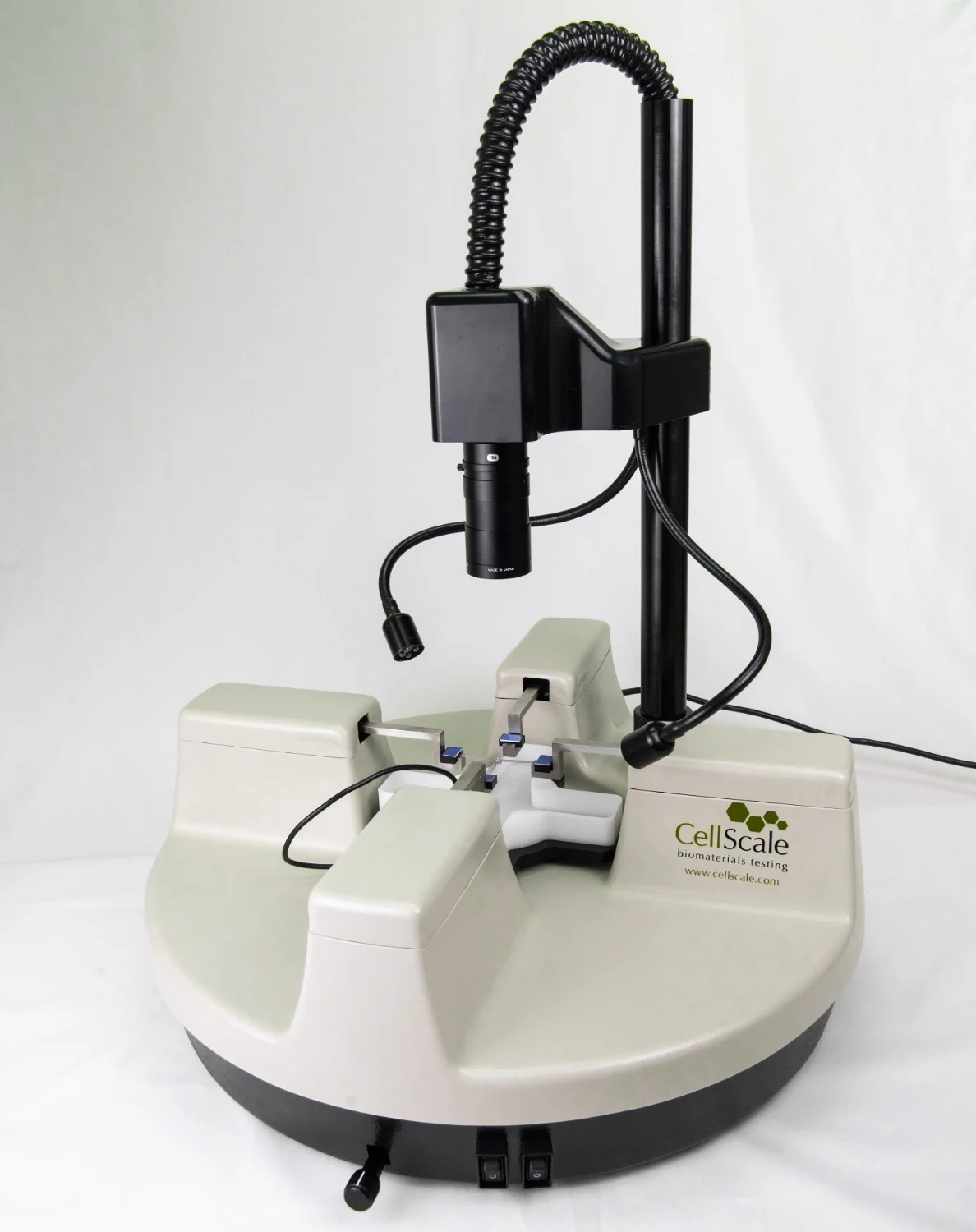
BioTester
Supports biaxial testing of planar or membrane-like scaffolds where in-plane anisotropy and multiaxial deformation are important, including thin ECM-derived scaffolds and sheet-based engineered constructs.
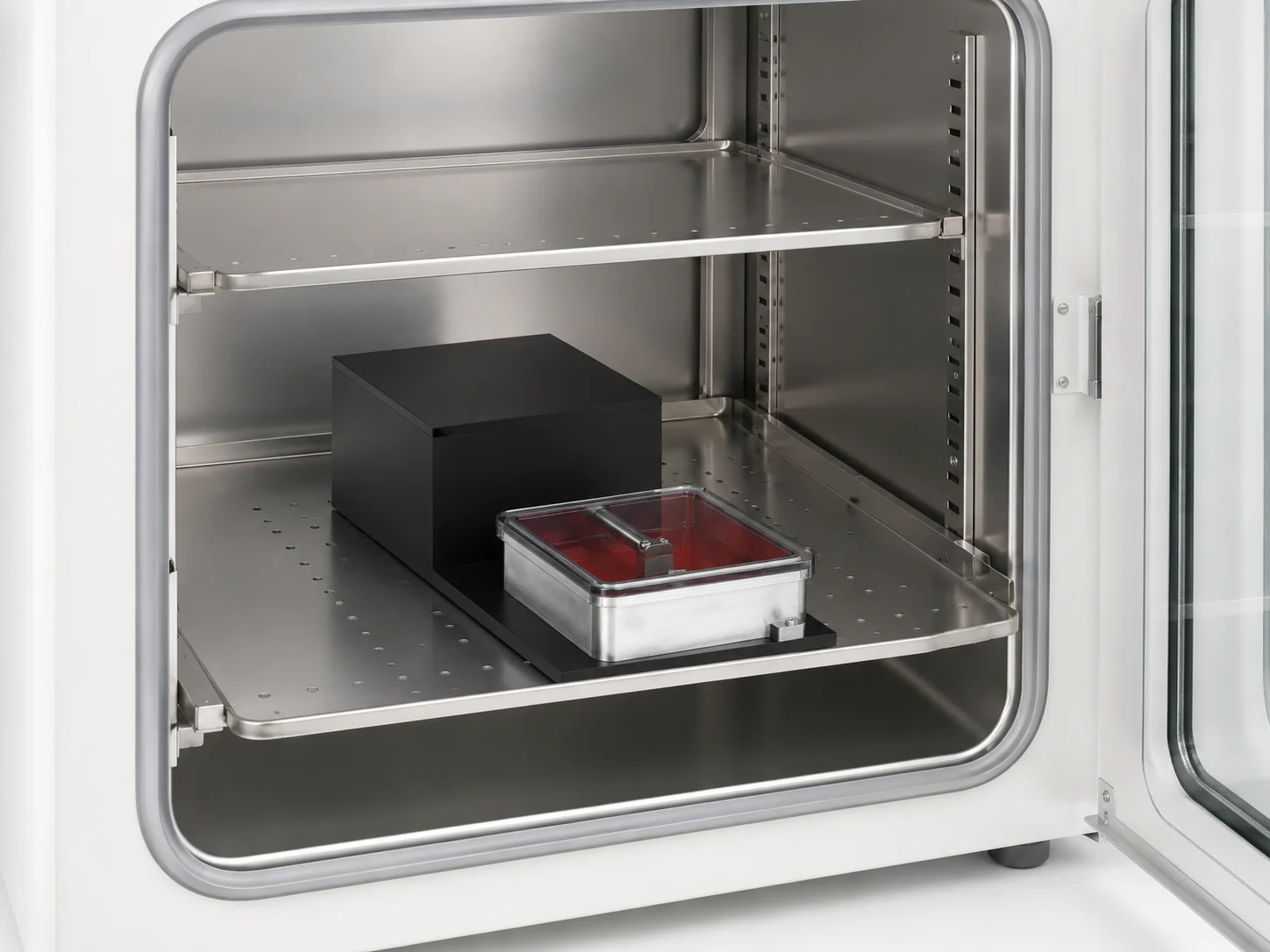
MechanoCulture T6
Applies controlled cyclic or static uniaxial tension to scaffold-based constructs for studies of mechanical conditioning, remodeling, durability, and cell-mediated mechanical evolution in a sterile 6-well culture environment.
Testing Methods for Scaffold Mechanical Characterization
Tensile Testing
Measures modulus, extensibility, and failure behaviour in fibrous or strip-form scaffolds
Compression Testing
Evaluates scaffold stiffness, pore collapse resistance, and bulk load-bearing behaviour
Indentation Testing
Maps local stiffness and spatial heterogeneity in scaffold structure
Creep Testing
Quantifies time-dependent deformation under sustained loading
Stress Relaxation Testing
Characterizes viscoelastic scaffold behaviour and load dissipation
Representative Sample Types
Porous and bulk scaffolds
- Salt leached or freeze dried porous scaffolds
- Foam and sponge-like tissue engineering scaffolds
- Mineralized porous scaffolds for bone research
Fibrous and electrospun scaffolds
- Electrospun polymer scaffolds
- Aligned fibrous scaffolds for tendon, ligament, or nerve applications
- Woven or nonwoven scaffold meshes
Hydrogel and composite scaffolds
- Hydrogel reinforced scaffolds
- Composite scaffolds with fibres, particles, or mineral phases
- Cell-compatible soft scaffolds for regenerative medicine
Printed and ECM-based scaffolds
- 3D printed lattice scaffolds
- Printed hydrogel scaffold architectures
- Decellularized tissue scaffolds
- ECM-derived scaffold biomaterials
Peer-Reviewed Publications in Scaffold Mechanical Testing
Advance Your Scaffold Mechanical Testing Research
CellScale systems support scaffold mechanical testing across porous, fibrous, hydrogel-based, printed, and ECM-derived biomaterials. Contact our team to identify the ideal testing configuration for your scaffold design, tissue engineering workflow, or regenerative biomaterials application.