

Creep Testing
For Soft Materials and Biomaterials

Creep testing measures how a material deforms over time when subjected to a constant load or stress. For soft tissues, hydrogels, and other viscoelastic biomaterials, creep testing provides critical insight into long-term mechanical behaviour that cannot be captured through instantaneous or short-duration tests. This approach enables direct measurement of time-dependent deformation under sustained loading conditions.
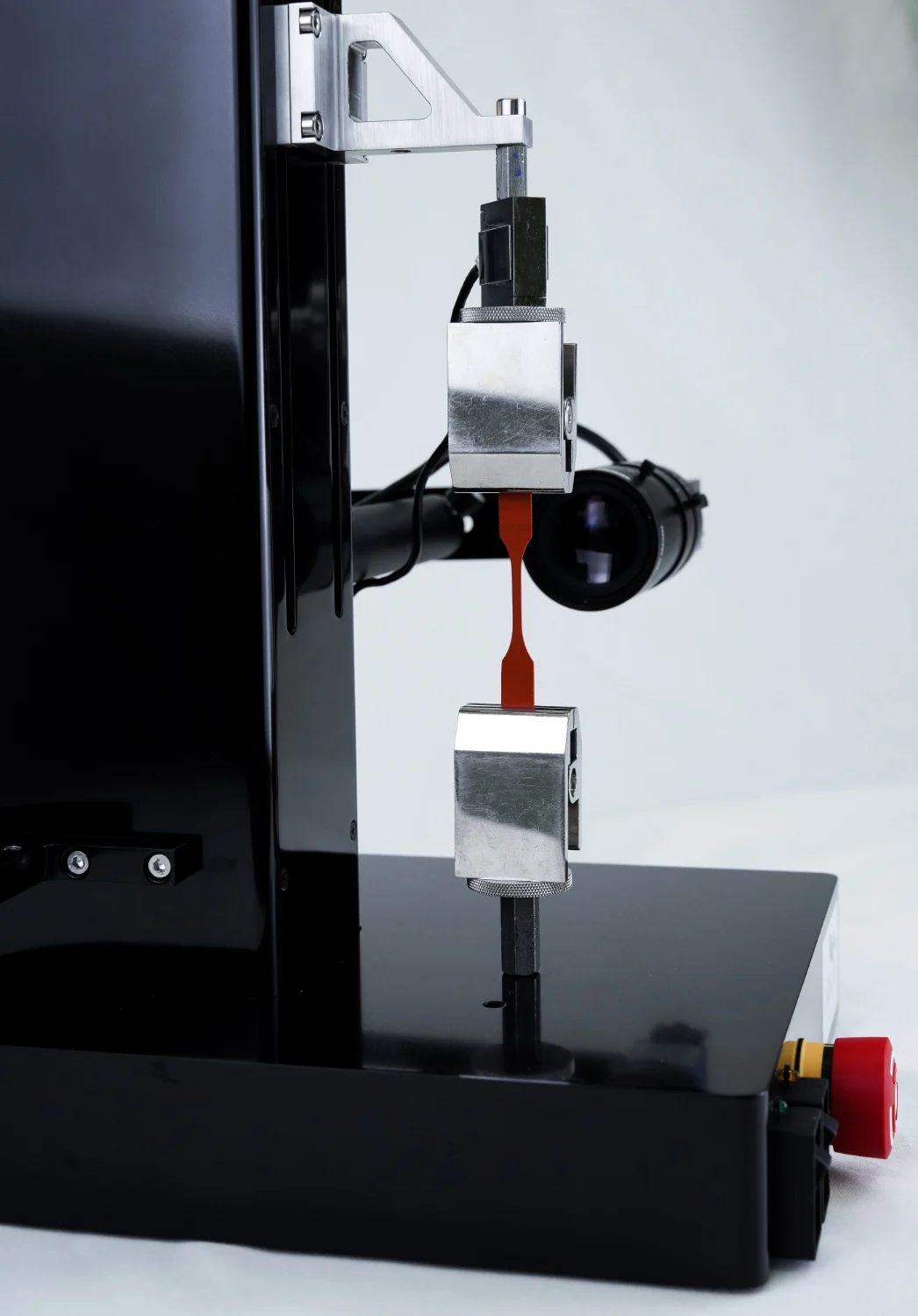
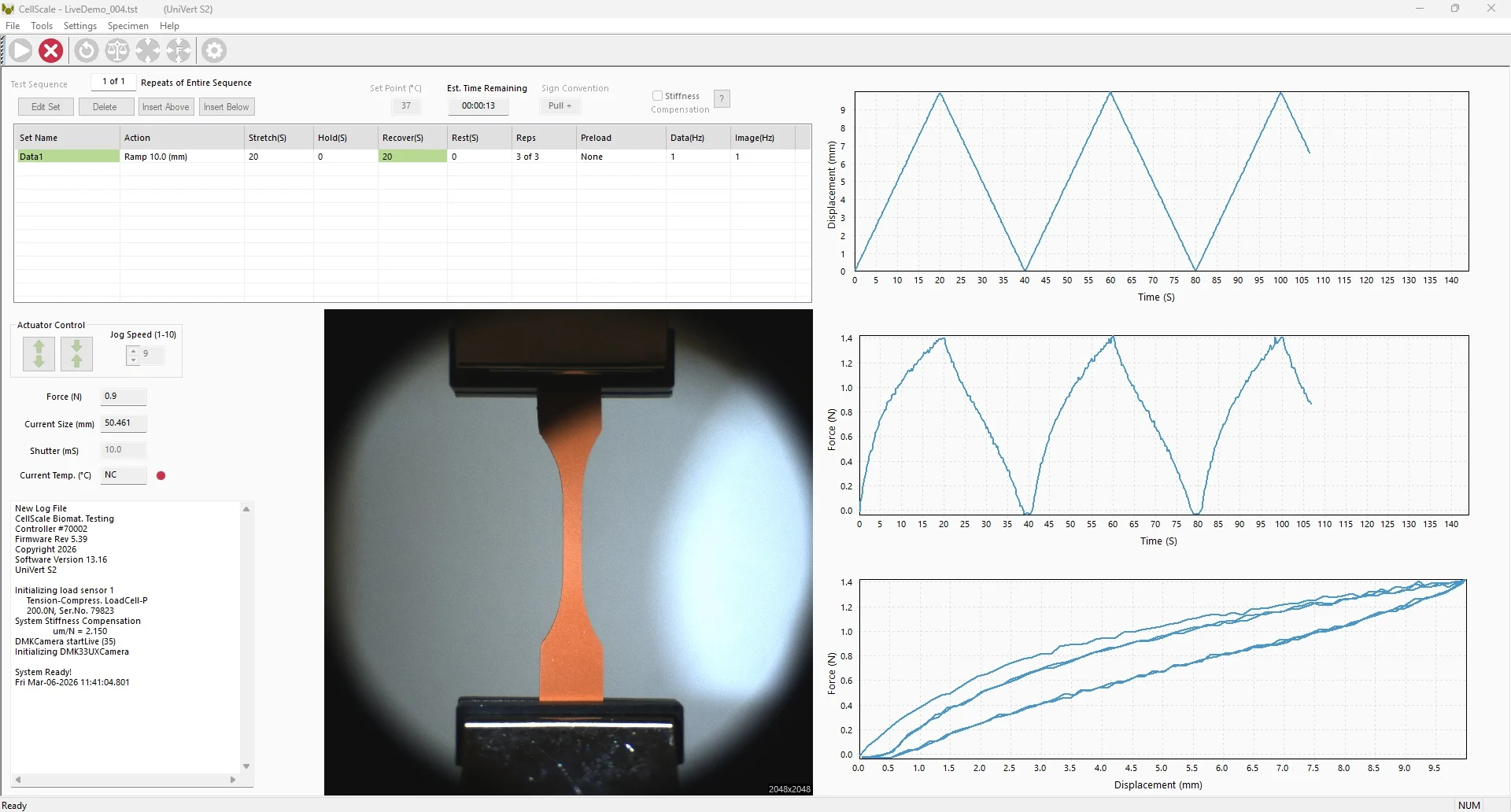

What Creep Testing Measures
Because many biological materials continue to deform under sustained loading, creep testing is essential for understanding physiological function, disease progression, and implant performance.
A creep test applies a constant force or stress to a specimen and records deformation as a function of time. In a standard creep test, deformation is tracked continuously to capture both immediate elastic strain and progressive viscoelastic deformation.
Measurement Examples
- Time-dependent strain accumulation
- Viscoelastic creep behaviour
- Primary, secondary, and tertiary creep regimes
- Deformation stability under sustained load
- Material compliance and relaxation mechanisms
- Long-term mechanical integrity
Creep testing complements traditional tensile and compression testing by revealing how materials behave under realistic, prolonged loading conditions.

Creep Testing in Biomaterials Research
Creep testing plays a key role in understanding biological and engineered materials that experience sustained loads both in vitro and in vivo. As a form of long-term mechanical testing, creep experiments reveal deformation mechanisms that emerge over extended loading durations.
- Soft tissue biomechanics
Skin, tendon, cartilage, and intervertebral disc components exhibit pronounced creep under constant stress, influencing mobility, load sharing, and injury risk.
- Hydrogel and scaffold characterization
Hydrogels and ECM-based scaffolds often undergo slow deformation under load, which affects cell behaviour, matrix remodeling, and long-term construct stability.
- Implant and device evaluation
Creep behaviour impacts the performance of soft implants, sealants, and load-bearing biomaterials designed for extended implantation.
- Disease modeling
Changes in creep behaviour are associated with fibrosis, degeneration, and aging, making creep testing valuable for studying disease-related mechanical changes.
Common Sample Types for Creep Testing
- Soft hydrogels
- Cartilage and osteochondral constructs
- Intervertebral disc AF or NP samples
- Engineered tissues and organoids
- Tissue slices and planar specimens
- Porous scaffolds and foams
- Spheroids, microgels and microtissue aggregates
- Elastomers and advanced polymers
- 3D bioprinted structures
How a Creep Test Works
In a creep test, the specimen is loaded to a prescribed force or stress level and held constant while deformation is continuously recorded over time.
Constant load and constant stress creep testing
Creep tests may be performed under force-controlled or stress-controlled conditions depending on specimen geometry and research goals. This form of constant load testing is commonly used to replicate in vivo loading conditions.
Time-dependent deformation measurement
Displacement or strain is recorded continuously, allowing characterization of both immediate elastic deformation and long-term viscoelastic creep. This response reflects viscoelastic creep, where strain continues to evolve under constant stress.
Environmental control during creep testing
Hydration, temperature, and physiological media are often critical for maintaining biomaterial integrity during long-duration creep experiments.
Imaging and non-contact strain tracking
Image-based strain measurement improves accuracy when testing soft, irregular, or heterogeneous specimens.
Recommended CellScale Instruments for Creep Testing
CellScale systems enable high-resolution creep testing for quantifying time-dependent deformation under sustained loading in soft tissues and biomaterials.
UniVert
MicroTester
Relevant Research Applications
Creep testing supports research across multiple application areas:
Featured Publications Using Creep Testing
Related Testing Methods
Creep testing is often used alongside complementary time-dependent methods.
Ready to Perform Creep Testing?
CellScale provides mechanical testing systems designed to capture time-dependent deformation in soft tissues and biomaterials under physiologically relevant conditions.
