

Peel Testing
for Bioadhesives and Soft Materials

Peel testing is used to evaluate the adhesive strength and interfacial mechanics of bonded materials by applying a controlled peeling force. In biomaterials research, peel testing is especially valuable for studying bioadhesives, tissue sealants, hydrogels, and layered soft materials, where failure often occurs at an interface rather than within the bulk material.

What Peel Testing Measures
Peel testing quantifies the resistance of an adhesive or bonded interface to separation under peeling forces.
The mechanical test provides insight into how bonded materials behave under realistic loading conditions that involve progressive separation rather than uniform tension.
Measurement Examples
- Peel strength and force per unit width
- Interfacial adhesion energy
- Steady-state peel force
- Initiation versus propagation behaviour
- Cohesive versus adhesive failure modes
- Effects of rate, hydration, and temperature
- Durability of bonded interfaces
These measurements form the basis of peel strength testing, where resistance to interfacial separation is quantified under controlled peeling conditions.
Peel Testing in Biomaterials Research
Peel testing is used in biomaterials and soft tissue research where interfacial adhesion governs performance and failure rather than bulk material strength. This approach is applied in adhesive peel testing to evaluate how bonded interfaces perform under physiologic deformation and removal.
- Bioadhesives and tissue sealants
Bioadhesive mechanical testing uses peel testing to evaluate whether adhesives maintain attachment under physiologic motion, deformation, and removal conditions relevant to surgical and regenerative applications.
- Hydrogel adhesion to tissues and substrates
Hydrogels used in wound healing, tissue interfaces, and regenerative scaffolds are often assessed for peel resistance against biological or synthetic surfaces.
- Layered soft material systems
Multilayer biomaterials, coatings, and composite structures frequently fail by delamination, making peel testing essential for interfacial characterization.
- Medical device films and membranes
Flexible films, membranes, and coatings used in wearable or implantable devices experience peel-like loading during use and removal.
- Skin and wound interface mechanics
Peel testing supports evaluation of materials designed to adhere securely to skin while minimizing trauma during removal.
Sample Types Suitable for Peel Testing
- Bioadhesives and tissue sealants
- Hydrogel adhesives
- Wound dressings and skin contact materials
- Layered polymer films
- Membranes and thin films
- Soft elastomer coatings
- Tissue bonded constructs
- Flexible medical device materials
How a Peel Test Works
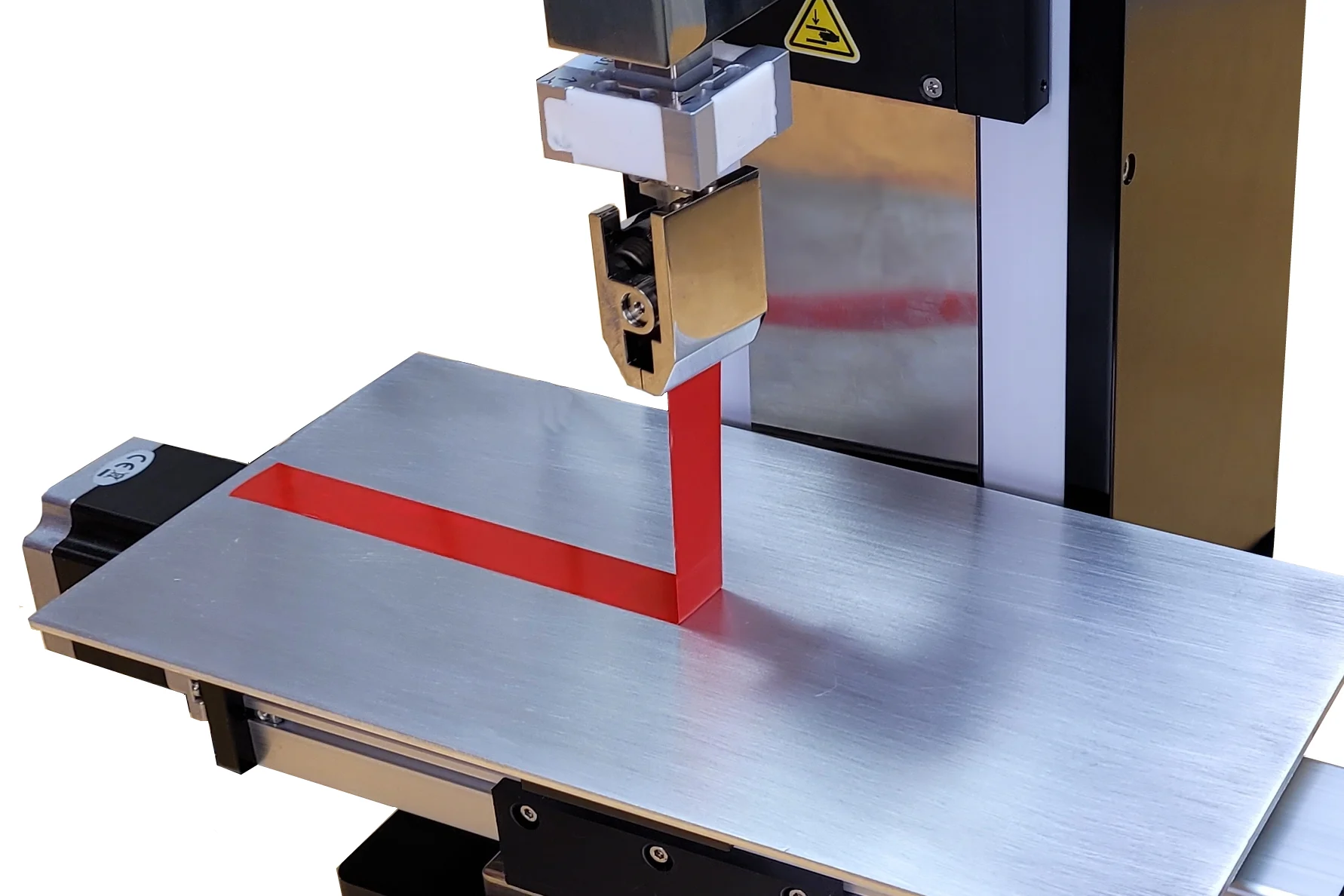
In peel testing, one bonded layer is progressively separated from another while force and displacement are recorded. The resulting force–displacement data are used to quantify peel strength and interfacial adhesion behaviour.
Peel geometry and configuration
Common configurations include 90-degree and 180-degree peel tests, which control the direction and magnitude of applied forces and influence measured peel strength.
Controlled displacement and peel rate
A constant peel rate is applied to ensure steady-state separation and repeatable measurement of peel force.
Hydrated and temperature-controlled peel testing
Peel tests can be performed in fluid or temperature-controlled environments (custom fixtures) to preserve physiologic relevance for hydrogels and biological adhesives. This setup is particularly important for performing a hydrogel peel strength test under physiologically relevant fluid conditions.
Failure mode analysis
Visual inspection and imaging distinguish between adhesive failure at the interface and cohesive failure within the bonded material.
Recommended Instrument for Peel Testing
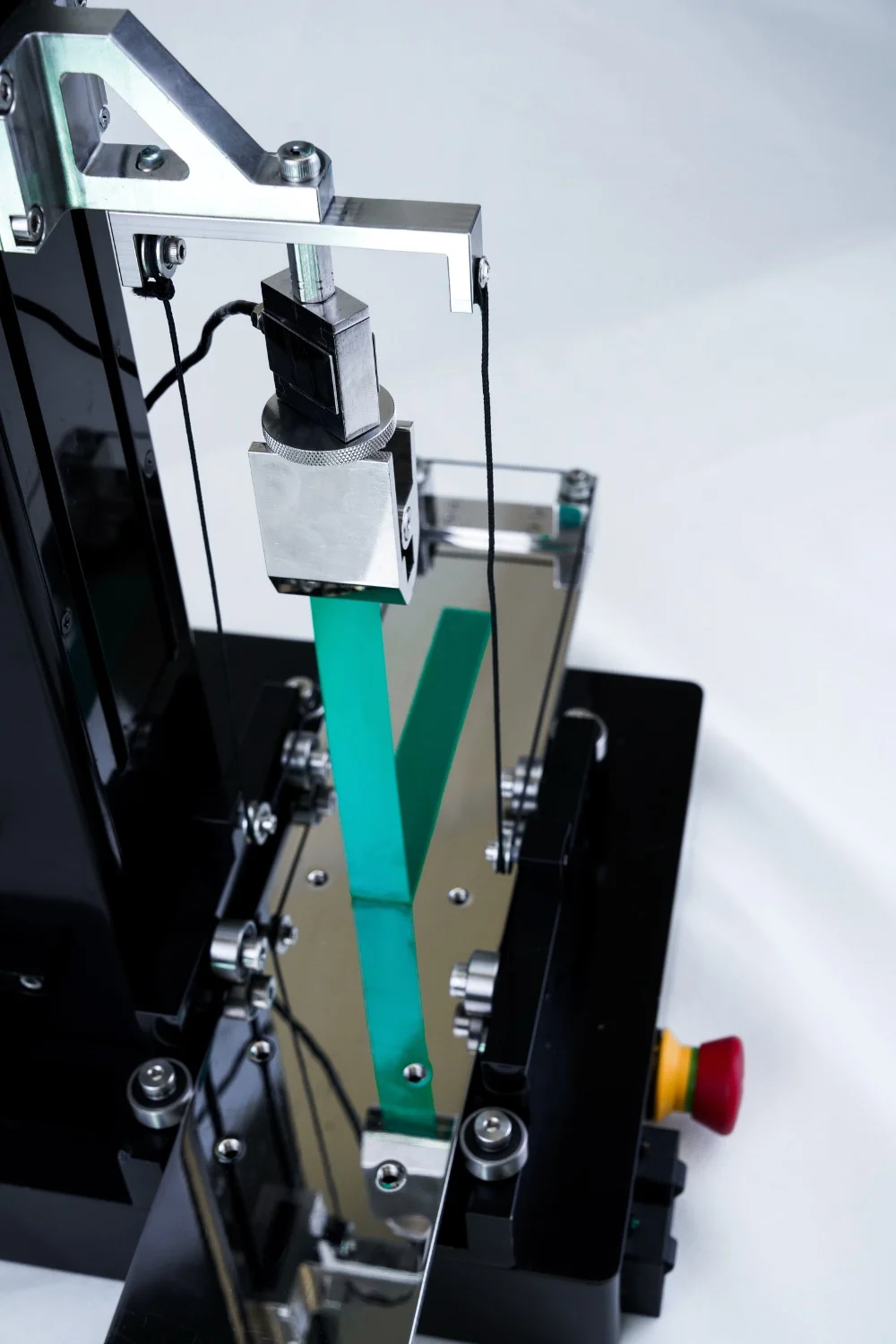
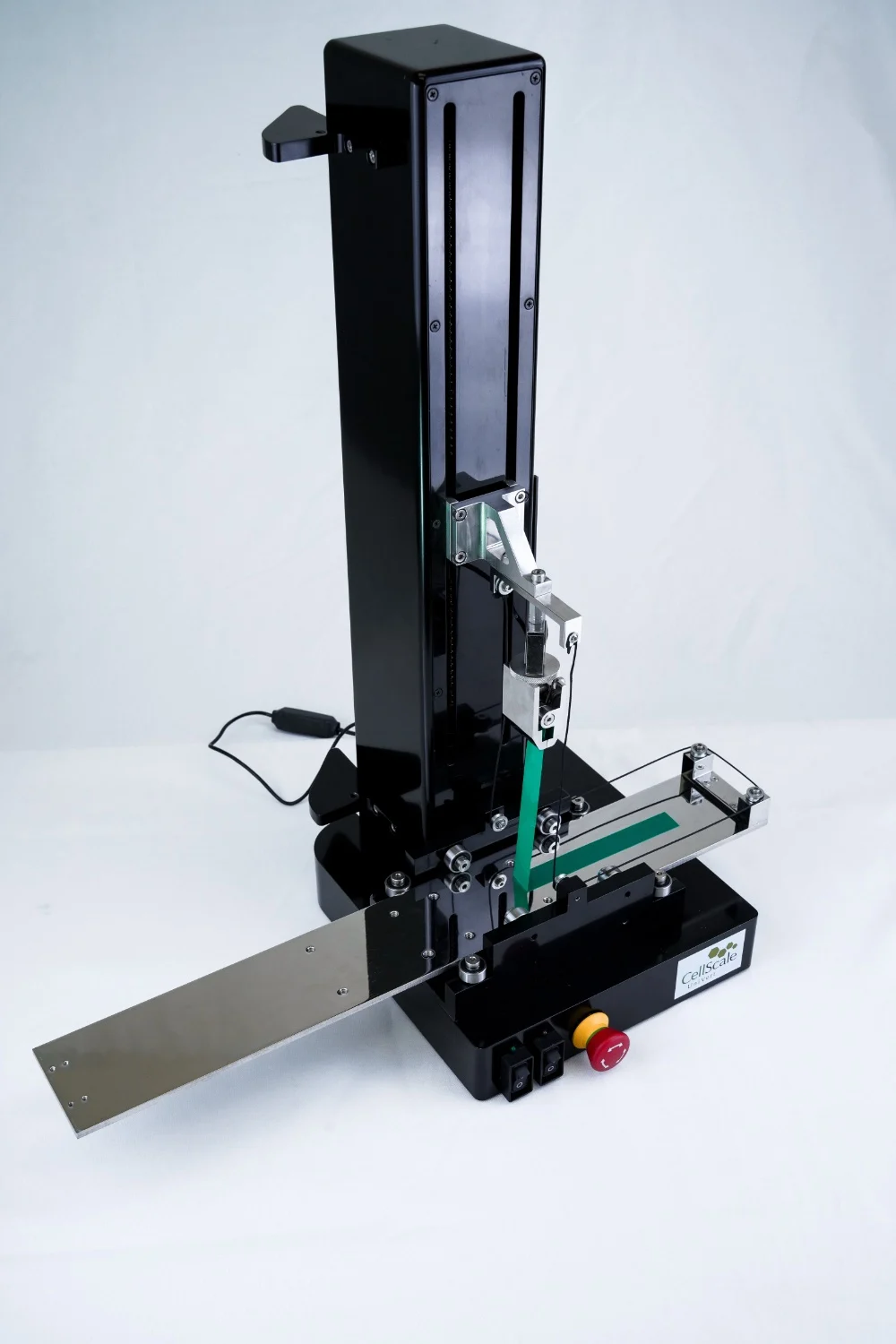
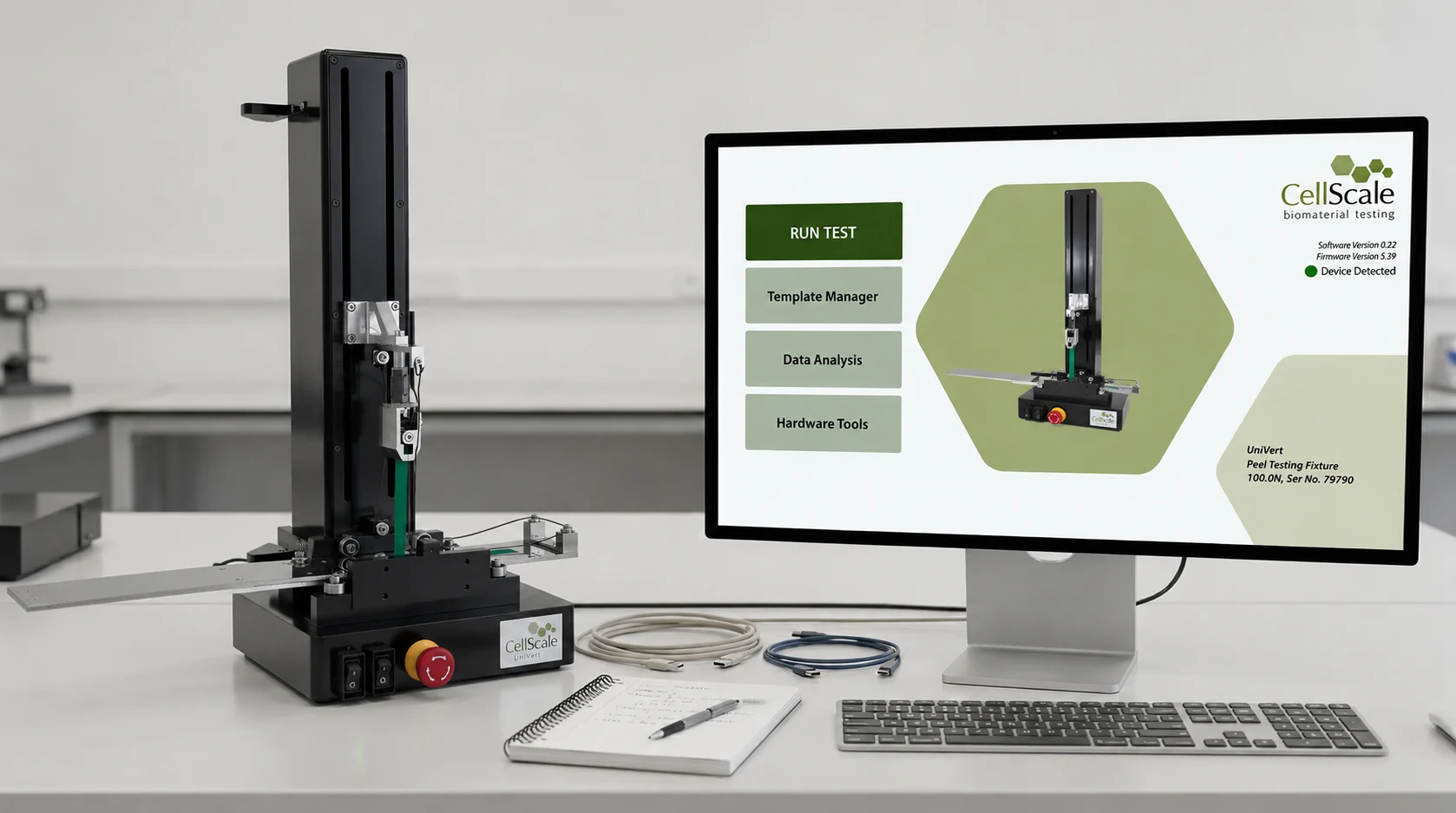
The CellScale UniVert supports peel testing with precise force control for evaluating interfacial adhesion in bioadhesives and soft materials.
Relevant Research Applications
Peel testing supports research in:
Featured Publications Using Peel Testing
Related Testing Methods
Peel testing complements other interfacial and localized failure methods.
Ready to Perform Peel Testing?
CellScale provides controlled peel testing solutions for bioadhesives, hydrogels, and soft material interfaces.
