

Shear Testing
For Soft Tissues, Hydrogels, and Biomaterials

Shear testing provides a controlled way to measure how materials respond to parallel or sliding forces, making it one of the most versatile methods for studying interfacial mechanics, adhesion strength, and shear deformation in soft tissues, hydrogels, and engineered biomaterials. Because many biological materials experience shear in vivo, shear testing is essential for understanding failure modes, interfacial bonding, and tissue level deformation behaviour.

What Shear Testing Measures
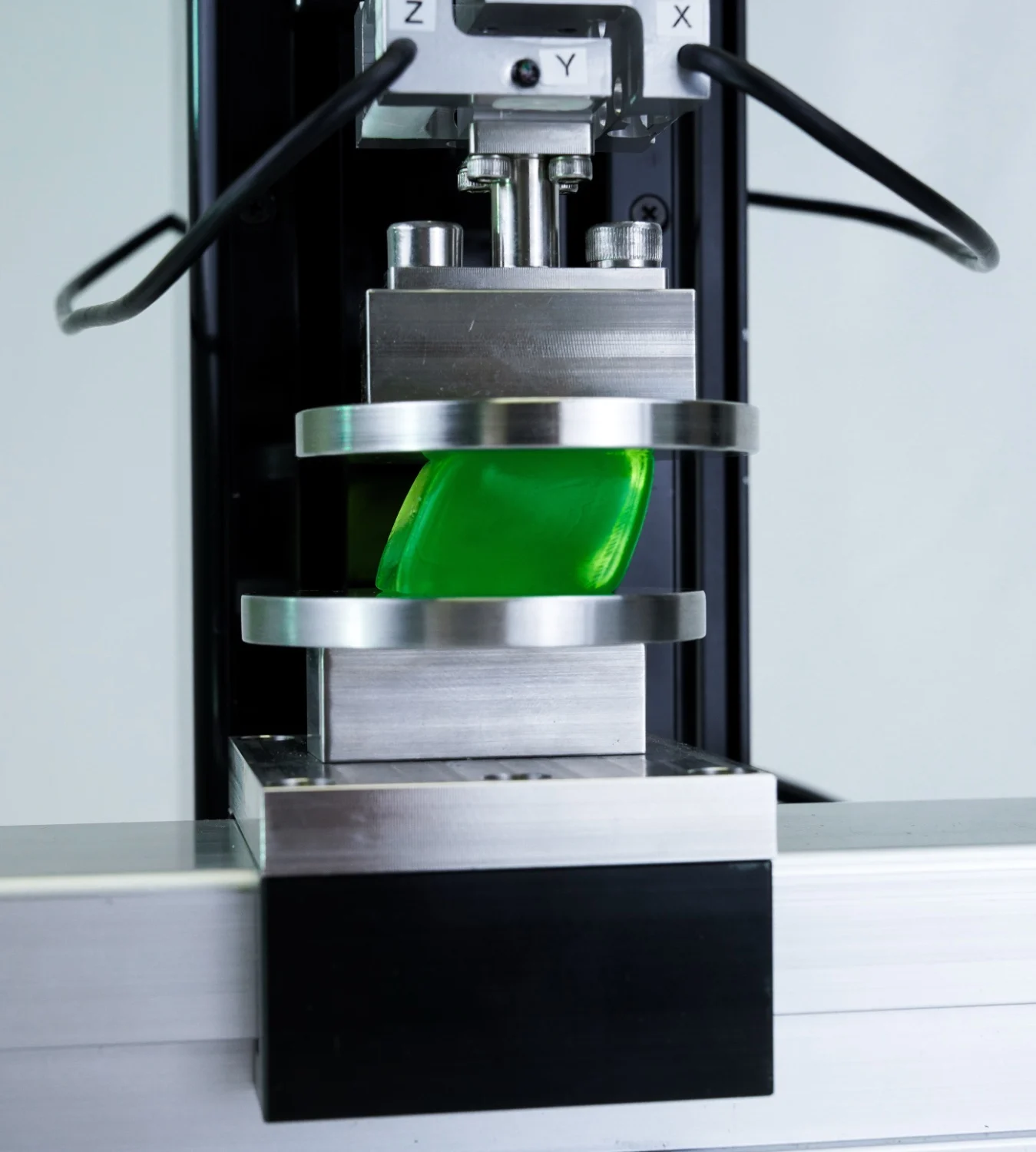
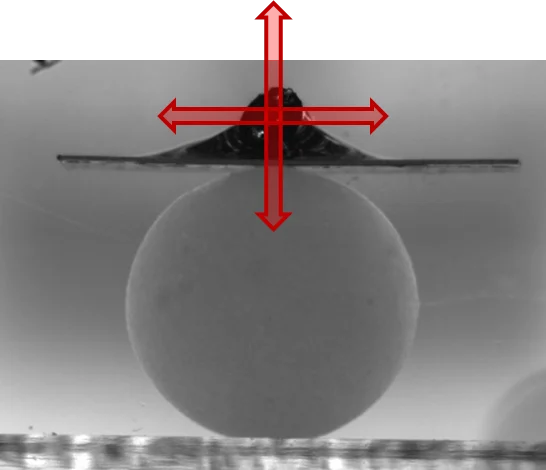
In a typical shear test, force is applied parallel to the specimen surface to quantify resistance to sliding and interfacial failure. A shear testing device applies force parallel to the material surface to quantify:
Measurement Examples
- Shear modulus
- Shear stress and shear strain
- Interfacial shear strength
- Adhesive or cohesive failure behaviour
- Viscoelastic shear response
- Slip, sliding and delamination behaviour
- Time-dependent shear deformation
Shear tests are particularly valuable for soft and compliant samples that exhibit anisotropy, layered structure, or adhesive bonding.
Shear Testing in Biomaterials Research
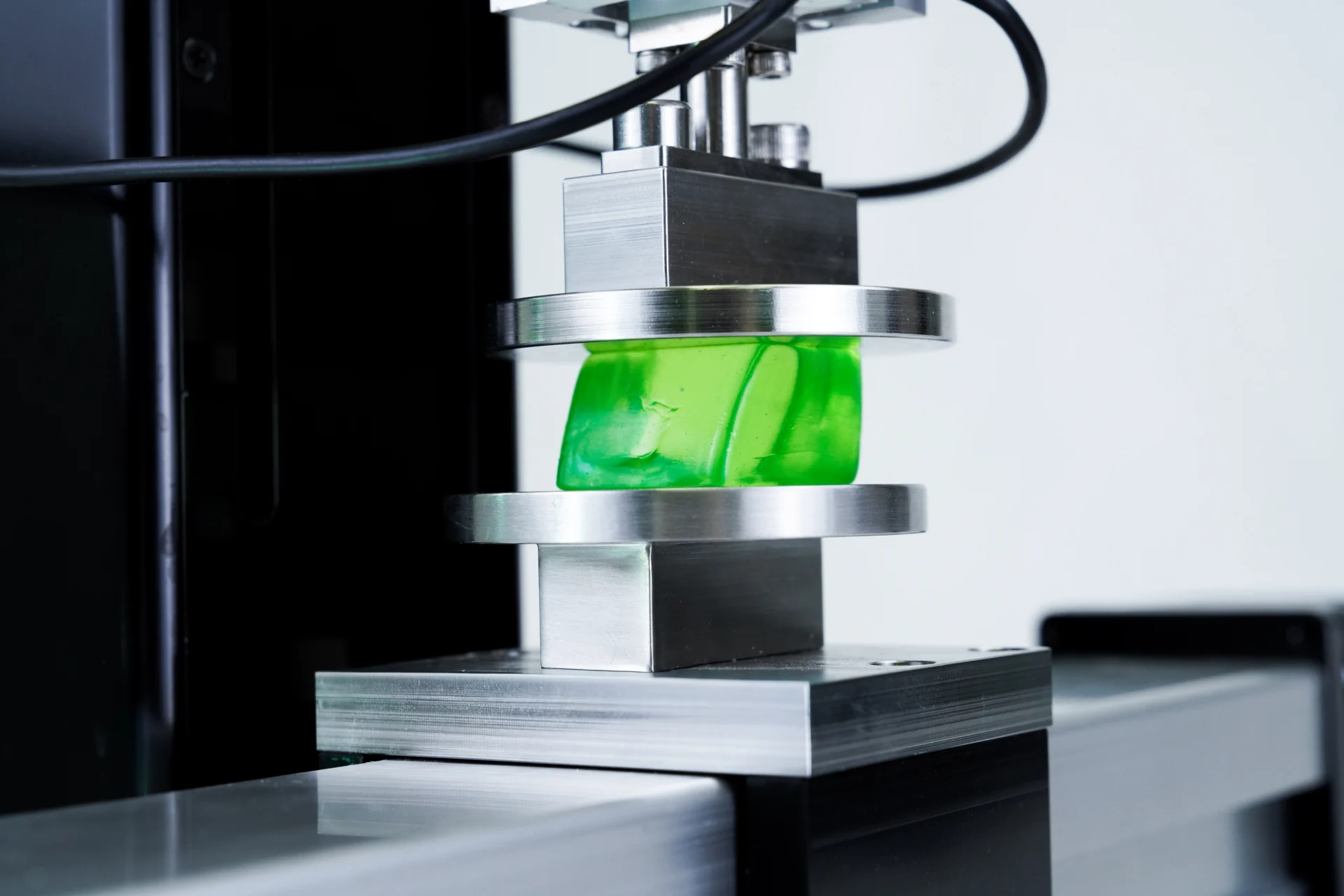
Shear testing is widely used in biomaterials and soft tissue research where materials experience sliding, interfacial loading, or layered deformation under physiologic conditions.
- Interfacial mechanics in hydrogels and scaffolds
Hydrogel–substrate bonding, scaffold coatings, and multi-material interfaces often fail in shear rather than tension or compression.
- Adhesion mechanics and lap shear behaviour
Bioadhesives, sealants, and bonded tissue interfaces are frequently evaluated using lap shear or direct shear tests to quantify interfacial strength.
- Shear deformation in soft tissues
Cartilage zones, ligaments, ECM layers, and ocular tissues experience complex shear stresses during in vivo loading.
- Cohesion and shear strength in engineered constructs
Shear testing assesses how engineered tissues resist sliding, tearing, or interlaminar failure during culture, handling, or implantation.
- Viscoelastic and time-dependent shear response
Hydrated biomaterials often exhibit rate-dependent shear behaviour that can only be captured through controlled shear testing.
Common Sample Types for Shear Testing
- Hydrogels and thin gelatin constructs
- Soft tissues with layered ECM
- Engineered tissues with anisotropic structure
- Bioadhesives and sealants
- Polymers and elastomers
- Cartilage or fibrocartilage slices
- Tendon or ligament fascicles
- Soft robotics materials and flexible composites
How a Shear Test Works
In shear testing, a specimen is subjected to controlled parallel loading while force and displacement are recorded. The resulting data quantify resistance to sliding deformation and interfacial failure.
Direct shear configurations
In a direct shear test, specimens are constrained between fixtures while lateral displacement is applied to measure shear modulus and strength.
Lap shear testing for bonded interfaces
In a lap shear test, overlapping substrates are pulled in shear to evaluate adhesive or interfacial performance until failure.
Shear ramp, hold, and viscoelastic protocols
Constant-rate shear and hold steps reveal time-dependent deformation, creep, and relaxation behaviour.
Cyclic shear and shear fatigue testing
Repeated shear loading assesses durability and damage accumulation under physiologic conditions.
Recommended CellScale Instruments for Shear Testing
The below CellScale systems support shear testing with precise force and displacement control for characterizing interfacial mechanics in soft tissues and biomaterials.
UniVert
Relevant Research Applications
Shear testing methods support numerous biomaterials and tissue engineering fields, including:
Featured Publications Using Shear Testing
Related Testing Methods
Shear testing is commonly used to study interfacial and multi-axial mechanics.
Ready to Begin Shear Testing?
CellScale instruments provide controlled shear testing for hydrogels, adhesives, engineered tissues, and advanced biomaterials.