

Lung Tissue Biomechanics
and Pleural Membrane Testing

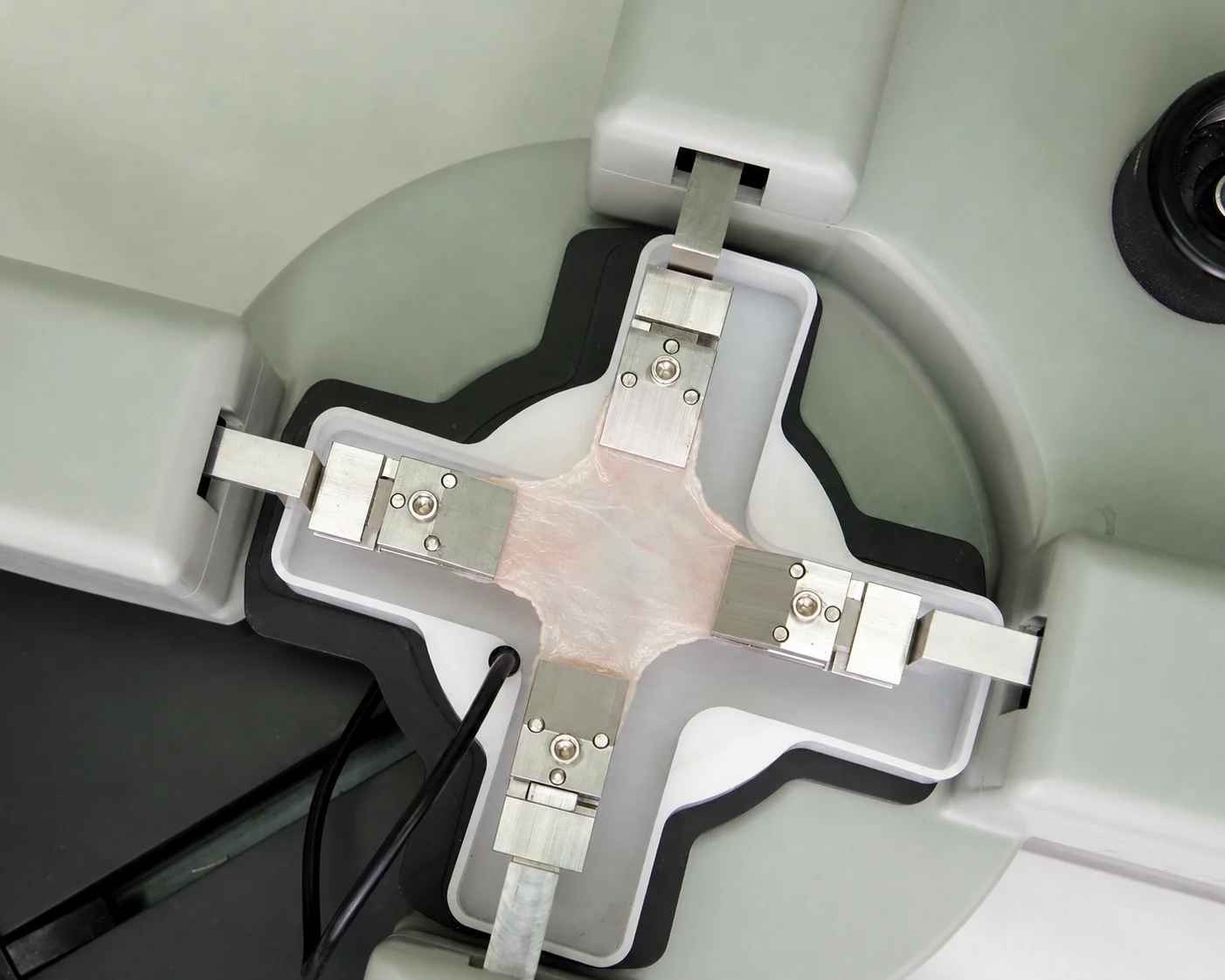
Overview of Lung and Pleural Tissue Mechanics
Lung tissue exhibits highly nonlinear, viscoelastic behaviour due to its composite structure of elastin, collagen, airway smooth muscle and alveolar architecture. Its mechanical properties influence breathing mechanics, gas exchange efficiency and tissue response to physiologic stretch.
Pleural membranes provide a thin, compliant interface that supports smooth lung motion within the thoracic cavity. Their surface properties and mechanical integrity are essential for maintaining proper lung expansion.
- Mechanical characterization supports research in:
Quantitative data guide the design of engineered constructs and deepen understanding of respiratory tissue function and response to load.

Importance of Mechanical Testing in Respiratory Tissue Research
Mechanical evaluation is essential for understanding pleural and lung tissue biomechanics.
Researchers use these methods to:
- Measure tensile stiffness and extensibility of parenchymal or airway tissues
- Quantify biaxial behaviour in thin lung or pleural membranes
- Map local stiffness with indentation for alveolar or engineered tissues
- Assess viscoelastic relaxation and rate dependent mechanics
- Characterize shear and interface behaviour of respiratory tissues
- Evaluate engineered constructs for lung tissue regeneration
- Study mechanobiology of epithelial and fibroblast layers under stretch
These results help characterize structural behaviour, guide biomaterial development, and support engineered lung tissue research.
Recommended CellScale Instruments for Lung Tissue Biomechanics Research
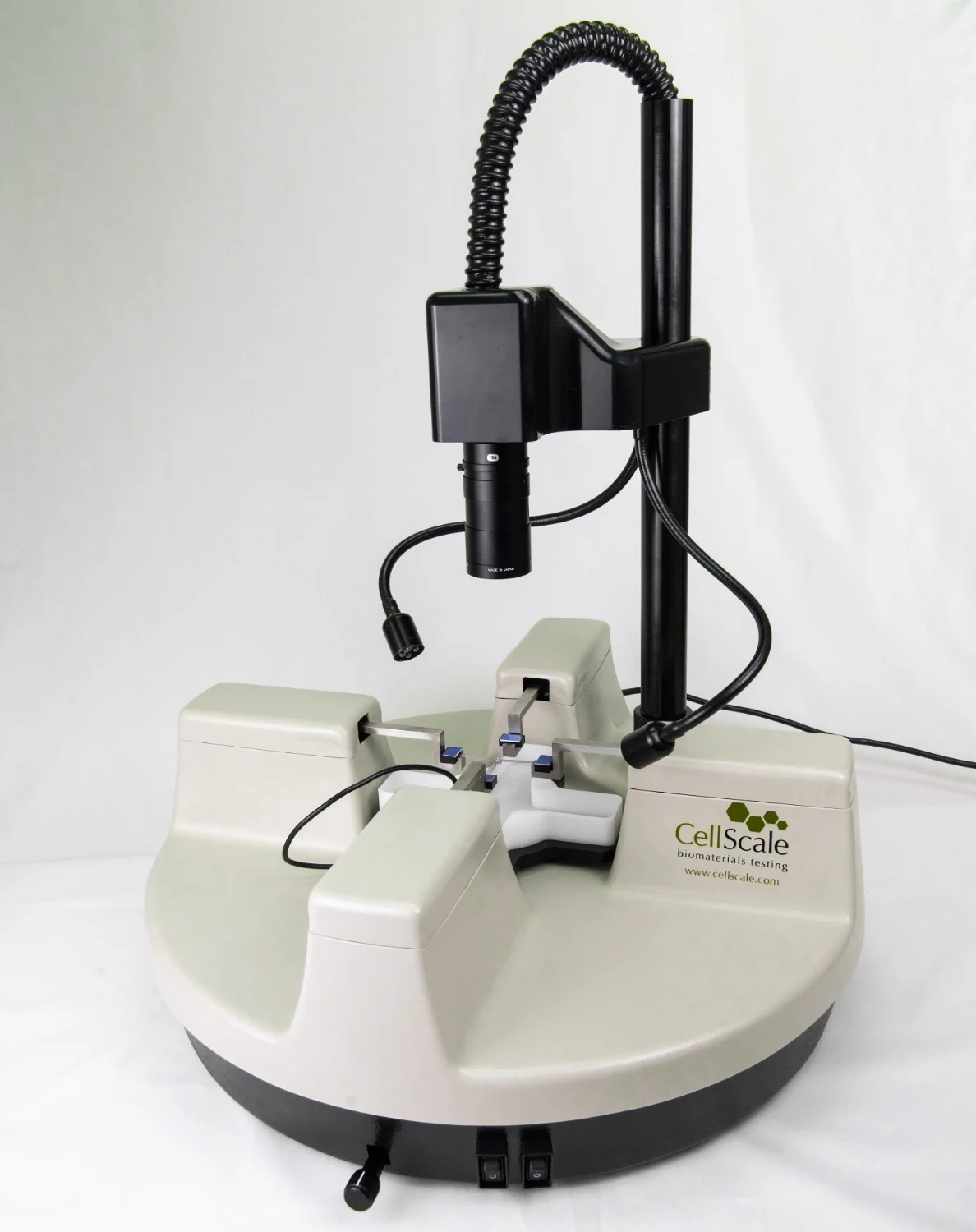
BioTester
Used for biaxial testing of pleural membranes and thin parenchymal tissue sections where anisotropy and multiaxial properties are important.
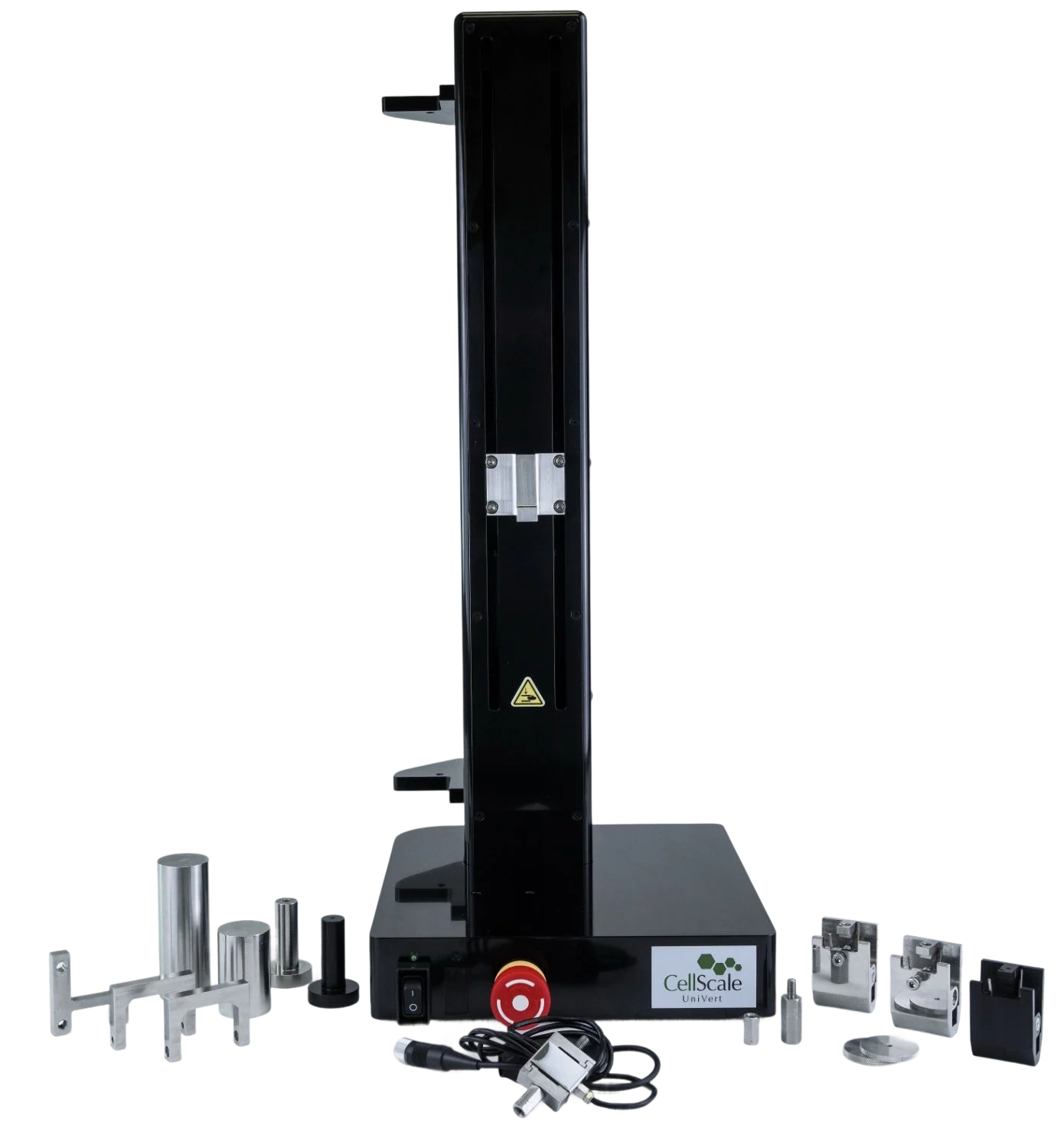
UniVert
Provides tensile, compression and shear testing for lung tissue slices, airway samples and engineered respiratory constructs.
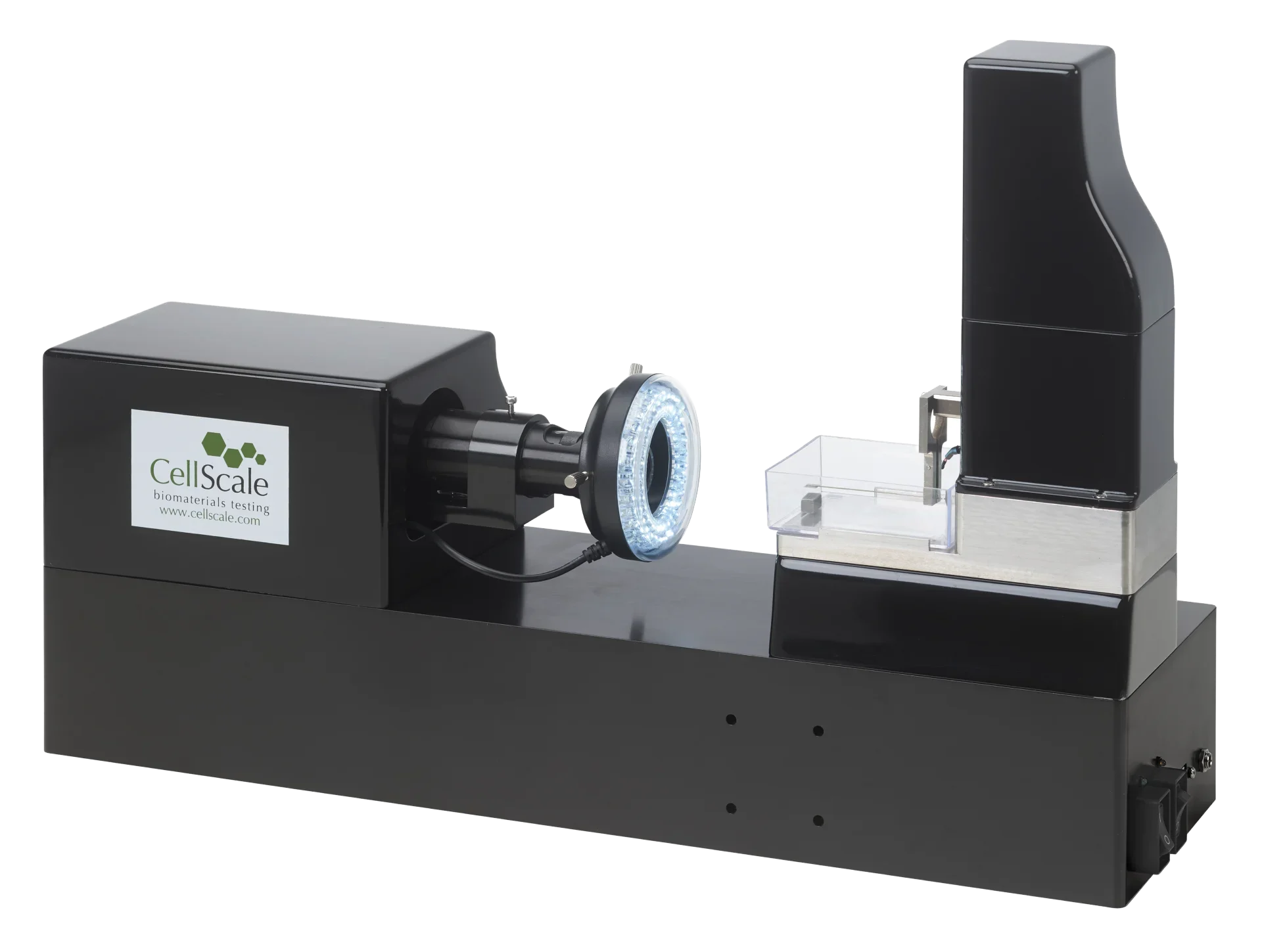
MicroTester
Suitable for micro scale indentation and mechanical mapping of alveolar regions, engineered lung scaffolds and thin tissue layers.
Testing Methods for Lung and Pleural Tissue Biomechanics
Tensile Testing
Evaluates tensile properties of lung tissues under physiological conditions
Indentation Testing
Measures local stiffness and heterogeneity in thin tissues or constructs
Stress Relaxation Testing
Measures time-dependent stress dissipation under constant deformation
Compression Testing
Characterizes bulk deformation of lung slices or scaffold structures
Shear Testing
Assesses interface behaviour and tissue sliding properties
Lung Tissue Biomechanics Representative Sample Types
Native tissues
- Lung parenchyma slices
- Airway cartilage or smooth muscle regions
- Pleural membranes
- Decellularized lung matrices
Engineered constructs
- Alveolar inspired hydrogels
- Engineered epithelial barrier models
- 3D printed lung scaffolds
- Composite respiratory tissue models
Mechanobiology models
- Cyclic stretch-induced epithelial and fibroblast cultures
- Mechanotransduction studies in lung cell layers
- Remodeling models during inflammatory or fibrotic conditions
Publications Related to Pulmonary Biomaterials Research

Advance Your Lung and Respiratory Biomechanics Research
CellScale instruments provide precision testing for lung tissue, pleural membranes, and engineered respiratory constructs. Contact our team to identify the best platform for your application.