

Skeletal Muscle Biomechanics
and Volumetric Muscle Loss


Overview of Skeletal Muscle Biomechanics and Volumetric Muscle Loss
Skeletal muscle exhibits highly nonlinear, anisotropic, and time-dependent mechanical behaviour driven by aligned fiber architecture and active contractile function. Muscle mechanics play a critical role in force transmission, energy absorption, and coordination with surrounding connective tissues.
- Mechanical testing supports research in:
Volumetric muscle loss (VML) results from traumatic injury or surgical resection and is characterized by permanent loss of muscle mass and impaired functional recovery. Muscle tissue engineering strategies aim to restore structure and mechanics through engineered scaffolds, cell-laden constructs, and regenerative conditioning protocols.
Importance of Mechanical Testing in Skeletal Muscle Research
Across published skeletal muscle biomechanics and VML studies, mechanical testing is used to quantify tensile properties, fatigue resistance, and viscoelastic behaviour in native muscle tissue, engineered muscle constructs, and regenerating systems. Quantitative mechanics provide essential benchmarks for evaluating regenerative success.
Researchers use these methods to:
- Quantify passive and active mechanical properties of muscle tissue
- Assess mechanical deficits following volumetric muscle loss
- Evaluate stiffness and durability of engineered muscle constructs
- Measure fatigue behaviour under repeated loading
- Compare regeneration strategies using quantitative benchmarks
- Study mechanotransduction pathways influencing muscle repair
- Generate inputs for musculoskeletal computational models
Mechanical characterization helps ensure that regenerative muscle systems restore both structure and function.
Recommended CellScale Instruments for Skeletal Muscle Mechanical Testing
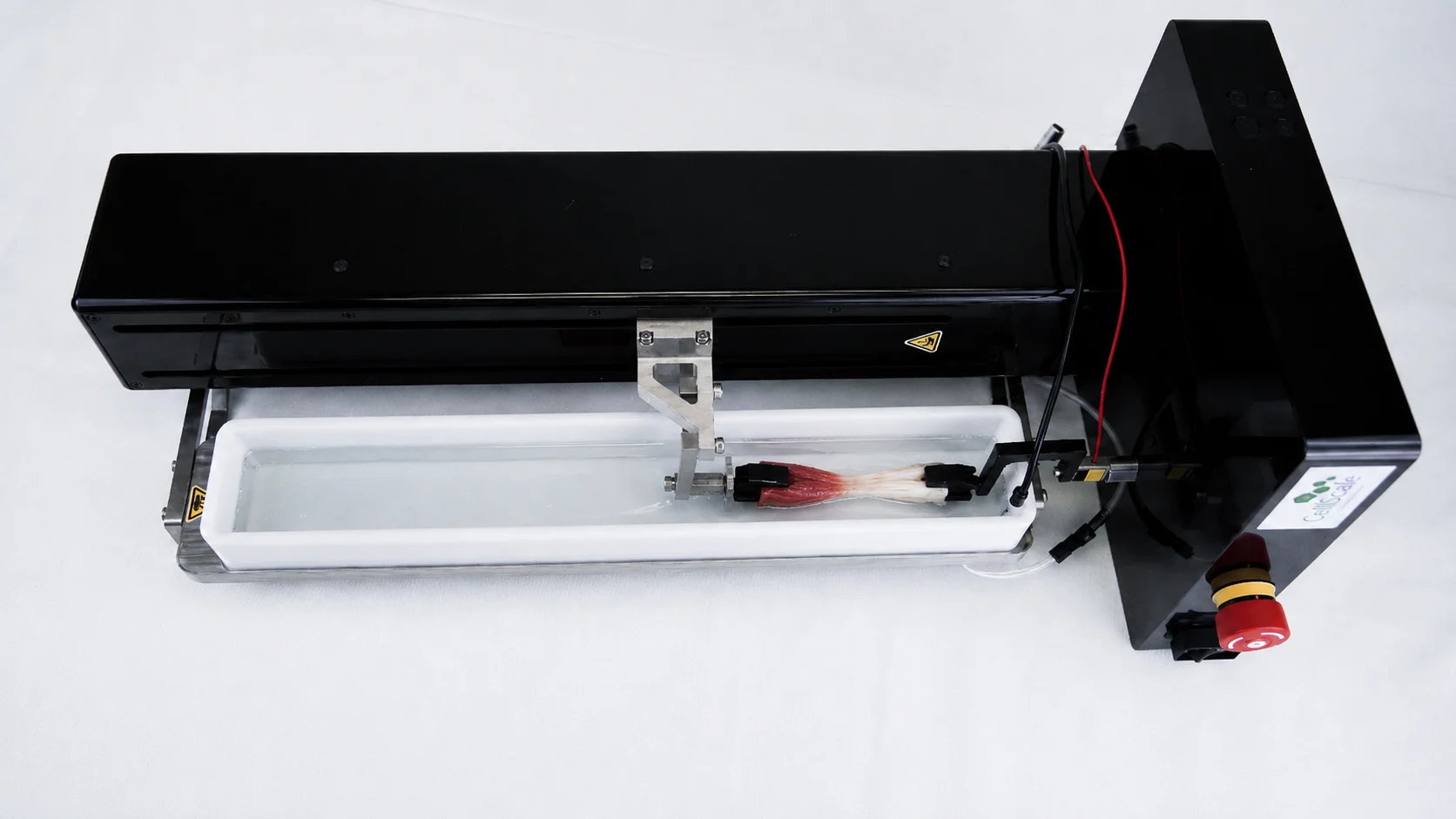
UniVert
Used for uniaxial tensile and compression testing of skeletal muscle strips, engineered muscle constructs, and regeneration scaffolds.
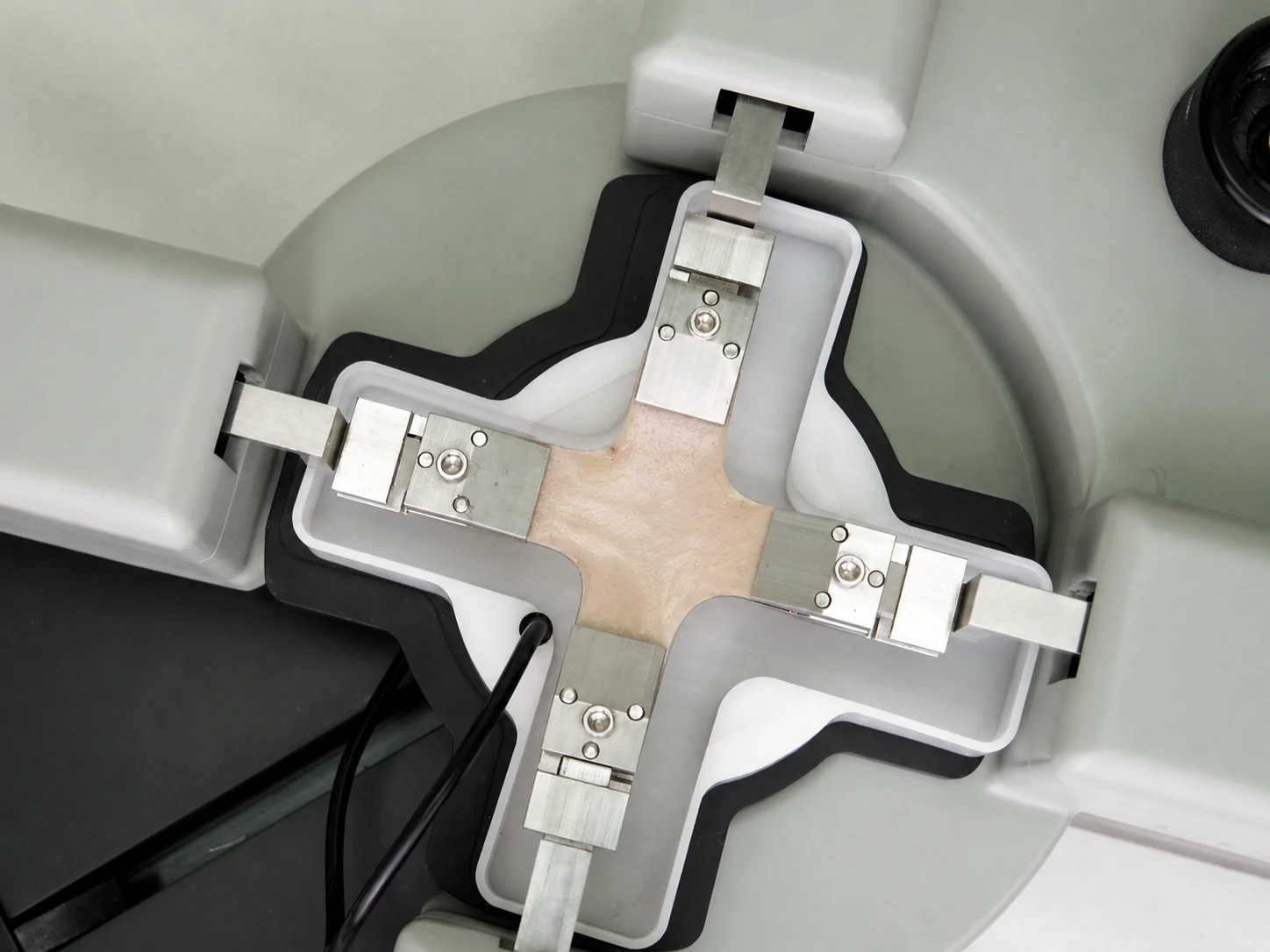
BioTester
Supports biaxial testing of planar muscle constructs and composite tissues where in-plane mechanics are relevant.
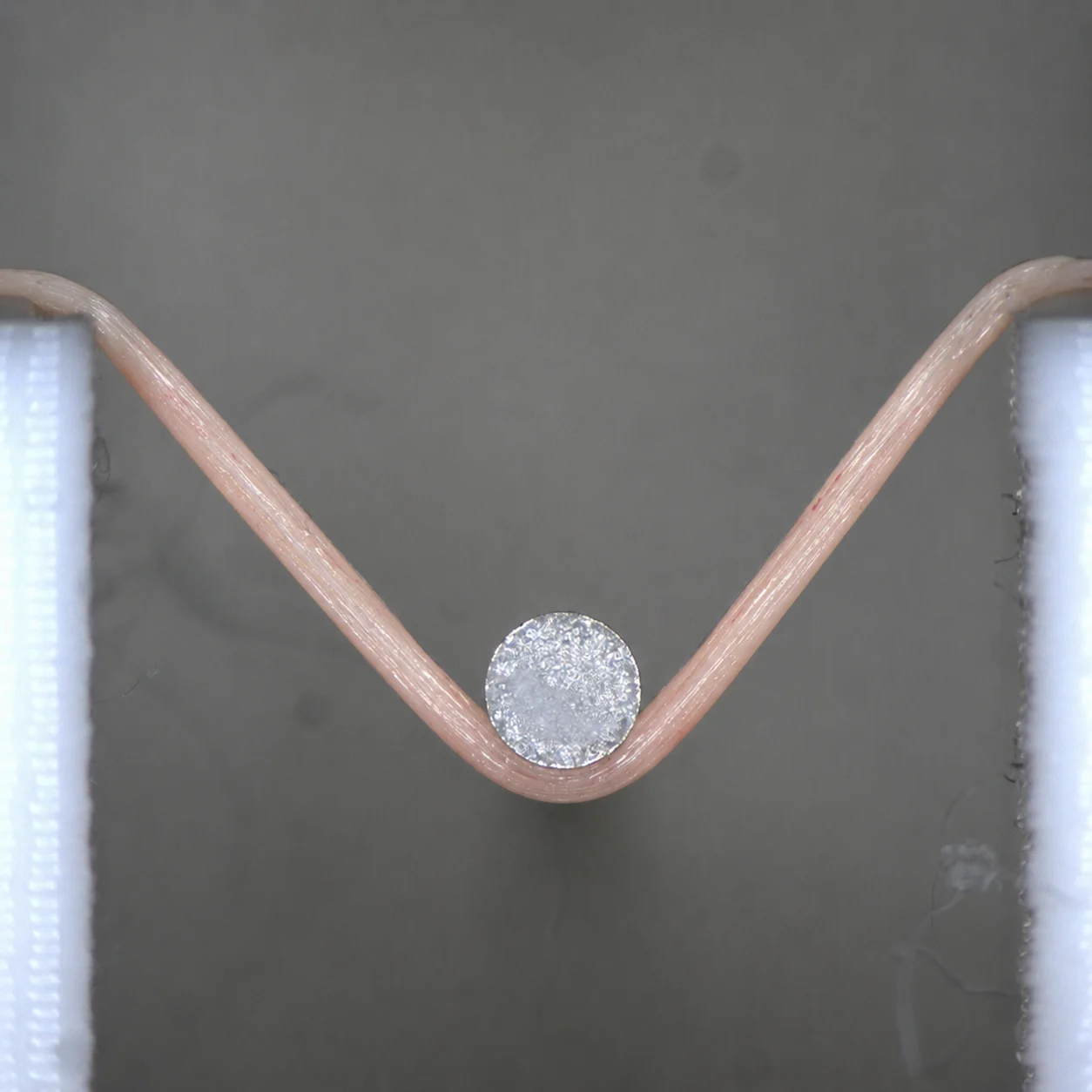
MicroTester
Ideal for low-force mechanical testing of small muscle samples, microtissues, and cell-laden muscle constructs.
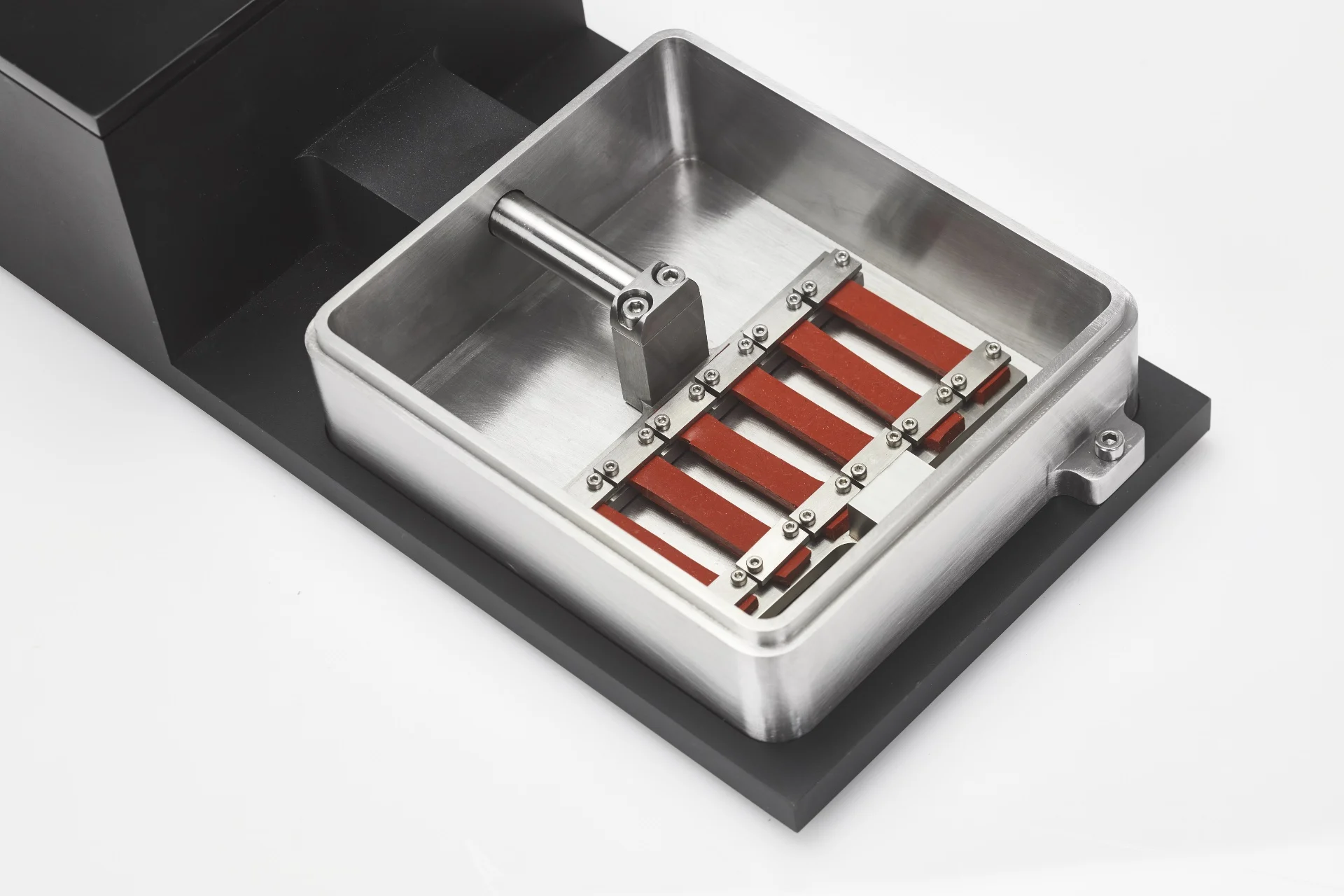
MechanoCulture T6
Applies cyclic tensile loading to engineered muscle tissues to study conditioning, alignment, and functional maturation.
Testing Methods for Skeletal Muscle and Volumetric Muscle Loss
Tensile Testing
Evaluates stiffness, extensibility, and failure behaviour of muscle tissue
Ultra Low Force Testing
Enables sensitive measurement of delicate muscle constructs
Fibre Testing
Characterizes mechanical properties of aligned muscle fibres and engineered myofibre constructs
Creep Testing
Relevant to long-term load-bearing performance
Hydrated & Temperature-Controlled Testing
Preserves physiologic conditions critical for muscle mechanics
Representative Sample Types in Skeletal Muscle Biomechanics
Native skeletal muscle tissues
- Muscle fibre bundles
- Muscle fascicles
- Passive muscle tissue samples
Engineered muscle and regeneration constructs
- Cell-laden muscle scaffolds
- Aligned fibrous muscle constructs
- Hydrogel-based muscle regeneration matrices
VML and injury models
- Volumetric muscle loss defects
- Mechanically conditioned regeneration systems
- Scaffold integration and remodeling models
Mechanobiology and conditioning systems
- Cyclically loaded muscle constructs
- Stretch-induced maturation models
- Fatigue and durability testing setups
Recent Publications in Skeletal Muscle Biomechanics

Advance Your Skeletal Muscle and Volumetric Muscle Loss Research
CellScale systems support skeletal muscle biomechanics, volumetric muscle loss research, and regenerative muscle testing requiring precise force control and physiologic loading conditions. Contact our team to identify the optimal platform for your muscle mechanics workflow.