





MechanoCulture TR
Hydrostatic Pressure Stimulation System

An incubator-ready hydrostatic pressure stimulation system for tissue and cell culture research
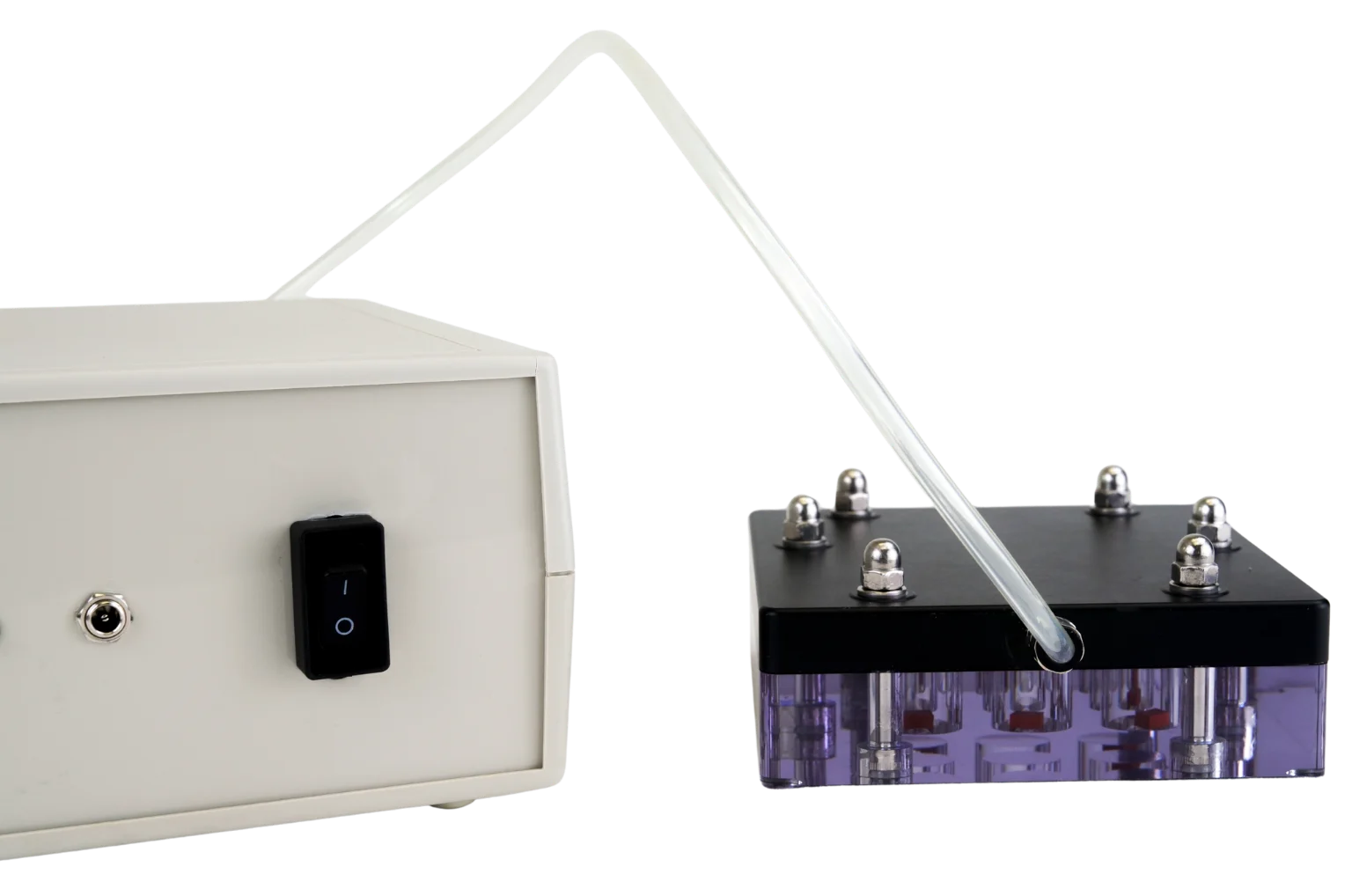
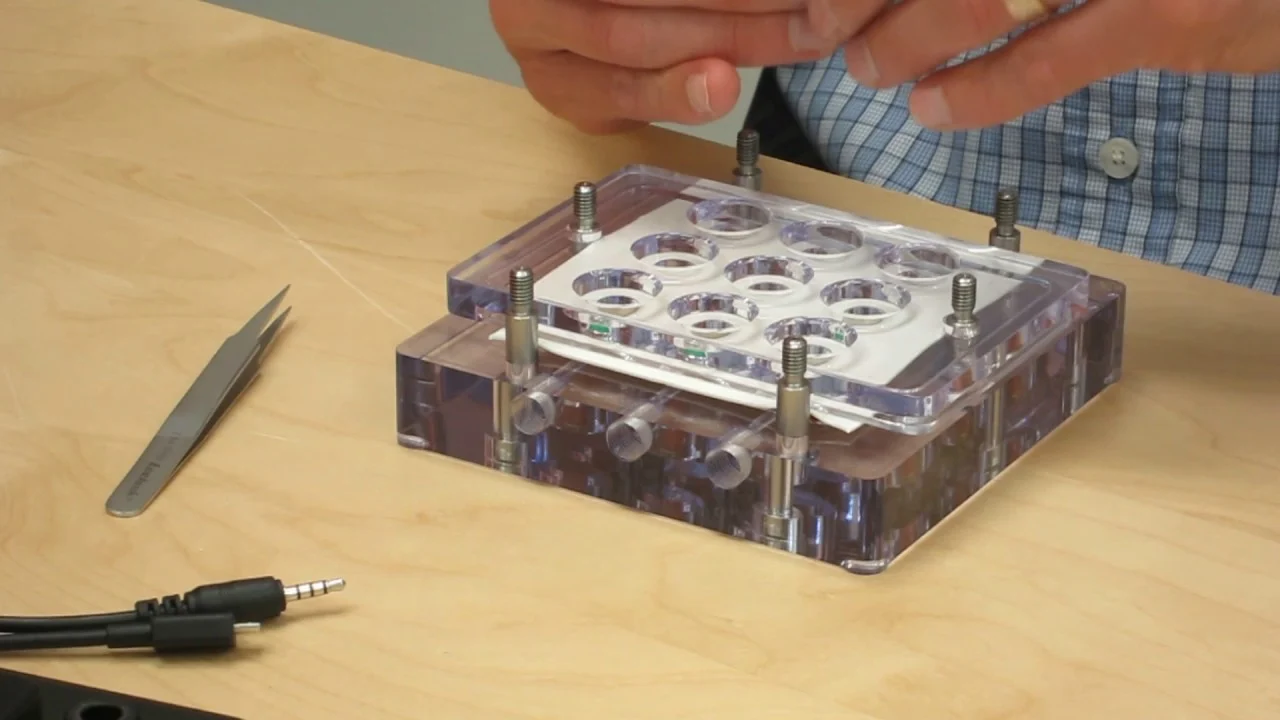
The MCTR bioreactor setup with control box

Hydrostatic Pressure Bioreactor for Hydrostatic Compression Stimulation

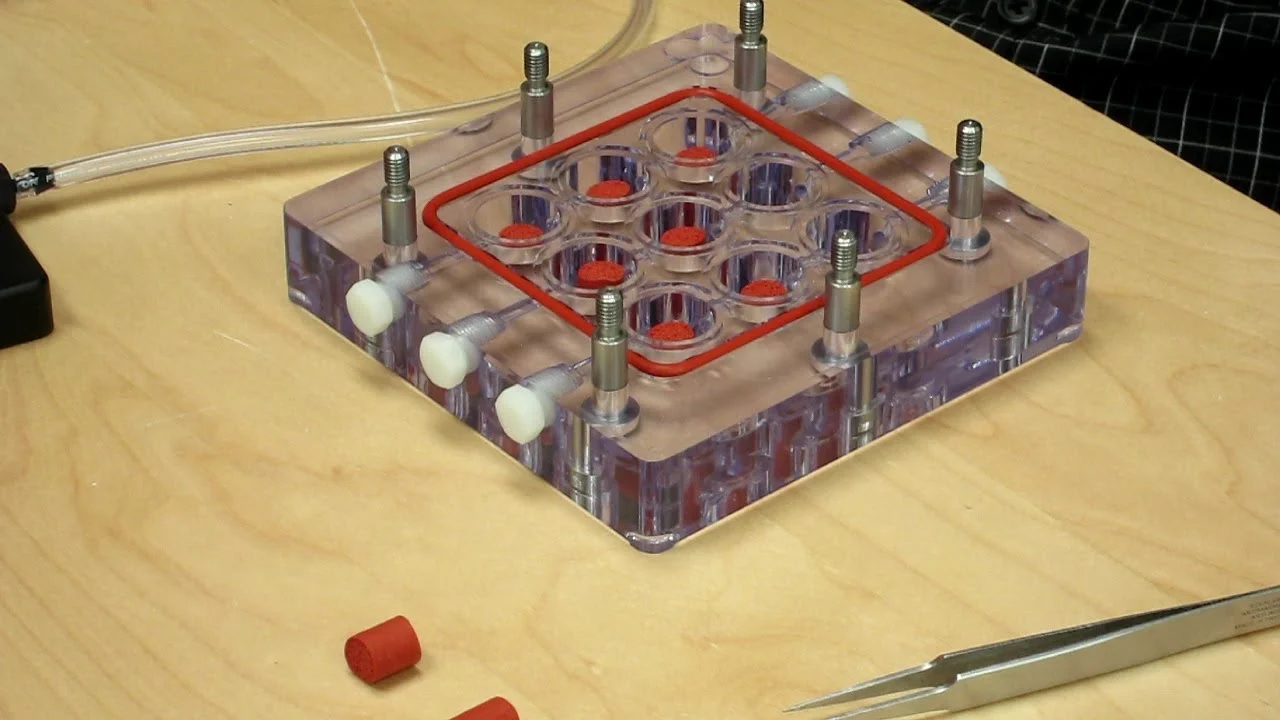
The MechanoCulture TR (MCTR) is a hydrostatic pressure stimulation system designed for mechanobiology and tissue engineering experiments where hydrostatic compression cues are applied through culture media. It programs pressure profiles up to 500kPa across nine individual wells, enabling parallel studies with repeatable hydrostatic pressure stimulation and controlled duty cycles.

The platform is commonly selected for pressure stimulation mechanobiology studies that require repeatable pressure regimens across multiple specimens. It is also widely used as a mechanotransduction bioreactor, supporting hydrostatic pressure mechanotransduction protocols with cyclic and intermittent sequences where compression is applied via hydrostatic pressure.

Specifications

Dimensions 14 x 14 x 9 cm
Weight 1 kg
Stimulation mode Hydrostatic pressure
Autoclavable components Yes
Number of wells 9
Specimen dimensions up to 20 mm diameter/width
Maximum pressure 500 kPa
Maximum cycle frequency 0.5 Hz
External compressed air required? Yes

MCTR Mechanical Stimulation Capabilities

The MechanoCulture TR is a hydrostatic pressure stimulation system built for programmable pressure regimens. It supports cyclic hydrostatic compression dosing, intermittent duty cycles, and multi-phase sequences that are commonly used in hydrostatic pressure mechanotransduction and pressure stimulation mechanobiology studies.

Hydrostatic Pressure Stimulation

With MechanoCulture TR: Hydrostatic pressure stimulation delivered through media in 9 sealed wells, creating repeatable hydrostatic compression at the specimen surface.

Use case: Hydrostatic compression is widely used to study mechanotransduction in 3D cultures where uniform compressive cues are preferred over direct contact compression.

Example specimens: cell-laden hydrogels, cartilage-like constructs, 3D matrices, tissue mimetics.

Cyclic Hydrostatic Compression and Duty Cycle Control

With MechanoCulture TR: Cyclic hydrostatic compression stimulation up to 0.5 Hz, with programmable cycle counts and rest intervals.

Use case: Many pressure stimulation mechanobiology responses are sensitive to frequency and duty cycle. Repeatable cyclic stimulation supports better comparisons across cohorts and conditions.

Example specimens: engineered tissues, hydrogel constructs, tissue mimetic systems.

Intermittent and Multi-Phase Hydrostatic Compression Stimulation

With MechanoCulture TR: Multi-phase sequences that combine pressurization ramps, holds, recovery, and rest phases to control hydrostatic compression stimulation dosing.

Use case: Intermittent protocols help separate immediate time-dependent effects from longer-term cellular adaptation, which is central to hydrostatic pressure mechanotransduction.

Example specimens: cartilage-inspired constructs, hydrogel cylinders, 3D printed scaffolds.

Incubator-Based Hydrated Culture Workflows

With MechanoCulture TR: A hydrostatic compression bioreactor workflow designed for incubator operation with sealed wells and hydrated specimens.

Use case. Incubator execution supports stable conditions for hydrostatic pressure stimulation and consistent mechanotransduction dosing.

Example specimens: cell-laden hydrogels, organoid-scale constructs, tissue mimetic constructs.

How the MCTR Compression Bioreactor Works

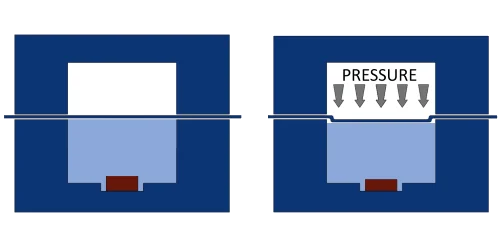
Overview of the hydrostatic pressure testing concept design with the MCTR hydrostatic pressure stimulation system

This hydrostatic pressure stimulation system delivers compression stimulation by transmitting pressure through media in each well. Specimens are submerged in culture media, and a flexible membrane separates the pressure chamber from the sterile culture space.

This approach is well suited for hydrostatic pressure mechanotransduction studies and pressure stimulation mechanobiology experiments where cyclic hydrostatic compression stimulation is the input and biological response is the output.

Protocol Programming and PC-Independent Operation

The MCTR uses dedicated programming software built specifically for the hydrostatic compression bioreactor. Protocols are defined on a PC, uploaded to the controller, and executed inside an incubator. This supports long-duration studies where the hydrostatic pressure stimulation system runs PC-independent.

Sterile Workflow and Autoclavable Culture Components

The sealed well plate design supports sterile handling during long incubator runs. Culture-contacting components are made from autoclavable materials, enabling sterilization between studies.

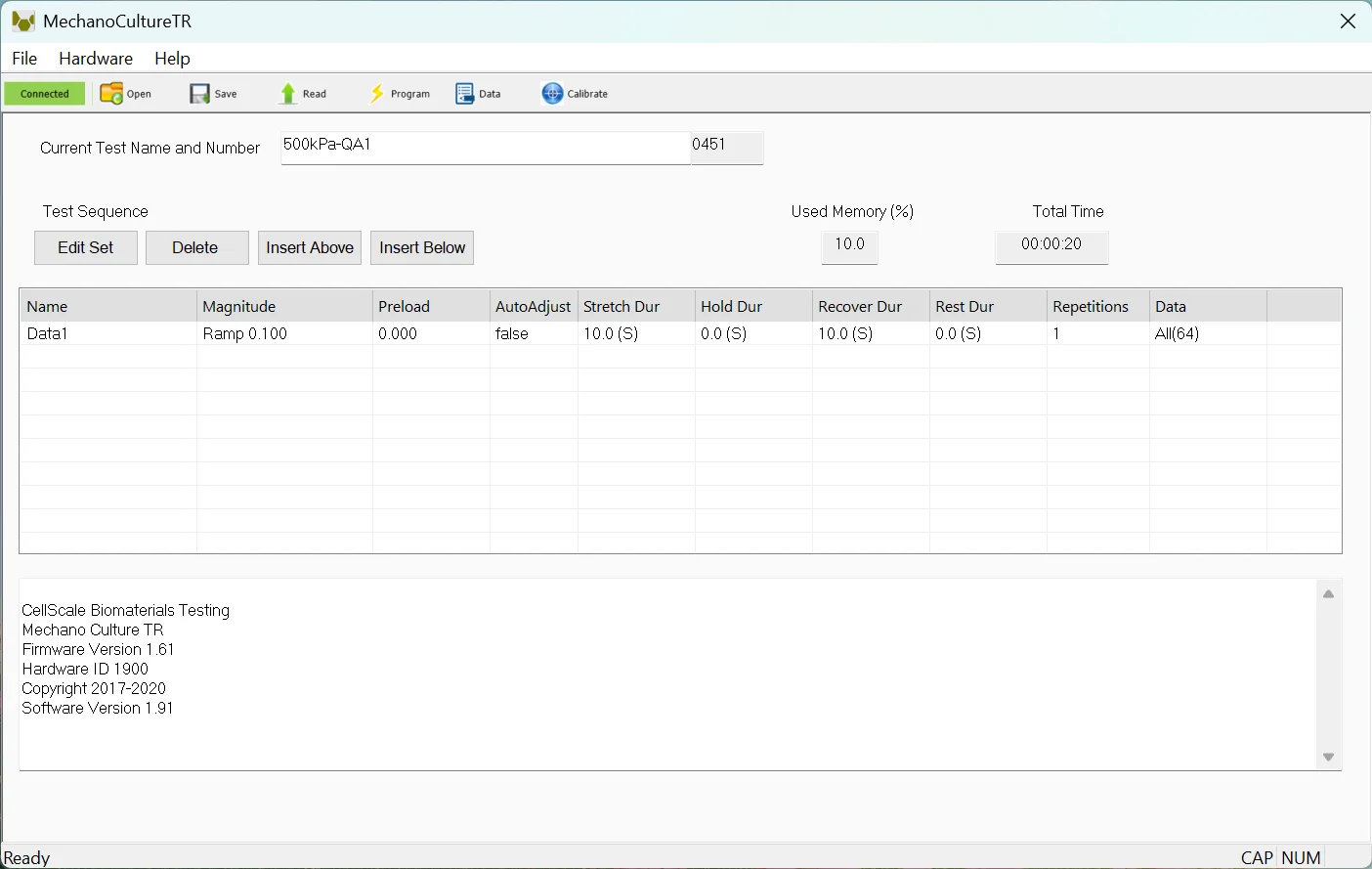
Software: Protocol Programming

The MechanoCulture TR uses dedicated protocol programming and data download software. Protocols are downloaded to the controller for PC-independent incubator operation. After a run, data showing the pressure applied over time is downloaded for review and record keeping.

A screenshot of the MCTR bioreactor software

Comments From The Field

“We’re able to take cells out of the intervertebral disc, grow them in the lab, apply controlled mechanical loading, and ask how the cell responds at a cellular level.”

Dr. Cheryl A. Seguin headshot

Cheryle Séguin

PhD. Professor, Schulich Medicine & Dentistry, Western University, Canada.

“A versatile and cost-effective bioreactor… with intuitive software and responsive support.”

Dr. Brian Amsden headshot

Brian Amsden

PhD. Professor & Associate Vice-Principal of Research, Donald and Joan McGeachy Chair in Biomedical Engineering, Queen’s University, Canada.

MCTR Videos

Videos
2 Videos

MechanoCulture TR (MCTR) Compression Bioreactor Demonstration

Demonstration of the MechanoCulture TR compression bioreactor for parallel mechanical stimulation of tissue cultures.

FAQs About the MCTR Bioreactor

The MCTR is designed for hydrostatic pressure stimulation of samples in a sterile culture environment. It is best suited for workflows where researchers want to expose constructs or biomaterials to controlled pressure loading rather than direct gripping or platen-based compression.

The MCTR is suited for tissues, constructs, scaffolds, and biomaterial samples up to 20 mm diameter or width that benefit from hydrostatic pressure stimulation in fluid.

The MCTR can stimulate up to 9 specimens in individual wells. This makes it the highest-throughput hydrostatic system in the MechanoCulture lineup.

The MCTR uses hydrostatic pressure stimulation, with programmable pressure up to 500 kPa and a maximum cycle frequency of 0.5 Hz.

No. The MCTR is designed for PC-independent operation inside an incubator. The USB connection is used to program test protocols and access data, but it does not need to remain connected while the test is running.

Yes. The MCTR is built for sterile culture workflows; cleaning and sterilization of the system components are part of normal use. The specimen chamber plate is sterilizable and suitable for long-term cell and tissue culture in an incubator.

The MCTR is the MechanoCulture platform for hydrostatic pressure stimulation. In contrast, the MCJ1 and MCT6 are tension stimulation systems, while the MCTX is designed for uniaxial compression stimulation. The MCTR is the right fit when the biological question depends on pressure-based loading rather than tensile or compressive contact.

Yes. The fluid ports can be attached to a pump system to circulate or flow media through the specimen wells, and the product family also supports custom solutions when needed.

Talk to an Applications Specialist

If you share your specimen type and desired outcomes, we will recommend a bioreactor model, configuration, and protocol approach aligned to your research goals.

Contact Sales

Product of Interest: