



Overview of Gastrointestinal Biomechanics
Gastrointestinal (GI) and urinary tract tissues are highly compliant, multilayered structures that exhibit nonlinear, anisotropic and viscoelastic mechanical behaviour. Their function depends on coordinated expansion, contraction and load distribution across smooth muscle, connective tissue and epithelial layers.
- Mechanical characterization supports research in:
Understanding these properties is essential for developing regenerative strategies, evaluating biomaterials and studying soft tissue structure function relationships.

Importance of Mechanics in Urinary and GI Tissue Research
Mechanical testing provides quantitative insight into the structural behaviour of GI and urinary tract tissues, particularly how these tissues behave under physiologically relevant conditions.
Researchers use these methods to:
- Measure tensile stiffness and extensibility of intestinal or bladder tissues
- Characterize compliance and pressure dependent deformation
- Assess biaxial behaviour of thin membranes and tubular tissues
- Evaluate shear resistance between soft tissue layers
- Map localized stiffness with micro indentation
- Benchmark engineered constructs against native tissue
- Study viscoelastic recovery and rate dependent deformation
These measurements inform tissue engineering approaches and help refine biomaterial design.
Recommended CellScale Instruments For Gastrointestinal Biomechanics Research

UniVert
Used for tensile, compression and shear testing of intestinal tissue strips, bladder wall samples and engineered GI or urinary constructs.
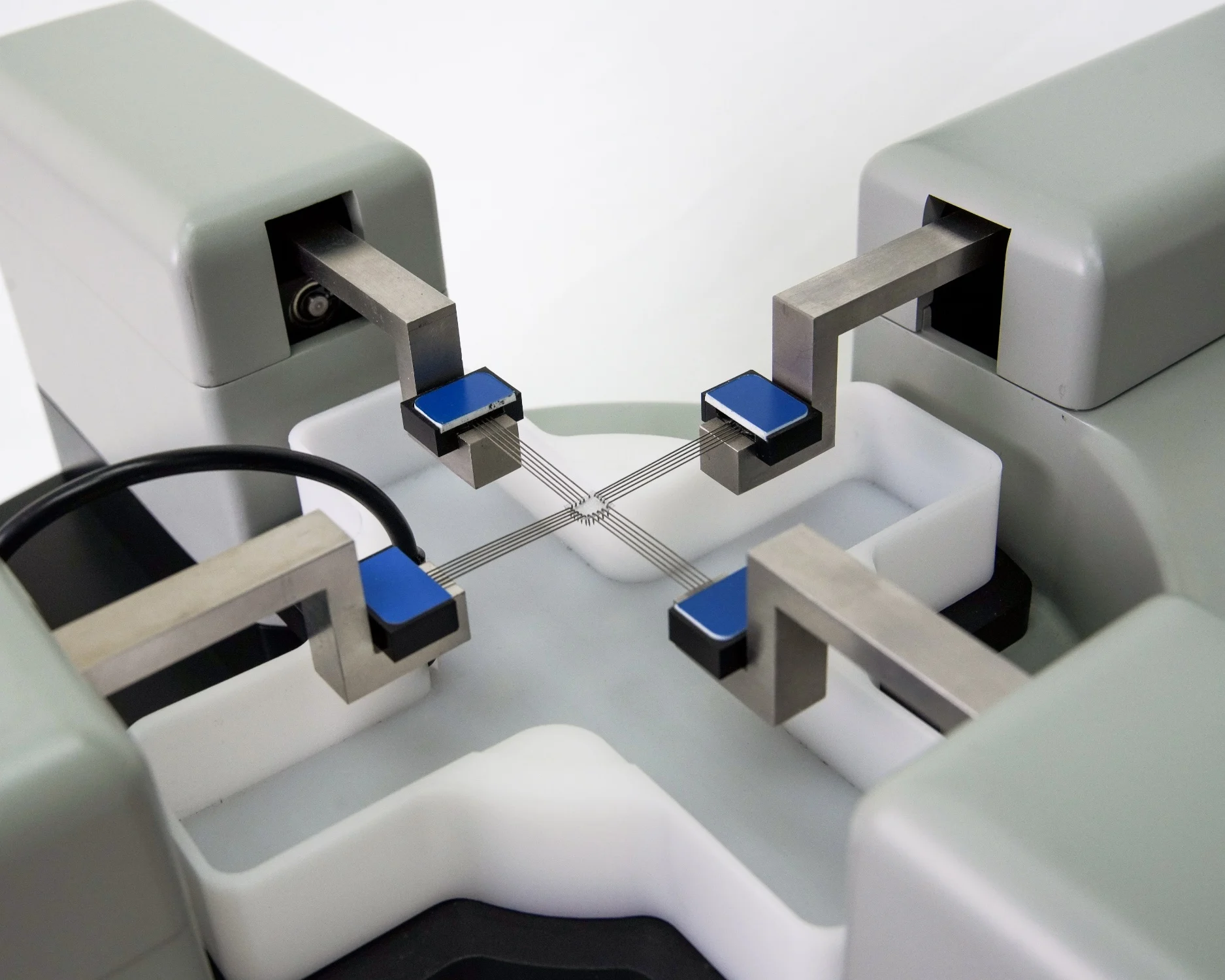
BioTester
Provides biaxial testing of thin GI membranes, bladder tissue sheets and engineered scaffolds where multidirectional mechanics are important.
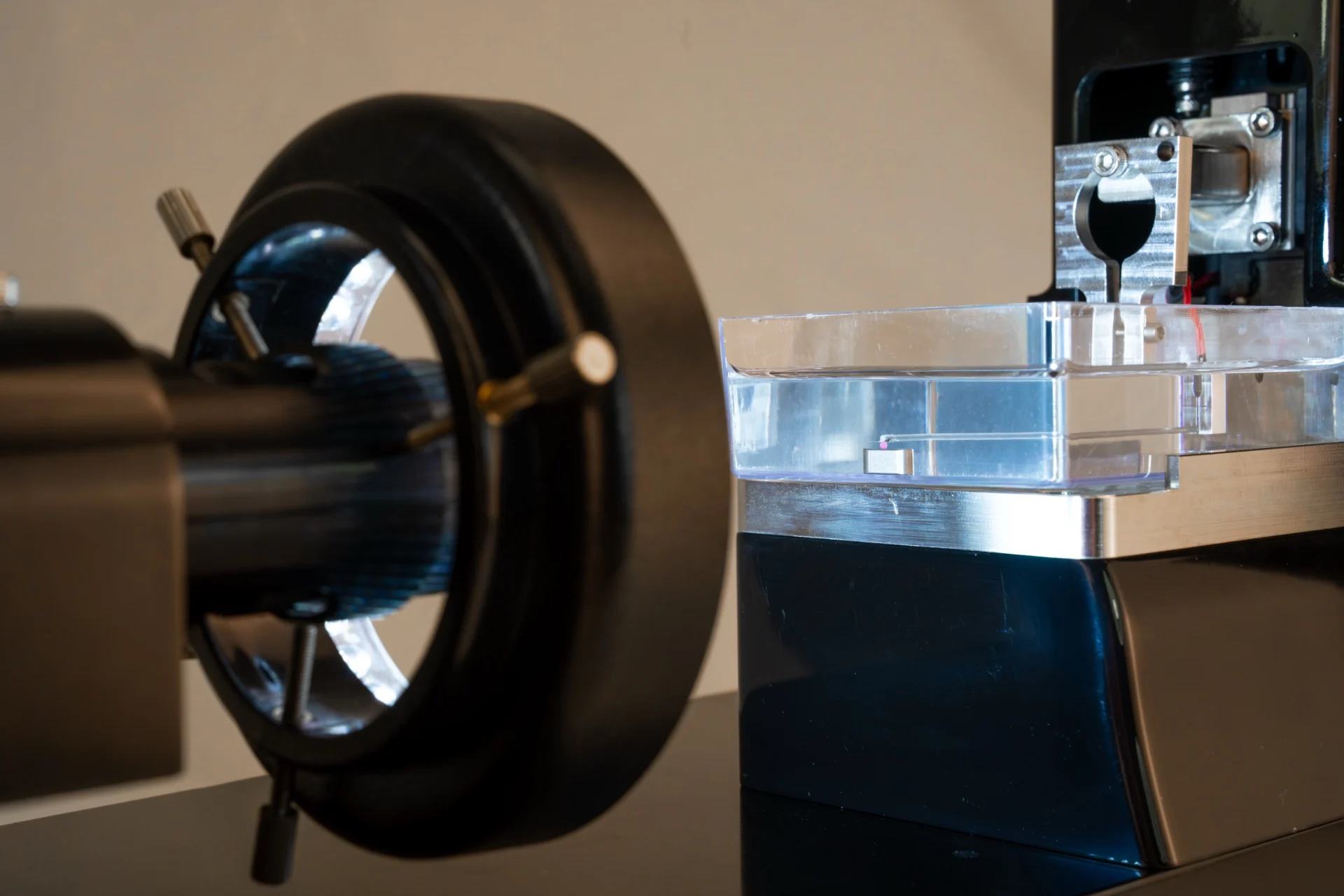
MicroTester
Suitable for micro indentation, local stiffness mapping and testing of small engineered constructs or thin mucosal layers.
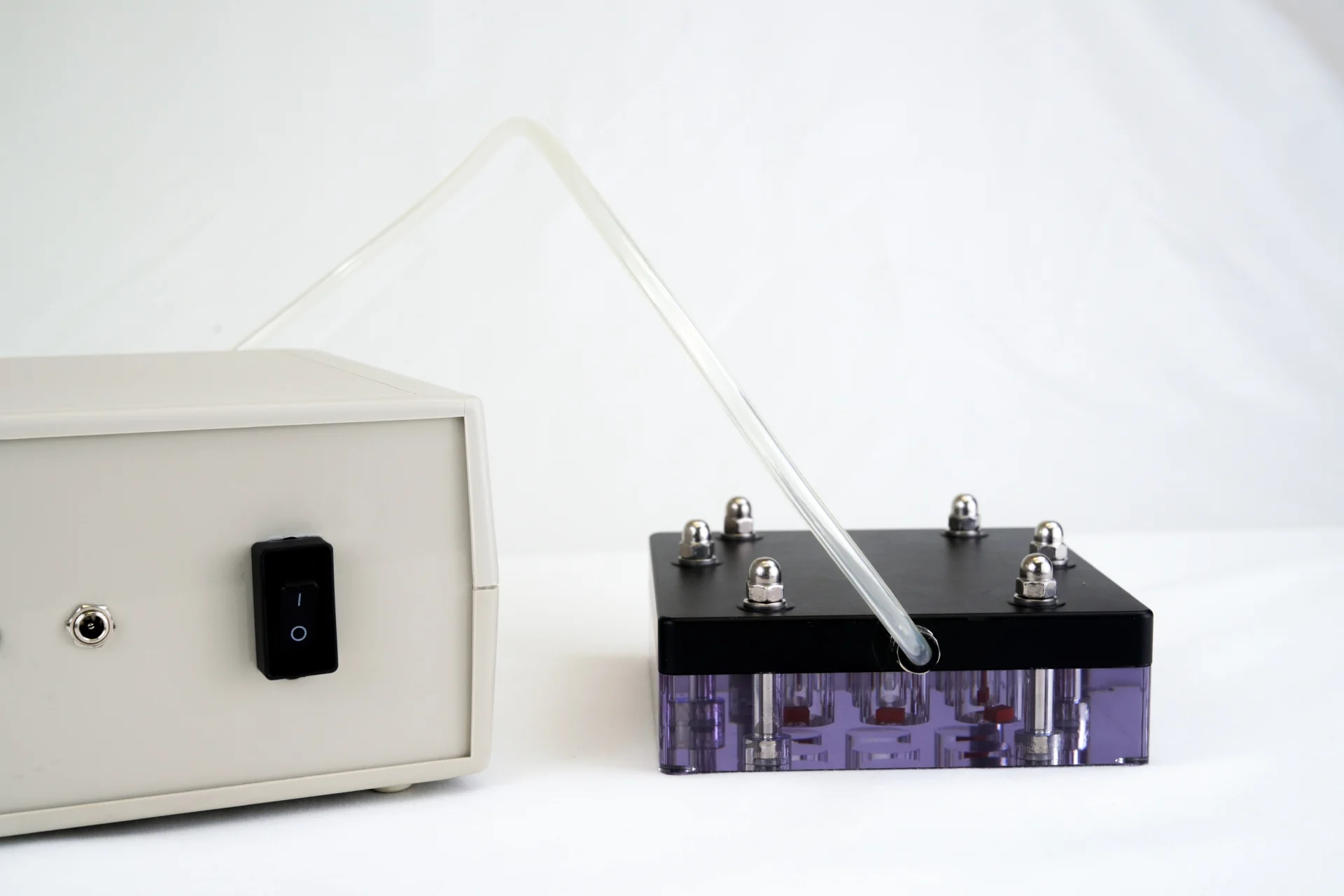
MechanoCulture TR
Applies hydrostatic pressure stimulation to study gastrointestinal biomechanics under hydrostatic pressure.
Testing Methods for GI and Urinary Tract Biomechanics
Compression Testing
Characterizes bulk deformation in bladder or intestinal walls
Biaxial Testing
Captures anisotropic behaviour in sheet based or membrane tissues
Indentation Testing
Measures local stiffness and regional heterogeneity
Shear Testing
Assesses interface behaviour across layered soft tissues
Hydrostatic Pressure Testing
Reproduces intraluminal pressure loading
Representative Sample Types
Native tissues
- Intestinal wall segments
- Bladder tissue strips or sheets
- Urethral soft tissues
- Decellularized GI or urinary matrices
Engineered constructs
- Collagen based intestinal or bladder scaffolds
- Tubular engineered tissues for urinary reconstruction
- Hydrogel or hybrid polymer biomaterials
- Epithelialized or multilayer engineered constructs
Mechanobiology models
- Cyclic stretch induced epithelial and stromal cultures
- Smooth muscle and fibroblast loaded constructs
- Strain driven remodeling models
Featured Publications in GI and Urinary Tract Biomechanics

Advance Your GI and Urinary Biomechanics Research
CellScale systems provide precise mechanical testing for gastrointestinal tissues, urinary tract structures, and engineered constructs. Contact our team to find the right configuration for your application.