


Biomechanical Impact of Localized Corneal Cross-linking

A tensile test divider icon

Dr Giuliano Scarcelli from the Fischell Department of Bioengineering at the University of Maryland presents his research on localized-CXL within and beyond the irradiated treatment area.

Bar graph comparing the elasticity, found via MicroTester compression, of control corneal punches and crosslinked punches. Error bars represent SEM for each condition (* = p < 0.05).
CellScale hexagon shapes

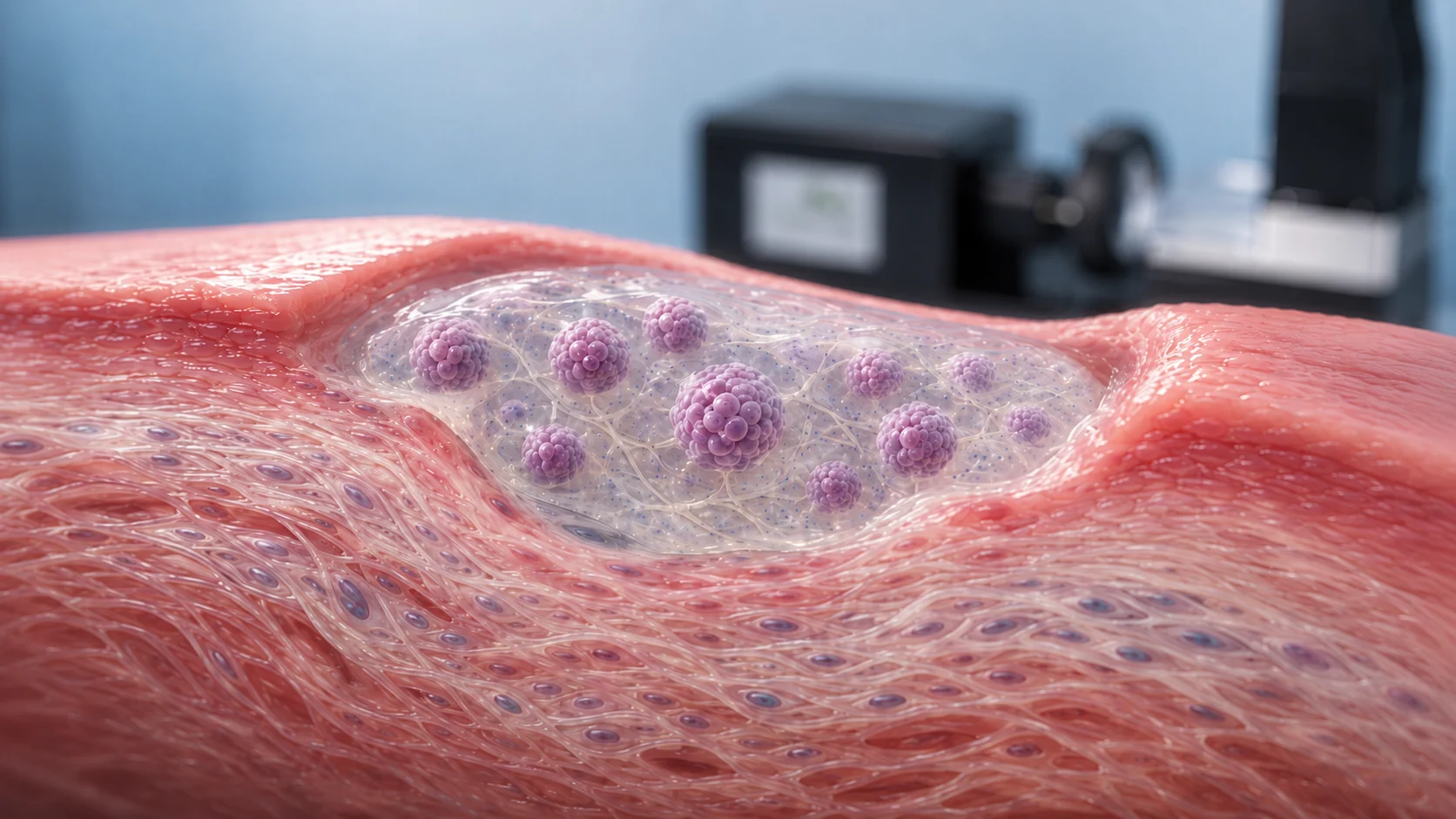
Corneal Ectasia occurs when there are irregularities in the cornea which may lead to disturbances of vision. Astigmatism is a common outcome of corneal ectasia, but the disorder can also occur after refractive surgery (LASIK). It is the second leading cause of corneal transplantation worldwide. To treat it, the U.S. FDA approves of corneal cross-linking (CXL) to stop the ectatic process. This is a process that stiffens the cornea with a photosensitizer followed by uniform ultraviolet-A exposure. The additional chemical bonds created through this process increases the overall corneal strength.

Another recent approach is localized CXL. The risk of complication and infection is expected to diminish by limiting the irradiated area. Dr Giuliano Scarcelli and his team at the University of Maryland investigates localized CXL within and beyond the irradiated region in three-dimensions and worked with fresh porcine eyes acquired within 8 hours after the animal was killed.

The CellScale MicroTester was used to evaluate the mechanical properties of each corneal sample through a compression test, from which the Young’s Modulus could be derived from force and displacement data.
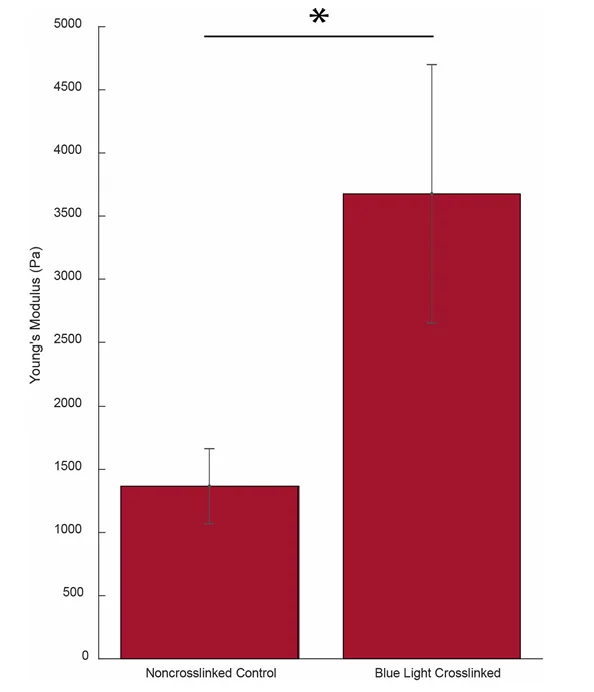
Bar graph comparing the elasticity, found via MicroTester compression, of control corneal punches and crosslinked punches. Error bars represent SEM for each condition (* = p < 0.05). Bar graph comparing the elasticity, found via MicroTester compression, of control corneal punches and crosslinked punches. Error bars represent SEM for each condition (* = p < 0.05).

Read the full journal article here.

To read about another cornea research based in the IROC Institute in Switzerland, click here.

CellScale hexagons, without text

CELLSCALE INSTRUMENT USED

MicroTester

TAGS

compression testing, Corneal Biomechanics, Corneal cross-linking, Eye biomechanics, Keratoconus Research, MicroTester, Ocular tissue mechanics, Ophthalmology research, Vision science

POST DETAILS
CATEGORY

Research Highlights

INSTRUMENT USED
MicroTester
RESEARCH APPLICATIONS
Ophthalmic Biomechanics & Corneal Tissue Engineering
TESTING METHODS
Compression TestingMicro-Mechanical Testing

Related Posts:

Filter by Category:
Filter by Instrument
Filter by Testing Method:
Filter by Research Application:
Soy protein microcarriers for cultivated meat with bovine muscle cells, including one particle undergoing parallel-plate compression testing.

August 10, 2026

Testing Soy Protein Microcarriers for Cultivated Meat Cell Expansion

UniVert hydrogel tensile testing setup with camera imaging and a digital image correlation strain map showing localized deformation.

July 30, 2026

Hydrogel Tensile Testing Reveals Strain Localization in Architected Materials

An aortic tissue sample being biaxially tested with BioRakes on the BioTester for vascular tissue engineering research

July 23, 2026

Carotid Artery Biaxial Testing with Axial Pre-Stretch

UniVert performing hydrated tensile testing on a glowing hydrogel optical fibre mounted between grips in a fluid bath.

July 16, 2026

Hydrogel Optical Fiber Testing Under Repeated Strain

Bioprinted meniscus tissue engineering construct with curved collagen-like alignment patterns in the foreground and a softly blurred CellScale BioTester in the background.

July 2, 2026

Meniscus Tissue Engineering with Boundary-Guided Collagen Alignment

Hydrogel fiber mechanical testing setup showing a thin hydrated fibre suspended across two supports while a small MicroTester beam presses downward in the centre, before and after.

June 25, 2026

Hydrogel Fibre Mechanical Testing of Recombinant Hagfish Protein Materials

Contact Sales

Product of Interest:
CellScale hexagon shapes