



Here is another post in the series called Caleb’s Corner, where our company president Caleb Horst pens some original content related to biomaterials based on his insights and experience.
Biomaterials research teams often have members from engineering, biology, medicine, and other fields. For non-engineers it can be easy to understand why mechanical properties are important, but testing can seem complex and confusing. Here’s a quick framework to help you get started.
Understand your objectives
Do you need to test an entity with a particular geometry or the properties of a material? For entity testing, it is often important to mimic in vivo loading, perform comparison studies and establish benchmarks. For materials testing it is important to generate a specimen with a regular geometry such as a cylinder, sphere, or dog-bone. This will enable the determination of material properties (such as Young’s Modulus) that are independent of specimen geometry.
Choose the right technology for your application
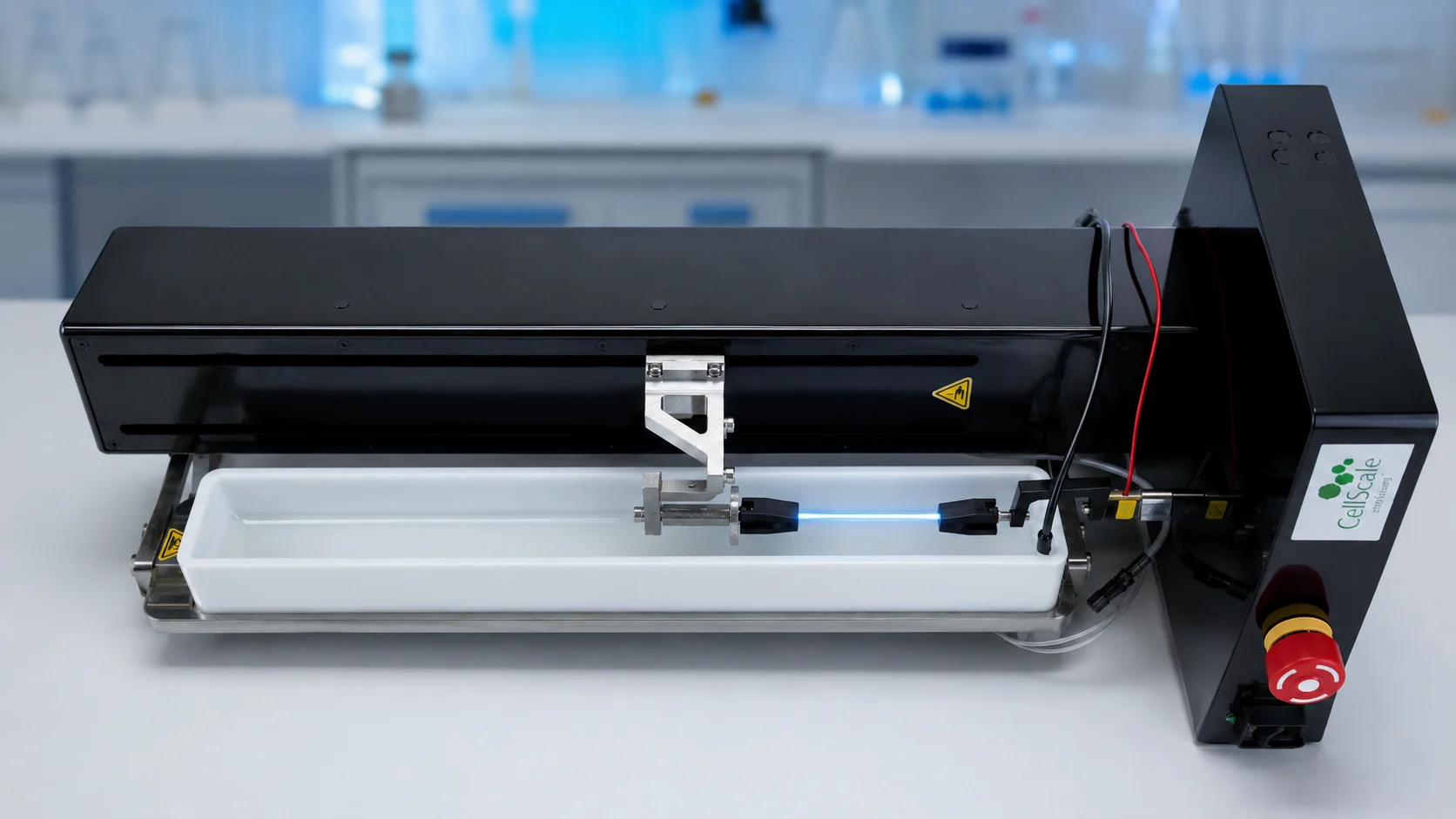
For applied forces 50mN-50kN, conventional load cells are the best choice and are available from most major equipment providers. For applied forces 1μN-50mN, consider cantilever-based force probes such as those used in the CellScale MicroTester or the Optics11 Piuma. In general, expect force accuracy of between 0.1% and 0.5% of the load capacity of the force sensor
For 2-10μm displacement accuracy, motor/screw actuation is used by most equipment providers. For higher accuracy consider piezo-driven or voice coil-driven actuation such as used in the CellScale MicroTester or the TA instruments Electroforce line.
Consider fixturing/test environment
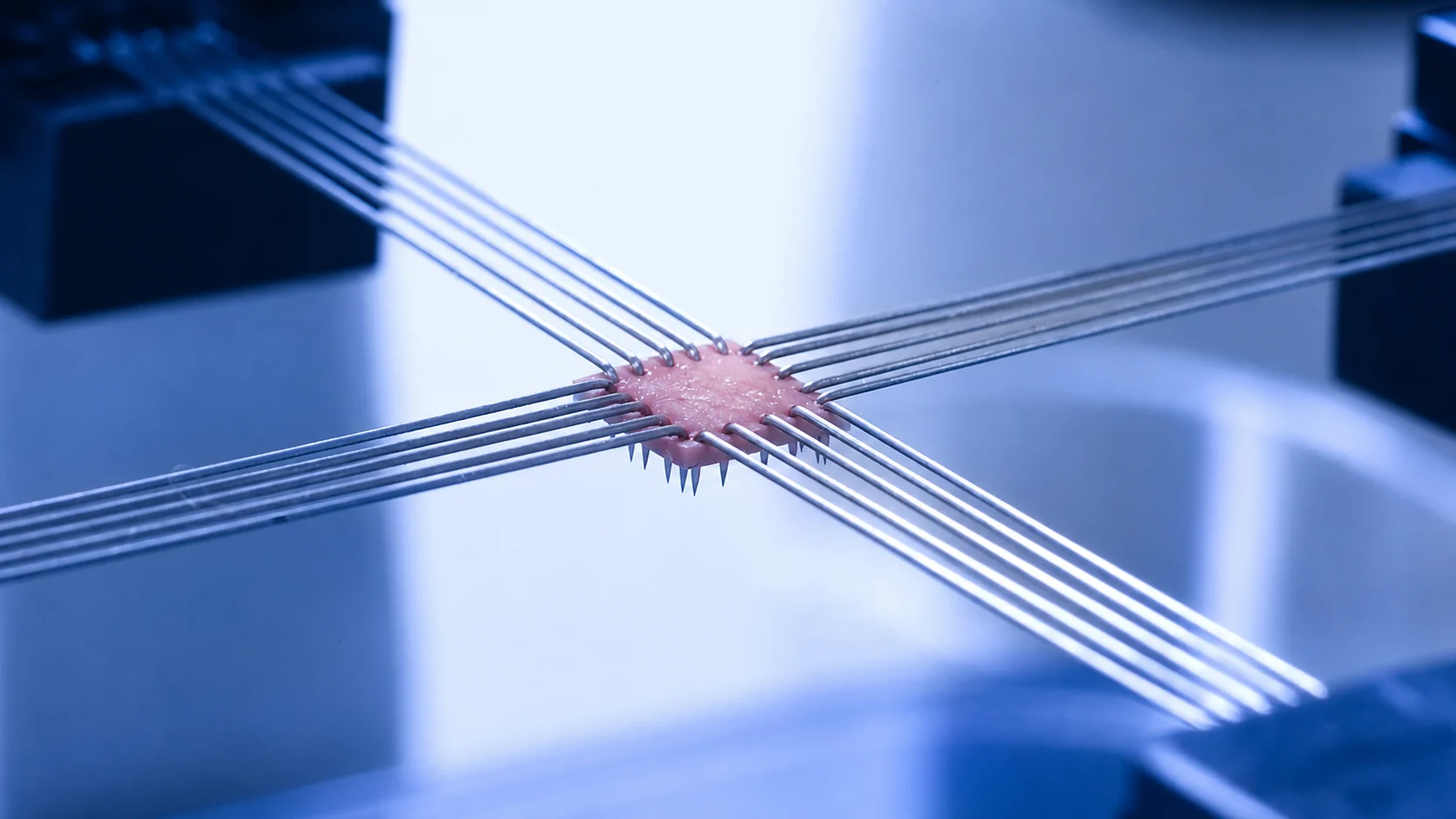
Biomaterials vary widely and often require special treatment. For gripping, consider jaw surfaces (serrations, sand paper coating), gripping force (screw, pneumatic, spring closure), or alternative methods such as multi-point puncture mounting or adhesively-applied gripping tabs. Some manufacturers are happy to help in this regard.
Also consider the importance of maintaining hydration and physiological temperatures. Most manufacturers can provide this, but often at additional cost.
Plan for test validation
Most test systems will provide a means to calibrate system force and displacement. Many manufacturers have integrated imaging systems which can provide valuable qualitative and quantitative information. These images/videos can also be used effectively in presentations and publications.
Why stiffness must be measured directly
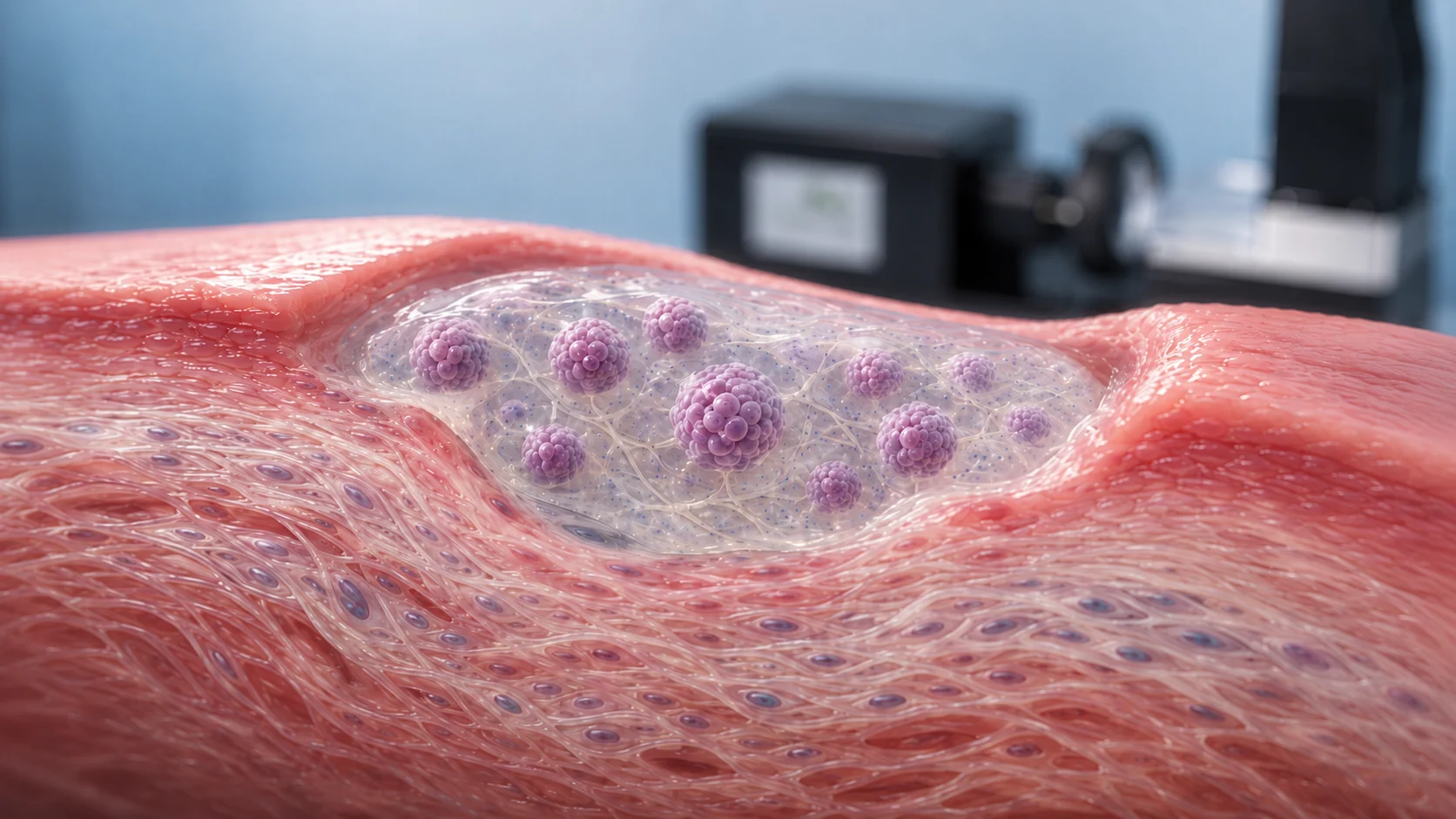
In many biological systems, stiffness is often inferred indirectly from composition, imaging, or molecular markers. However, these proxies can be misleading. Two samples may appear structurally similar while responding very differently under load. This is especially true in complex systems such as tumors, where extracellular matrix organization and cellular remodeling can significantly alter resistance to deformation without obvious visual changes.
In these cases, tumor stiffness must be treated as a measurable mechanical property, not an inferred one. Direct mechanical testing enables researchers to quantify how biological materials actually behave under force, allowing molecular and structural observations to be connected to functional outcomes in biomechanics and mechanobiology research.
Equipment sourcing tips

- ask for demonstrations (online or in person)
- ask for sample testing with your materials or a similar substitute material
- search academic publications for researchers who have done similar testing
- Utilize manufacturer technical support to provide advice on test protocols, fixation, and other aspects of testing.
Happy researching!
To read the second post of Caleb’s Corner: Build or Buy, click here