

Pressure Testing
of Biomaterials and Soft Tissues

Pressure testing evaluates how tubular, luminal, and enclosed biological specimens respond to controlled internal pressurization. By inflating samples such as arteries, vessels, ducts, or engineered lumens, pressure testing provides direct insight into compliance, stiffness, failure behaviour, and functional performance under physiologic loading conditions.
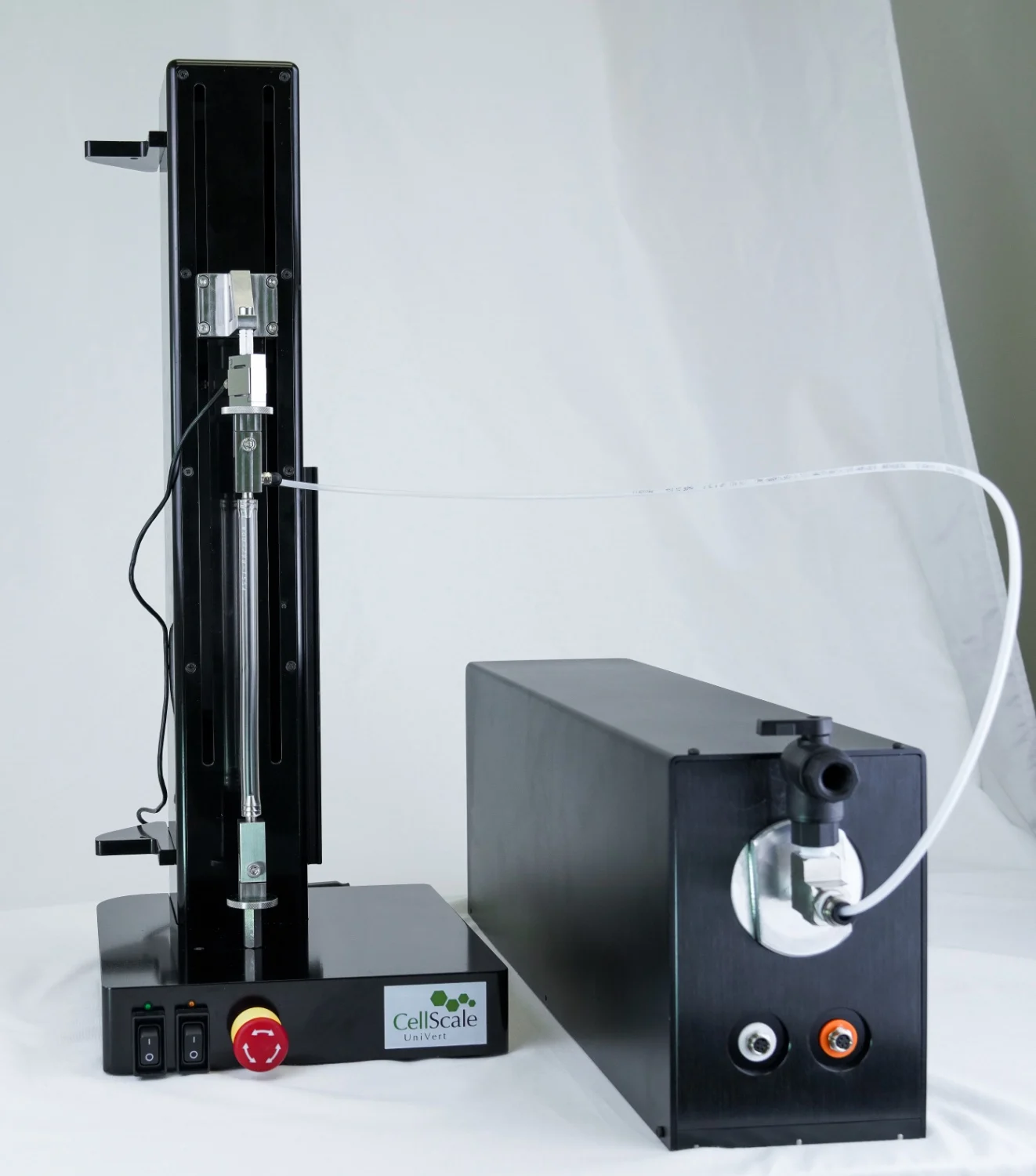
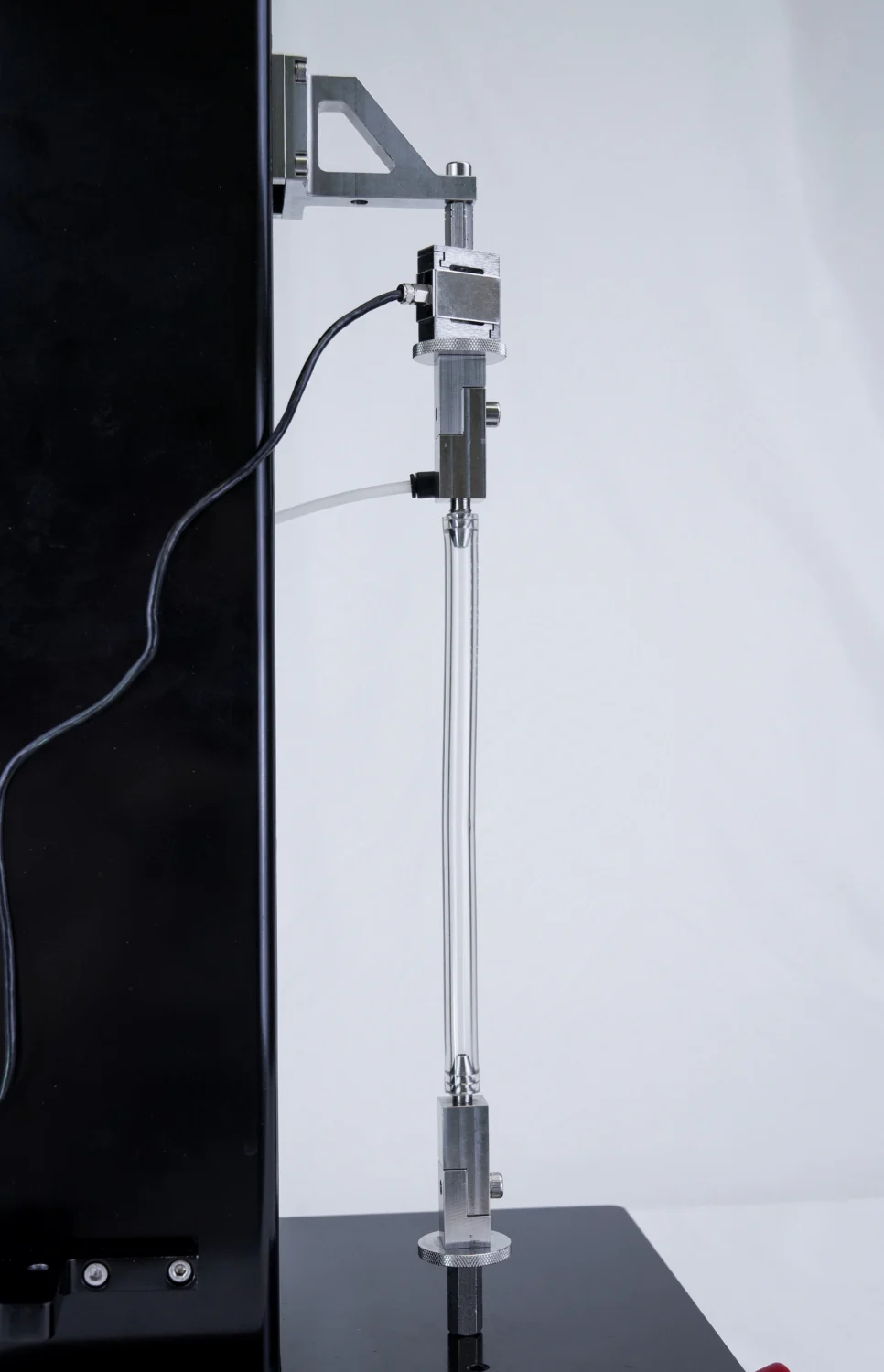

What Pressure Testing Measures
Unlike uniaxial or planar tests, pressure testing reproduces the inflationary loading mode experienced in vivo, making it a critical method for vascular biomechanics, tissue engineering, and disease modeling. This form of luminal pressure testing replicates the internal loading conditions experienced by hollow tissues and biomaterials.
A pressure testing of biomaterials system applies controlled internal pressure to inflate a specimen while measuring mechanical response (burst or rupture strength, for example).
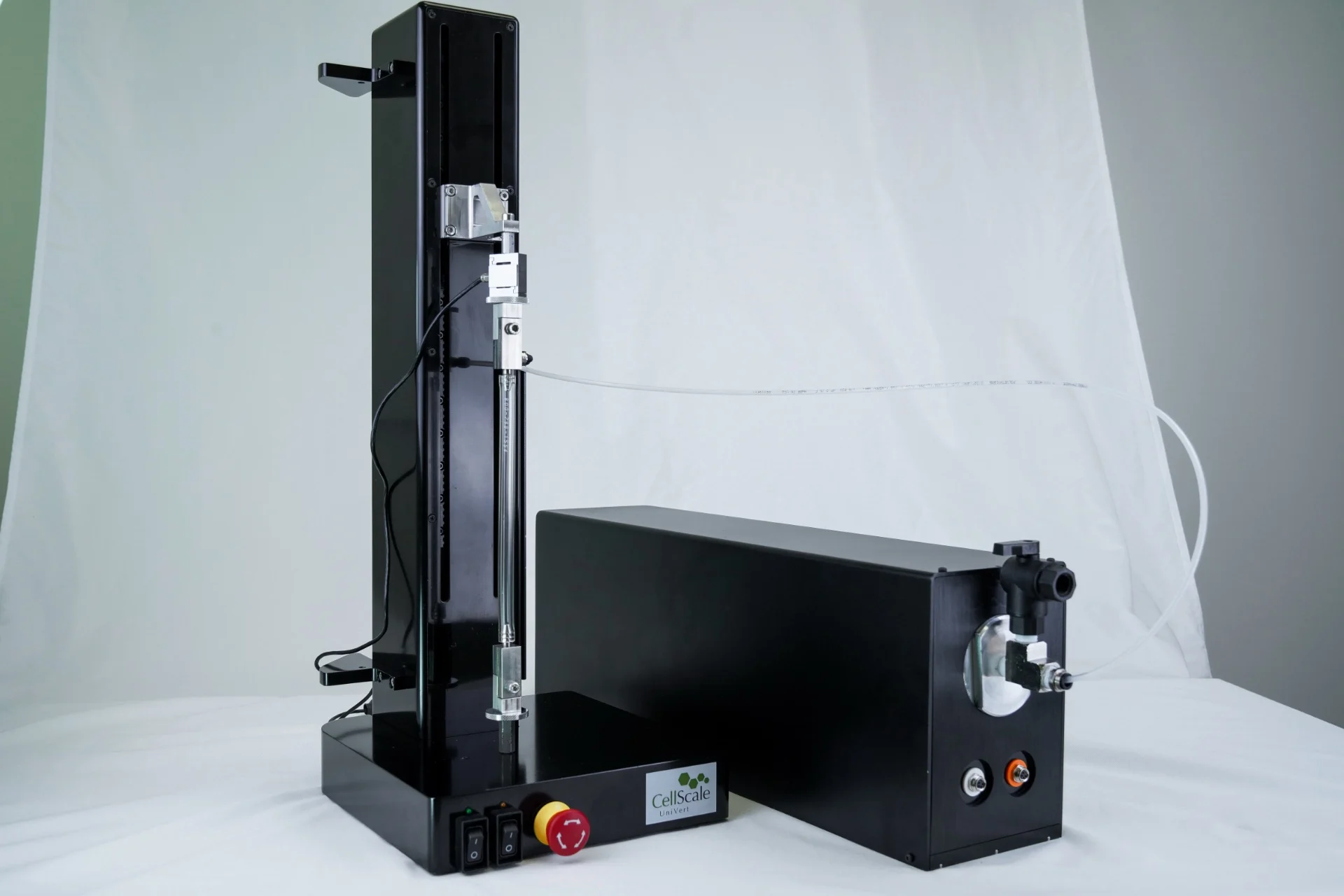
What Pressure Testing Enables
- Pressure–diameter relationships
- Circumferential and axial compliance
- Nonlinear stiffening behaviour
- Inflation-induced strain and deformation
- Burst pressure testing and failure properties
- Time-dependent and viscoelastic response under pressurization
- Effects of disease, remodeling, or degradation
Pressure testing is particularly valuable for materials and tissues where internal pressurization, rather than external loading, governs mechanical function.
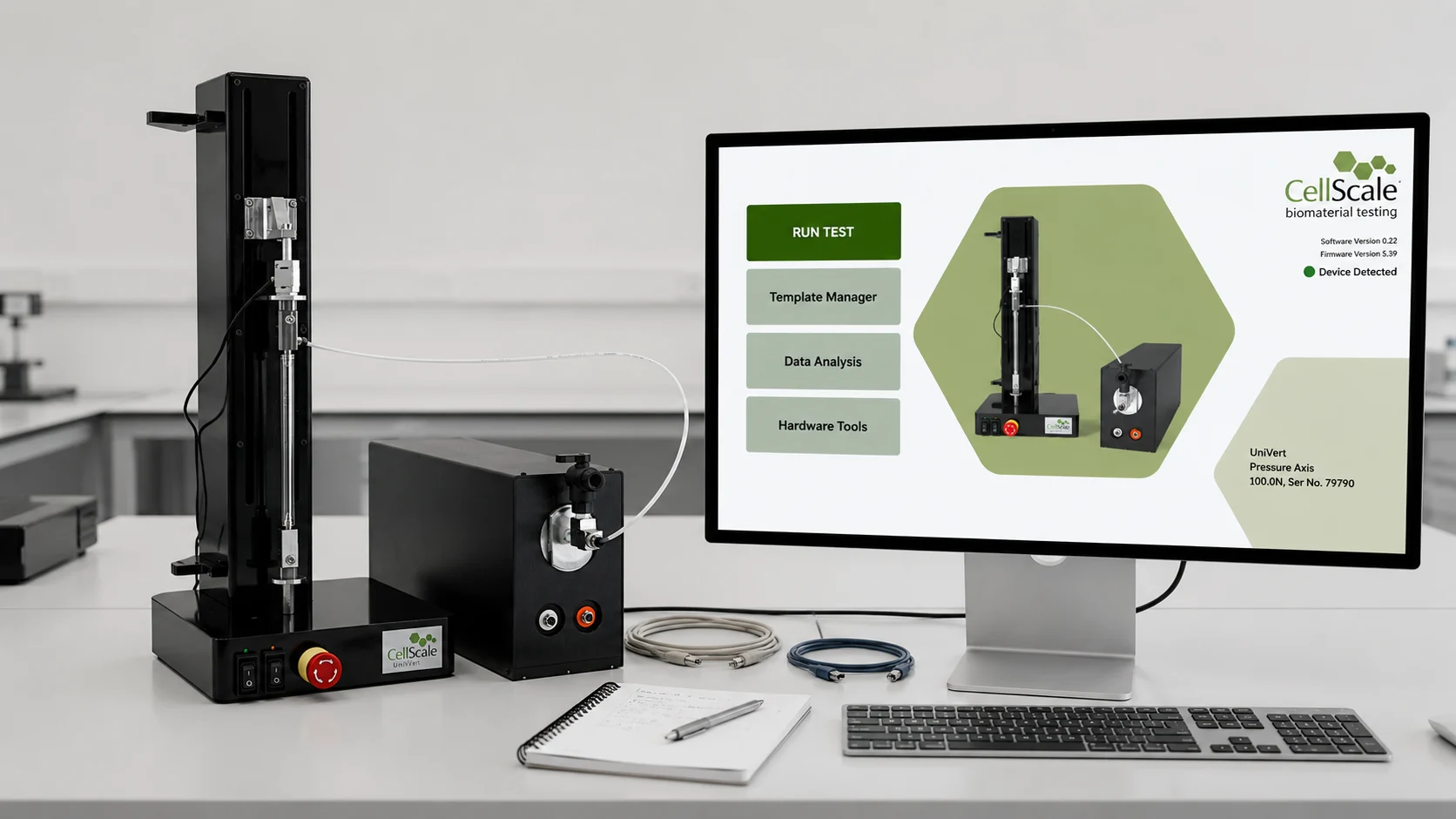
Pressure Testing of Biomaterials Research
Pressure testing is widely used in:
- Vascular biomechanics
Inflation testing captures compliance, anisotropy, and failure behaviour of arteries and vascular grafts under physiologic pressure ranges.
- Cardiovascular implant development
Balloon catheters, stents, grafts, and valve components undergo pressure-driven deformation that must be characterized during development and validation.
- Tissue engineering and regenerative medicine
Engineered vessels, tubular scaffolds, and lumenized constructs are evaluated for mechanical maturity, functional integrity, and remodeling under pressurized conditions.
- Disease modeling and pathology studies
Hypertension, aneurysm formation, fibrosis, and aging all alter pressure–diameter relationships and stiffness, making pressure testing a key diagnostic research tool.
- Computational model validation
Inflation data provide essential inputs for constitutive modeling and finite-element simulations of tubular tissues and biomaterials.
Compatible Sample Types for Pressure Testing
- Arteries and veins
- Engineered vascular grafts
- Aorta and large vessel segments
- Tubular hydrogels and scaffolds
- Catheter balloons
- Lumenized tissue constructs
- Compliant polymer tubes
- Soft robotic actuators with internal pressurization
How a Pressure Test Works
A pressure testing system inflates a specimen using a controlled fluid or air source while monitoring internal pressure and mechanical response. Depending on the configuration, axial loading, imaging, and environmental control can be applied simultaneously.
Controlled pressurization protocols
Pressure can be applied monotonically, cyclically, or in stepwise increments to replicate physiologic or pathological loading conditions.
Pressure–diameter and compliance measurement
Pressure–diameter testing quantifies diameter changes using imaging or displacement tracking to calculate stiffness and compliance as a function of pressure. This analysis enables accurate compliance measurement across physiologic and pathological pressure ranges.
Combined axial and pressure loading
Many vascular tissues experience coupled axial stretch and pressurization. Custom setups allow tension–pressure protocols to replicate in vivo mechanics.
Hydrated and temperature-controlled testing
Tests can be performed in fluid baths (with custom fixtures) at physiologic temperature to preserve tissue integrity and ensure reproducibility.
ASTF 2392 standard
With modifications to the UniVert or MCTR, the burst or rupture strength of surgical sealants on soft tissue can be measured.
Recommended CellScale Instruments for Pressure Testing
The UniVert supports controlled pressure testing of biomaterials using precise inflation, imaging, and axial loading synchronization, while the MCTR can be modified to support burst testing with custom burst fixtures. Both systems can be used to measure the burst or rupture strength of sealants on soft tissue (ASTF 2392 standard).
UniVert
Relevant Research Applications
Pressure testing supports research across several application areas:
Recent Publications Using the UniVert
Related Testing Methods
Pressure testing is commonly used with vascular and time-dependent methods.
Ready to Perform Pressure Testing?
CellScale provides precision pressure testing of biomaterials like vascular tissues, grafts, and engineered tubular constructs.