

Custom Mechanical Testing System Solutions

CellScale builds custom mechanical testing systems when a standard setup does not fit the specimen or the measurement goal. Our team develops custom biomechanical testing solutions for delicate tissues, compliant biomaterials, micro-scale samples, and unusual geometries, including custom mechanical testing fixtures that integrate cleanly with existing workflows.
Projects range from fixture design to full platform builds, including imaging-integrated mechanical testing, high throughput micro mechanical testing layouts, and ISO-aligned mechanical testing requirements where they apply. We support the work from early concept through build, verification, training, and ongoing service.

Capabilities: Custom Mechanical Testing Systems
Custom test fixtures for non-standard specimens
Many custom mechanical testing system projects start with custom test fixtures. We design custom fixtures to control boundary conditions, alignment, and contact mechanics, and to improve repeatability when specimens cannot be gripped using off-the-shelf tools. These custom fixtures range from rapid-turn 3D-printed prototypes to machined assemblies, including custom mechanical testing fixtures for tissues, polymers, microtissues, and medical devices.
Custom mechanical testing fixtures with imaging-integrated mechanical testing
When deformation in the gauge region matters, we support imaging-integrated mechanical testing through hardware integration and experiment design. This includes mounts and optical access for camera modules, synchronized acquisition workflows, and configurations that preserve the imaging path during loading. For groups doing imaging-integrated mechanical testing, custom mechanical testing fixtures often determine whether strain fields are measurable and reproducible.
High throughput micro mechanical testing and multi-sample workflows
For labs that need throughput without compromising measurement quality, we develop high throughput micro mechanical testing configurations, including custom test fixtures for multi-well formats and fast specimen exchange. These workflows commonly include micro tensile testing, automated positioning, and imaging access. In practice, high throughput micro mechanical testing succeeds when the mechanics, fixtures, and software templates are designed as one system rather than a collection of add-ons.

ISO-aligned mechanical testing for standards-driven development
We work with teams who need ISO-aligned mechanical testing for R&D and internal verification. In these projects, custom test fixtures must match the geometry principles and measurement intent described in the standard, while maintaining repeatable setup and traceable outputs. A custom mechanical testing system for ISO-aligned mechanical testing can also include multi-angle imaging and integrated reporting workflows.
Custom mechanobiology fixtures for bioreactor-style stimulation
Some custom solutions are less about failure testing and more about controlled stimulation in culture. We develop custom mechanobiology fixtures for delicate tissues and organotypic explants, including imaging-compatible culture wells and specialized mounting geometries. These custom mechanobiology fixtures translate directly to modern MechanoCulture workflows, where controlled deformation and optical access are often equally important.
Platforms We Customize for Custom Biomechanical Testing Solutions
A custom mechanical testing system can be built as a complete one-off instrument, but most projects are faster and more maintainable when they build on a proven platform. Our custom biomechanical testing solutions commonly use:
UniVert

MicroTester

The MicroTester for microforce workflows, high throughput micro mechanical testing, and device-scale setups requiring precision alignment
BioTester

The BioTester for planar biaxial testing, including imaging-integrated mechanical testing for microstructure-informed biomechanics
MechanoCulture Bioreactors

MechanoCulture systems for stimulation in culture using custom mechanobiology fixtures and incubator-compatible environments
These platforms allow custom biomechanical testing solutions to remain serviceable and repeatable over years of use, while still enabling highly specific experimental needs.
Featured Custom Biomechanical Testing Solutions
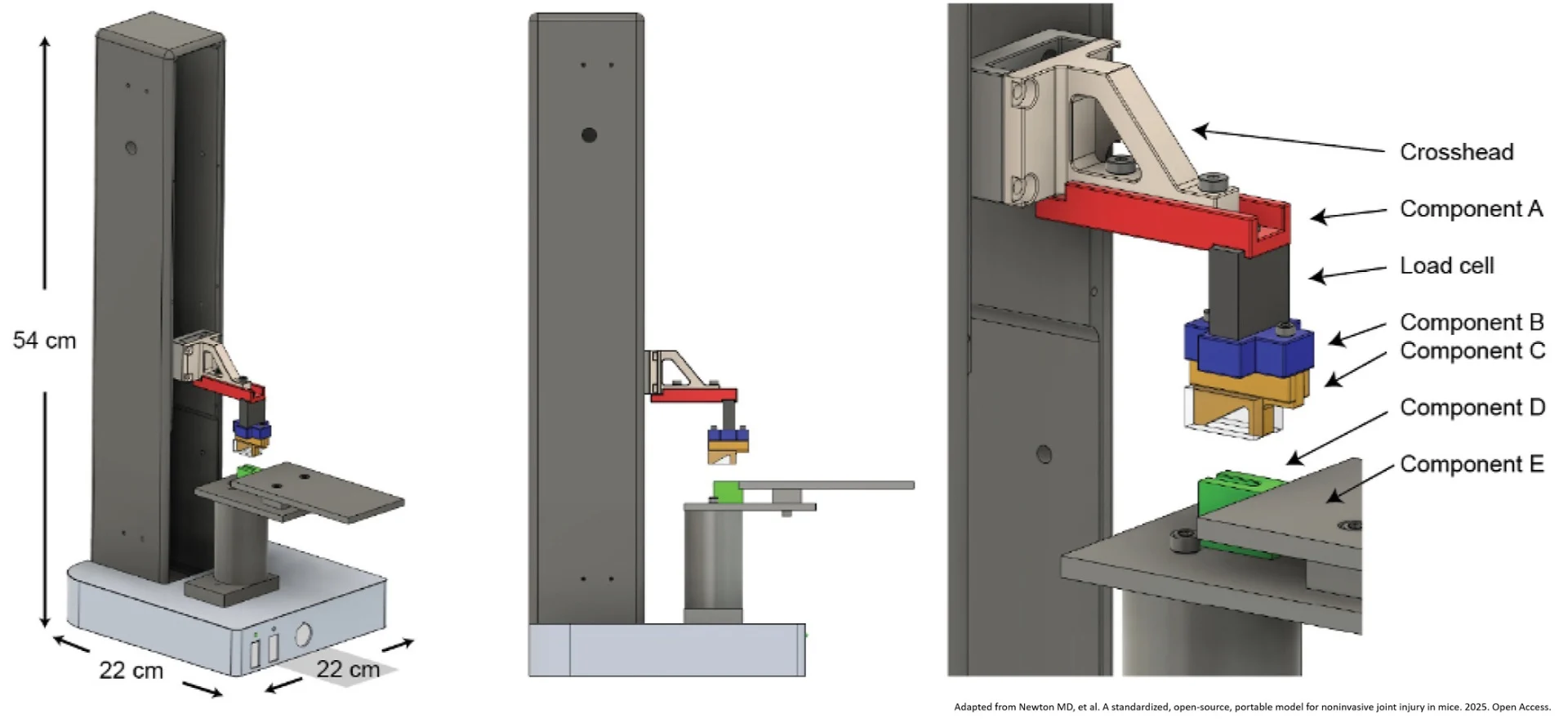
Custom mechanical testing fixtures on the UniVert for open-source joint injury models
A published murine joint injury model used the UniVert as the actuation platform and relied on custom testing fixtures that were 3D-printed to standardize alignment, constrain motion, and control load transfer during tibial compression injury protocols. This is a representative example of how custom test fixtures and a stable uniaxial frame can form a practical custom mechanical testing system for injury biomechanics.
High throughput micro mechanical testing in a 96 well plate
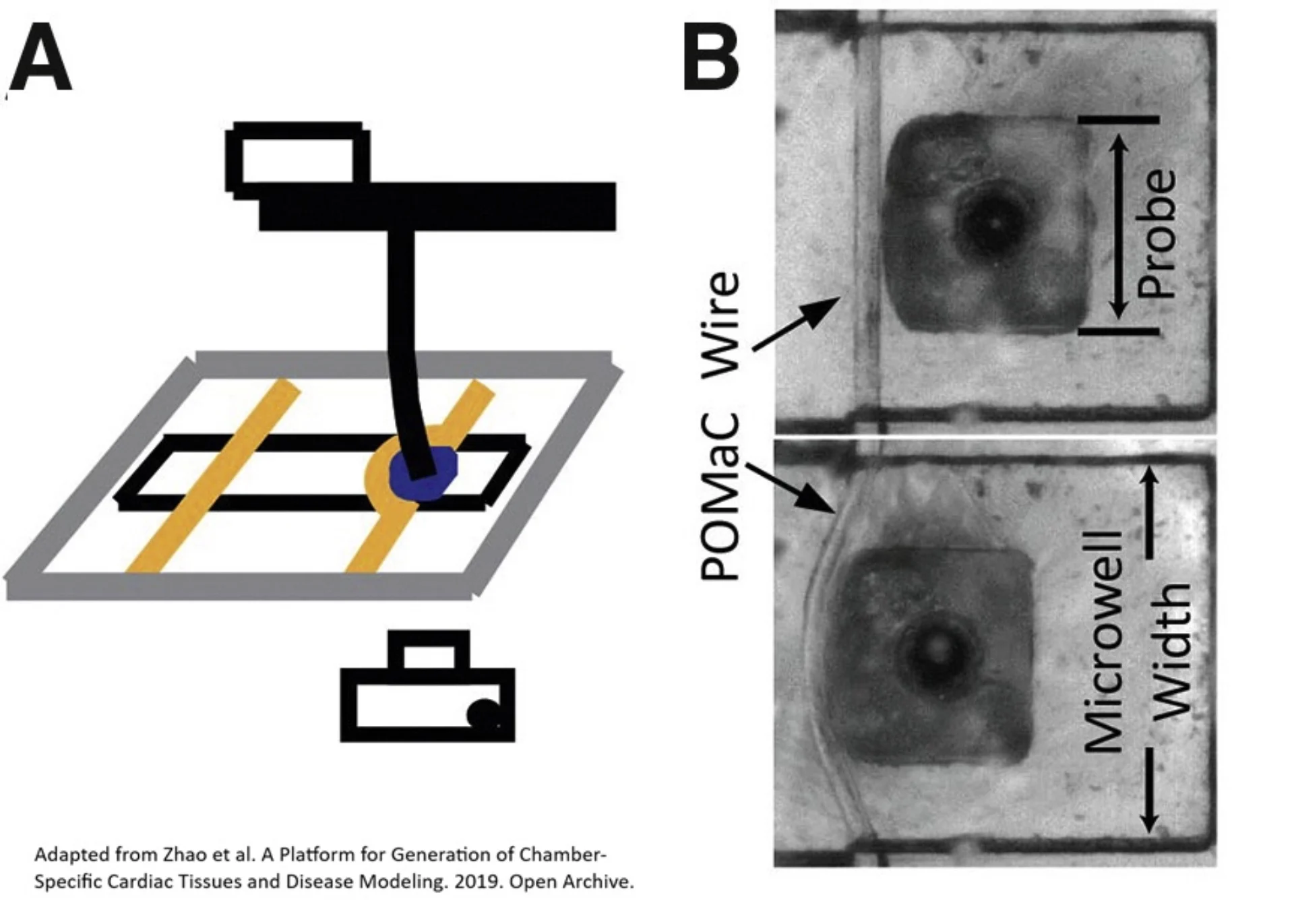
A University of Toronto team required high throughput micro mechanical testing for engineered fibers and microtissues cultured horizontally in a 96 well plate. A MicroTester custom configuration enabled micro tensile testing without removing samples from their culture environment, using custom test fixtures and positioning interfaces designed for 96 well plate testing. This project is a clear example of how high throughput micro mechanical testing can be achieved through geometry-first design and dedicated custom mechanical testing fixtures.

ISO-aligned mechanical testing for intraocular lens haptic compression
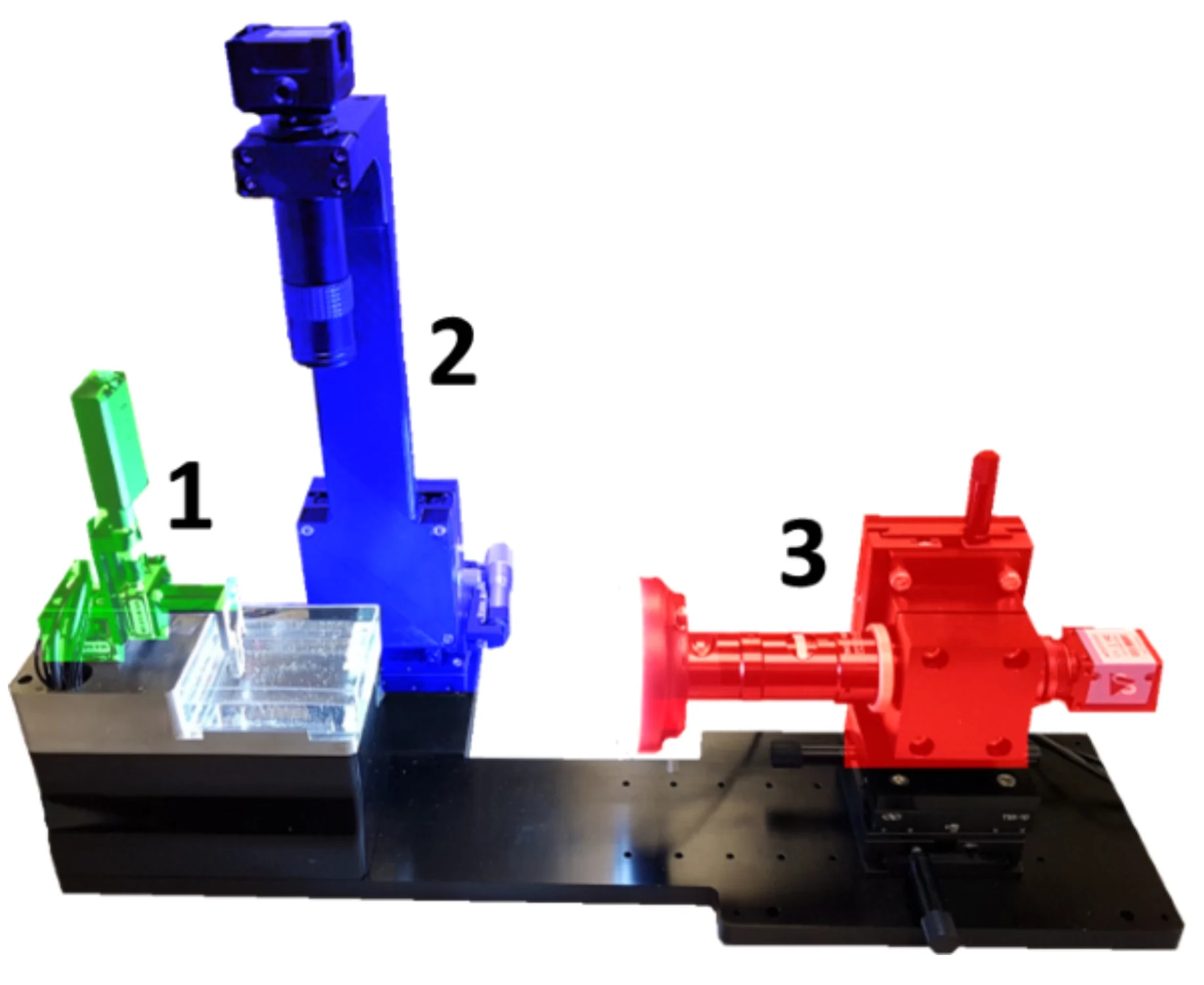
A medical device R&D group needed ISO-aligned mechanical testing for intraocular lens mechanical evaluation, including controlled radial compression, repeatable alignment, and dual-angle imaging. A MicroTester configuration with custom test fixtures and a unified data-and-video interface enabled standards-driven method development without relying on generic compression rigs. This system demonstrates how a custom mechanical testing system for ISO-aligned mechanical testing often depends on purpose-built custom mechanical testing fixtures and imaging integration.
Imaging-integrated mechanical testing for heart valve biaxial mechanics
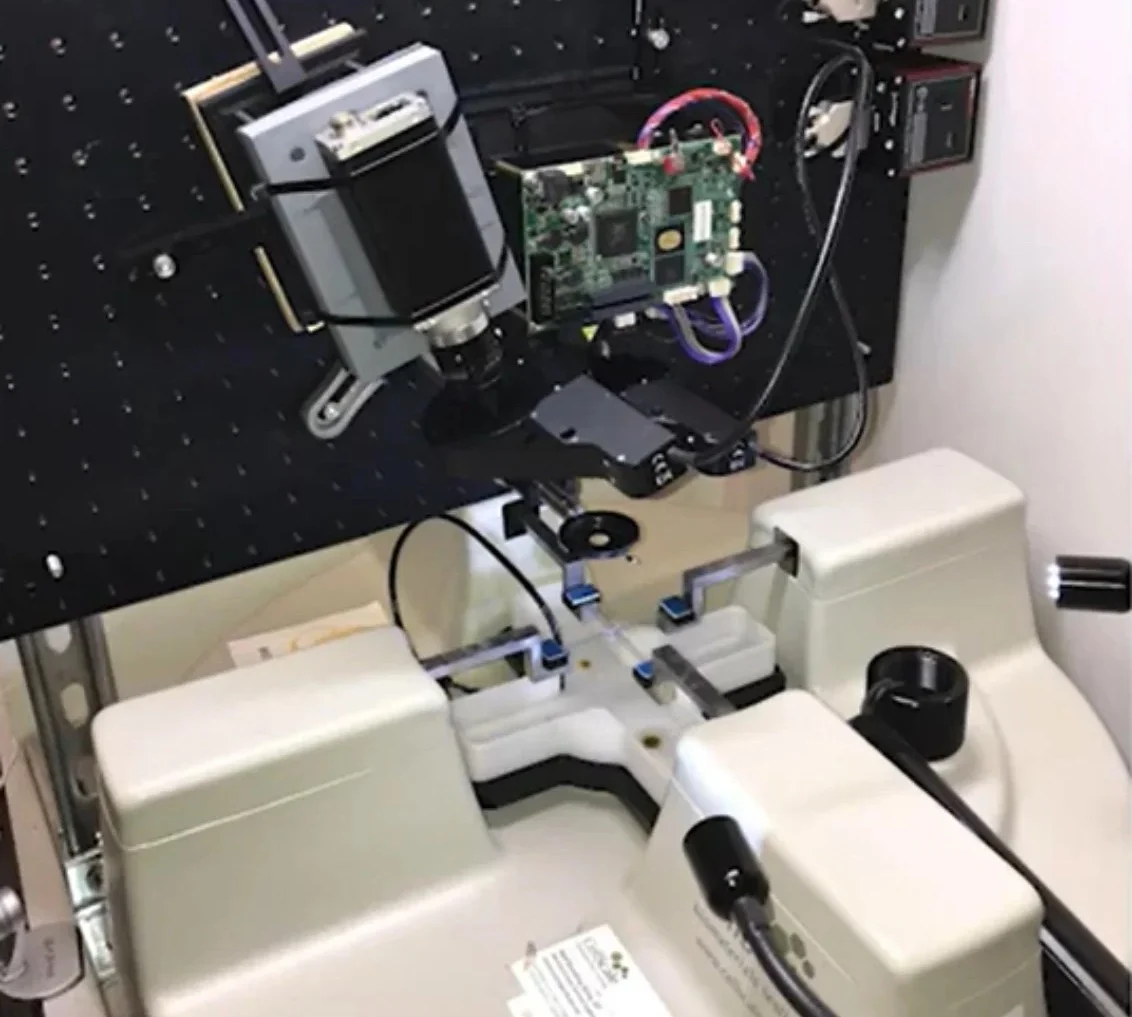
For cardiovascular tissue biomechanics, a research group integrated optical imaging with the BioTester to quantify collagen fiber reorientation during heart valve biaxial testing. This is a strong example of imaging-integrated mechanical testing, where the mechanical platform and the imaging approach together enable better valve constitutive modeling and improved experimental interpretation. In this workflow, custom mechanical testing fixtures and mounting strategies were evaluated to understand how boundary conditions influence measured response.
Custom mechanobiology fixtures for retinal tissue stimulation and imaging
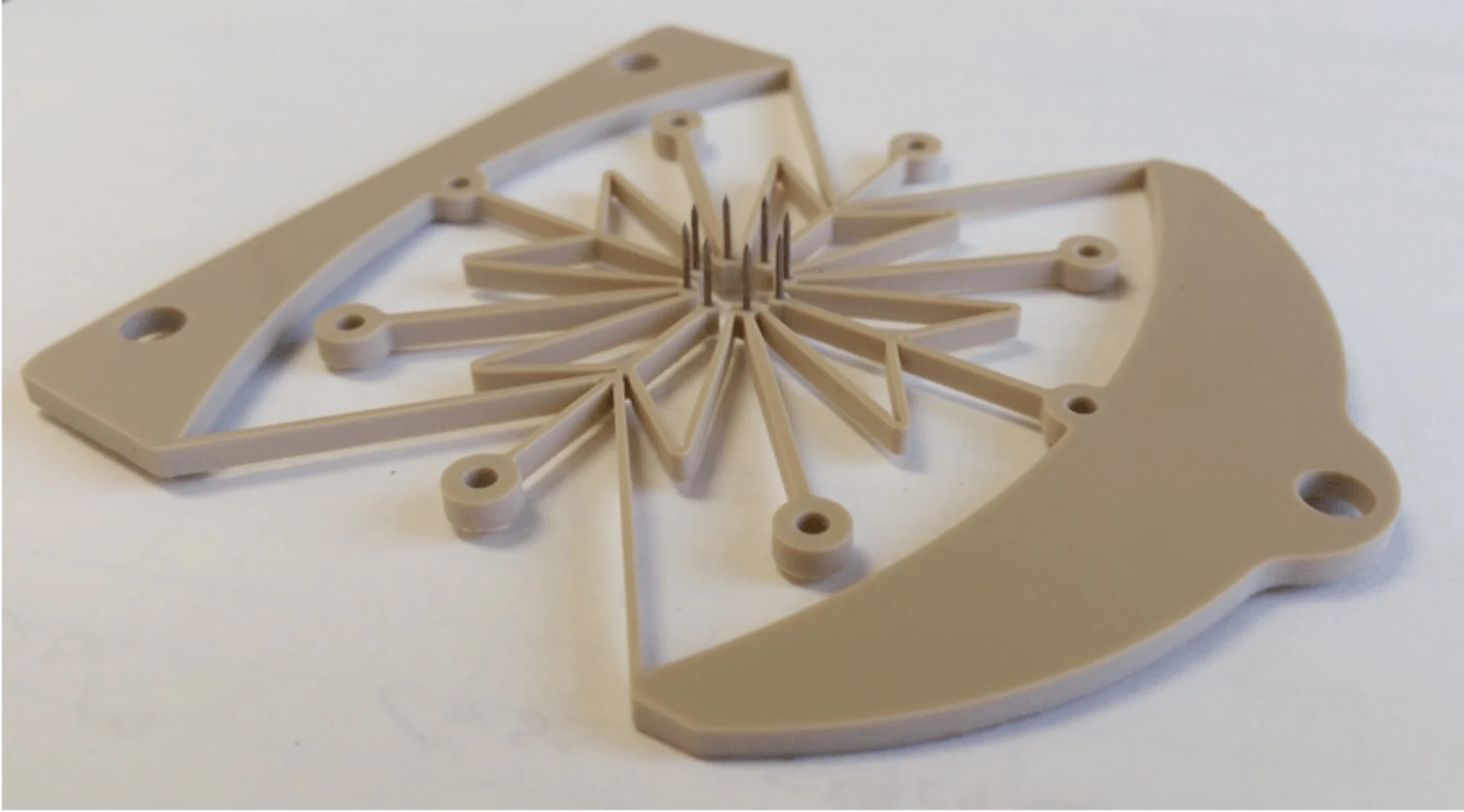
A Lund University ophthalmology team required retinal tissue mechanical stimulation with simultaneous imaging, using a legacy MechanoCulture FX frame as the actuator platform. The project centered on custom mechanobiology fixtures: a multi-point radial attachment for fragile explants and a transparent culture well designed for optical clarity. This case study demonstrates the possible custom solutions using the MechanoCulture series through custom mechanobiology fixtures and incubator-compatible environments.
How We Deliver
Custom Mechanical Testing Systems
Scientific discovery and requirements
We start by defining specimen constraints, force and displacement targets, environmental conditions, imaging needs, throughput goals, and any standards or reporting expectations. For many projects, this step clarifies whether you need a fully custom mechanical testing system or targeted custom test fixtures.
Feasibility and concept design
Our team proposes one or more concepts, often starting with fixture geometry and alignment strategy. When relevant, we consider custom mechanical testing fixtures designed for imaging access, hydration, and minimal compliance artifacts.
Build, integration, and verification
We fabricate and integrate the system, verify repeatability, and provide test templates and documentation. For ISO-aligned mechanical testing, we focus on geometry and measurement principles, fixture alignment, and consistent outputs.
Training and long-term support
A custom mechanical testing system only creates value if it stays productive. We provide onboarding, service support, and upgrade paths so your custom biomechanical testing solutions remain usable as your research evolves.
Start a Custom Biomechanical Testing Solution Project
If you are planning a custom mechanical testing system, we can discuss:
- Sample type, geometry, and handling constraints
- Expected force range and displacement or strain targets
- Hydration, temperature, or sterile environment needs
- Whether you require imaging-integrated mechanical testing
- Throughput goals such as high throughput micro mechanical testing or multi-well formats
- Any standards-driven requirements for ISO-aligned mechanical testing
- Whether the challenge can be solved with custom test fixtures on a standard platform
