

Soft Robotics Materials
and Compliant Polymer Mechanics

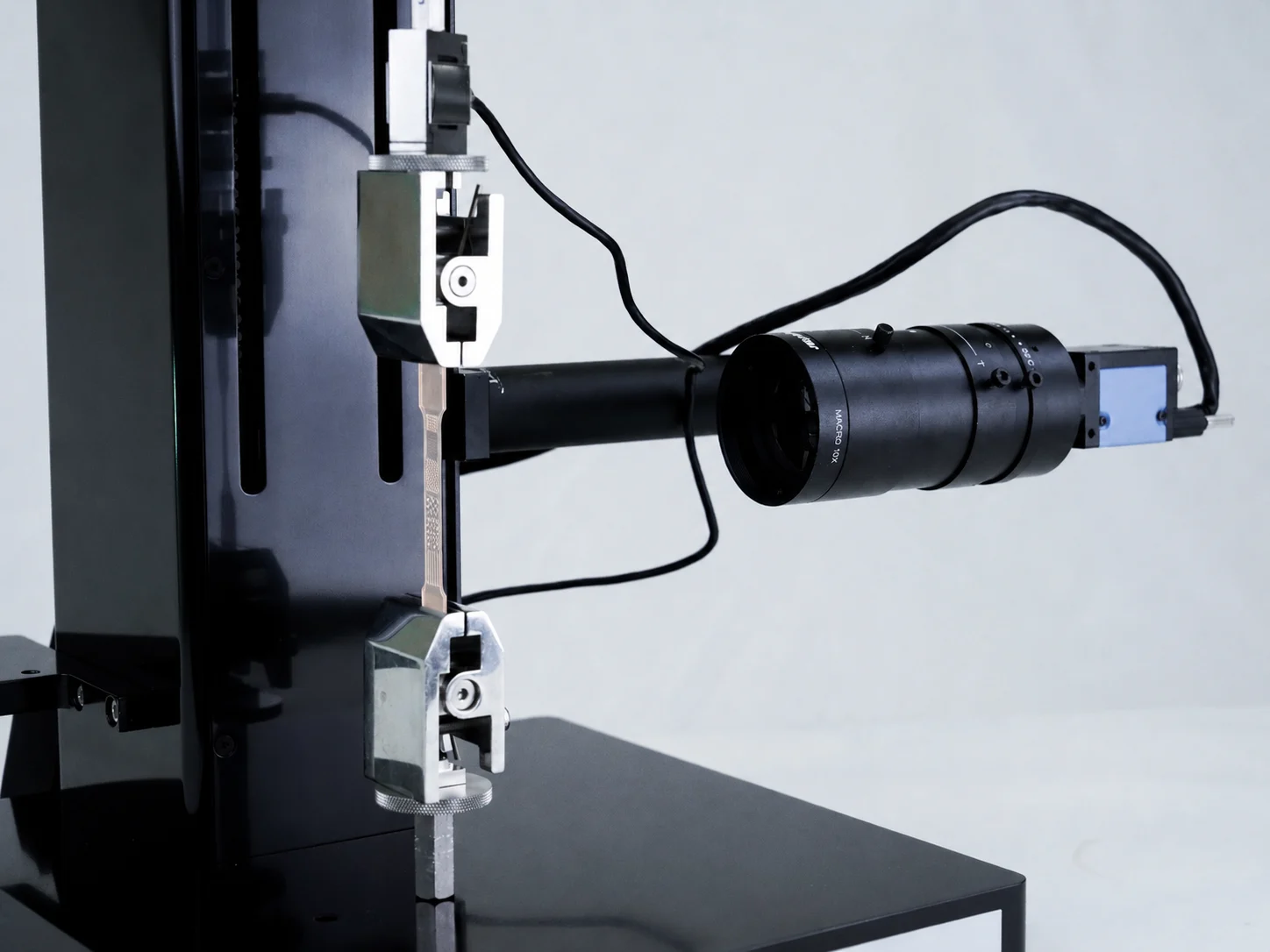

Overview of
Soft Robotics Material Mechanics
Soft robotic systems rely on compliant materials that deform predictably under load or internal pressurization. These materials must exhibit controlled nonlinear behaviour, recover from repeated deformation, and maintain structural integrity during actuation cycles.
- Soft robotics materials mechanical characterization supports research in:
Mechanical insights enable researchers to optimize performance, reliability, and control strategies in soft robotics applications.

Importance of Mechanical Testing in Soft Robotics Research
Materials used in soft robotics include silicone and TPU elastomers, PDMS-based composites, fibre-reinforced soft actuators, pneumatic and hydraulic actuator materials, programmable stiffness polymers, shape-morphing and multi-material constructs, and soft skins and tactile interfaces.
Mechanical testing provides essential information for soft robotics development:
- Quantification of stiffness and nonlinear stress strain behaviour
- Evaluation of elongation, failure strain, and structural stability
- Assessment of shear and interfacial mechanics in layered materials
- Measurement of bending stiffness in thin films and robotic skins
- Characterization of viscoelasticity and deformation recovery
- Analysis of material changes during repeated actuation cycles
- Comparison of material formulations for actuator performance
- Evaluation of composite or fibre reinforced structures
Mechanical data guide actuator design, strategy development, and materials engineering.
Recommended CellScale Instruments for Research in Compliant Robotic Materials
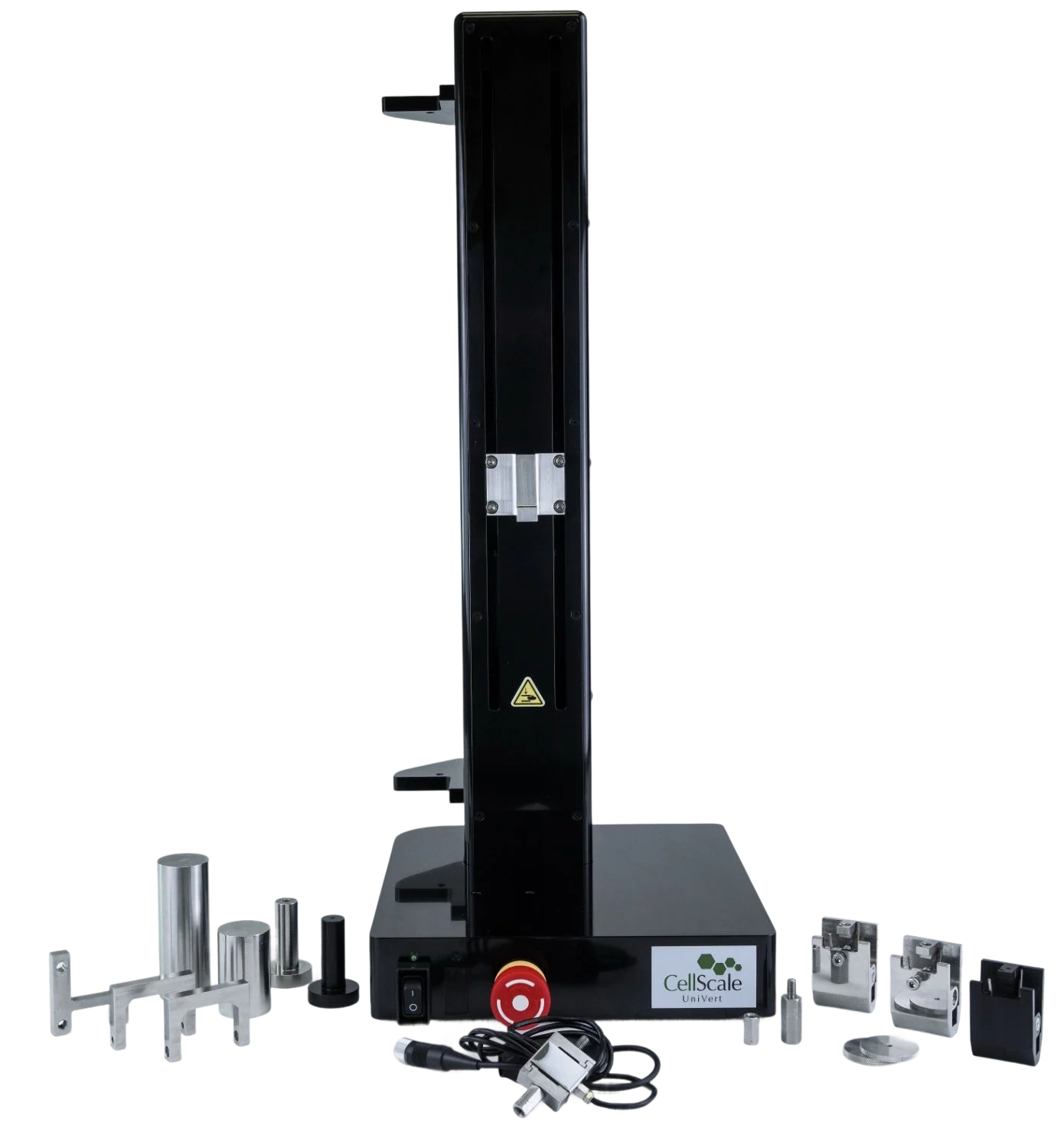
UniVert
Used for tensile, compression, shear, pressure, and bending testing of elastomers, composite actuators, soft robotic skins, and programmable stiffness materials.
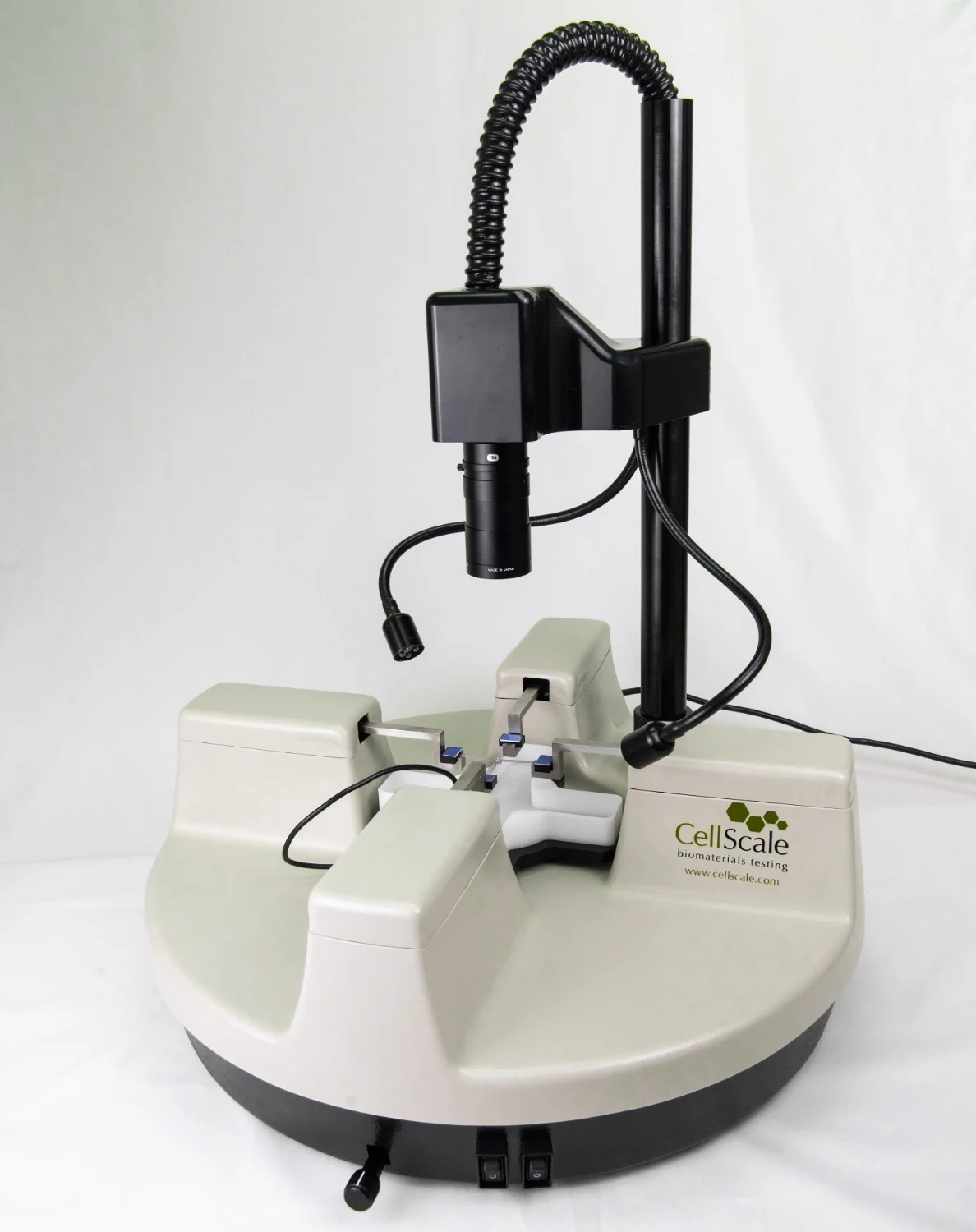
BioTester
Supports biaxial testing of sheet-based soft robotics materials where in plane behaviour and directional deformation are important.
Testing Methods for Soft Robotics Materials
Pressure Testing
Assesses deformation and durability of pressure-actuated soft robotic materials
Biaxial Testing
Captures planar deformation in compliant membranes
Viscoelastic Testing
Measures time-dependent response during cyclic loading
Fatigue Testing
Assesses durability under repeated actuation cycles
Flexural and Bending Testing
Quantifies bending stiffness of thin polymer sheets
Representative Sample Types for Soft Robotics Materials
Base polymers and elastomers
- Silicone elastomers
- PDMS formulations
- TPU and thermoplastic elastomers
Composite and functional materials
- Fibre-reinforced soft actuator composites
- Multi material robotic skins
- Patterned or anisotropic elastomer sheets
Advanced structures for soft robotics
- Pneumatic and hydraulic actuator chambers
- Programmable stiffness membranes
- Shape morphing structures
- Soft gripper materials
- Compliant wearable interface materials
Featured Publications in Soft Robotics Material Mechanics
Advance Your Soft Robotics Material Research
CellScale instruments support mechanical testing of elastomers, composite actuators, and responsive materials used in soft robotics. Contact our team to find the right configuration for your research needs.