

Bending & Flexural Testing
Of Soft Materials & Biomaterials

Flexural testing (also referred to as bending testing) evaluates how materials deform and fail when subjected to bending loads. Many biomaterials and engineered constructs experience bending rather than pure tension or compression in real world applications. Flexural testing provides critical insight into stiffness, strength, and failure behaviour under combined tensile and compressive stresses.
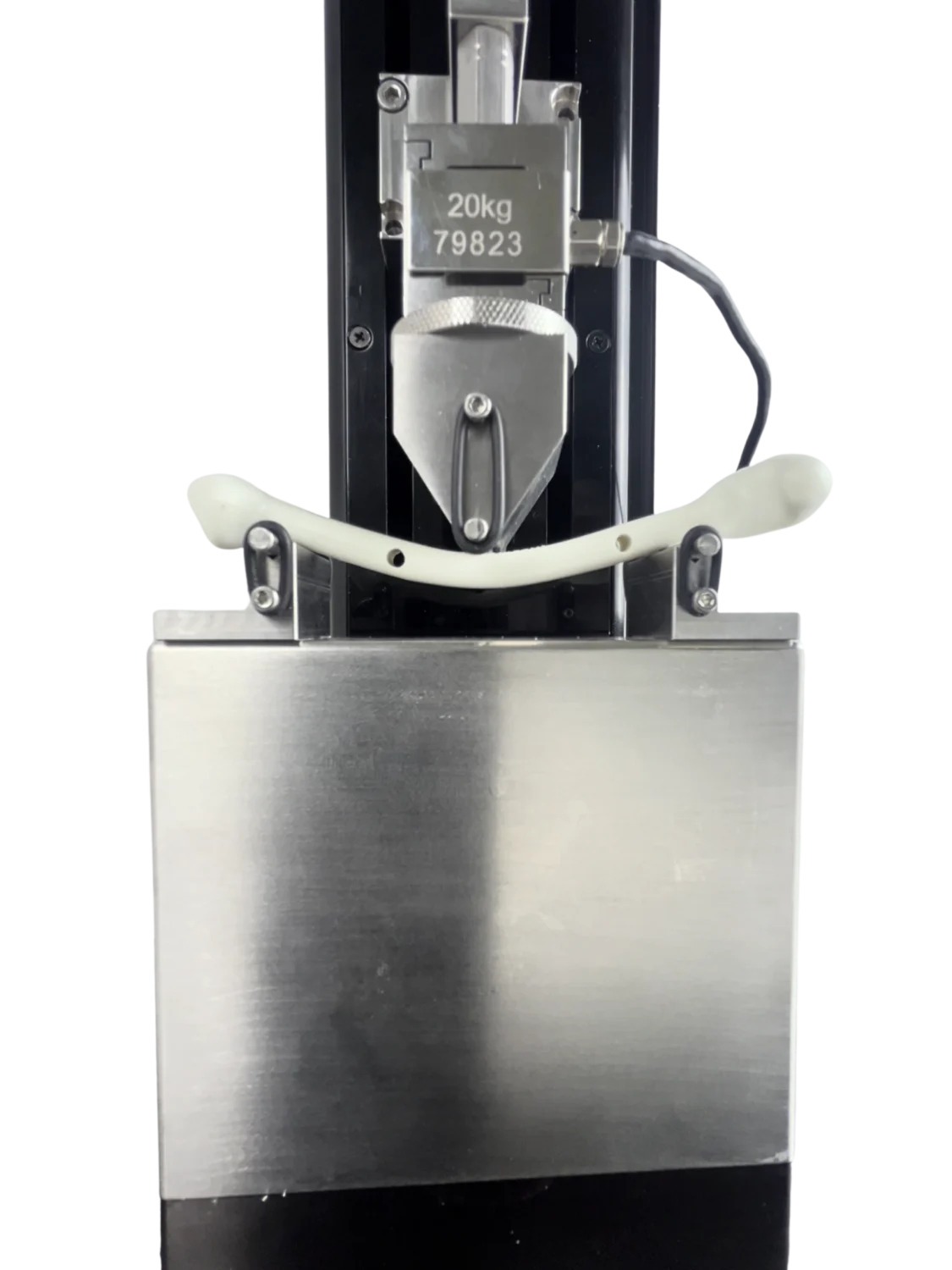
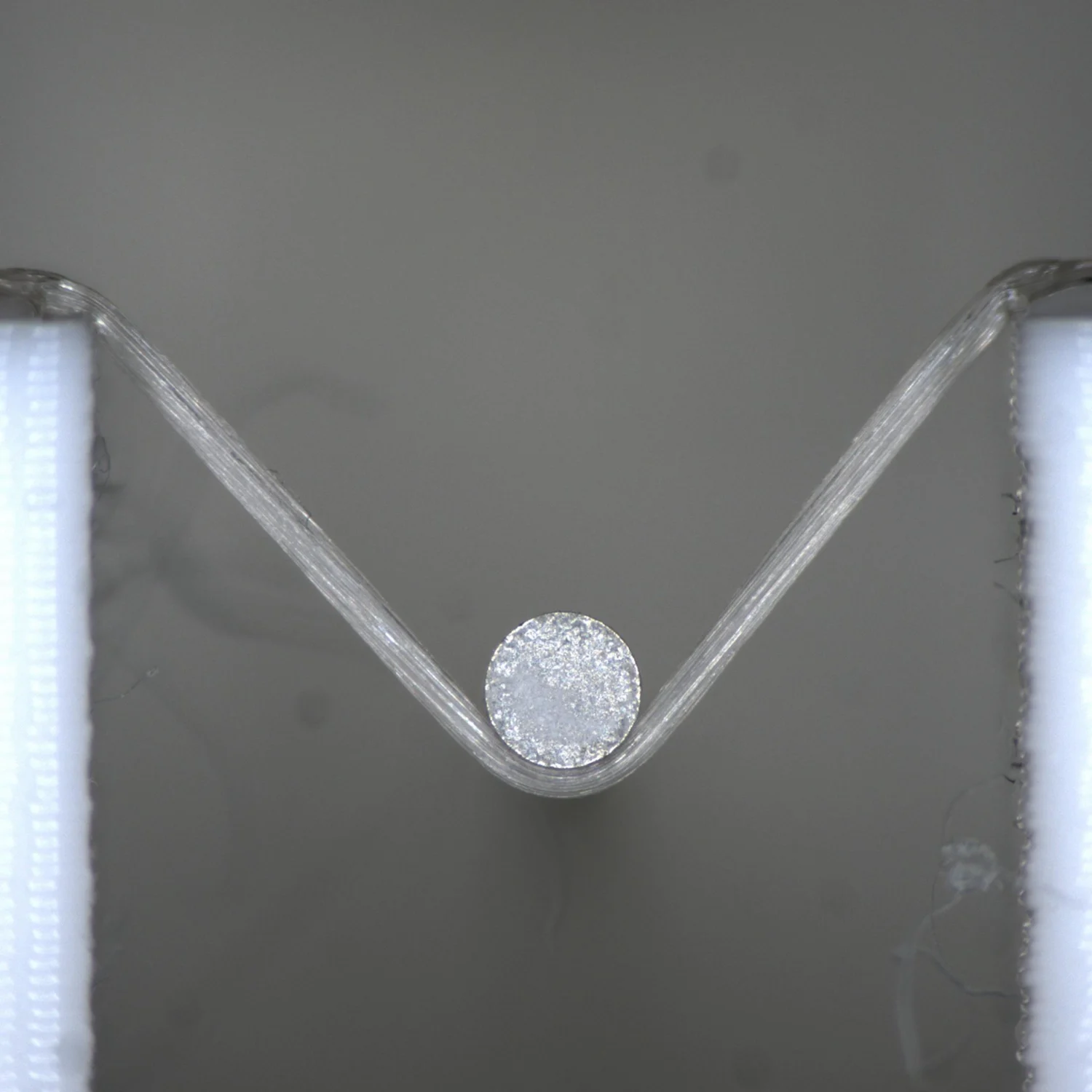

What Flexural Testing Measures
Flexural testing quantifies mechanical properties that cannot be captured through uniaxial loading alone.
Because bending induces both tensile and compressive stresses within a single specimen, flexural testing is particularly useful for heterogeneous and composite biomaterials.
Measurement Examples
- Flexural stiffness and bending modulus
- Flexural strength and failure behaviour
- Load–deflection response
- Elastic and plastic deformation under bending
- Failure initiation and propagation
- Structural integrity of layered or composite materials
- Failure properties of sheet like specimens
These measurements are central to flexural strength testing, where failure behaviour under bending loads is used to assess structural reliability.
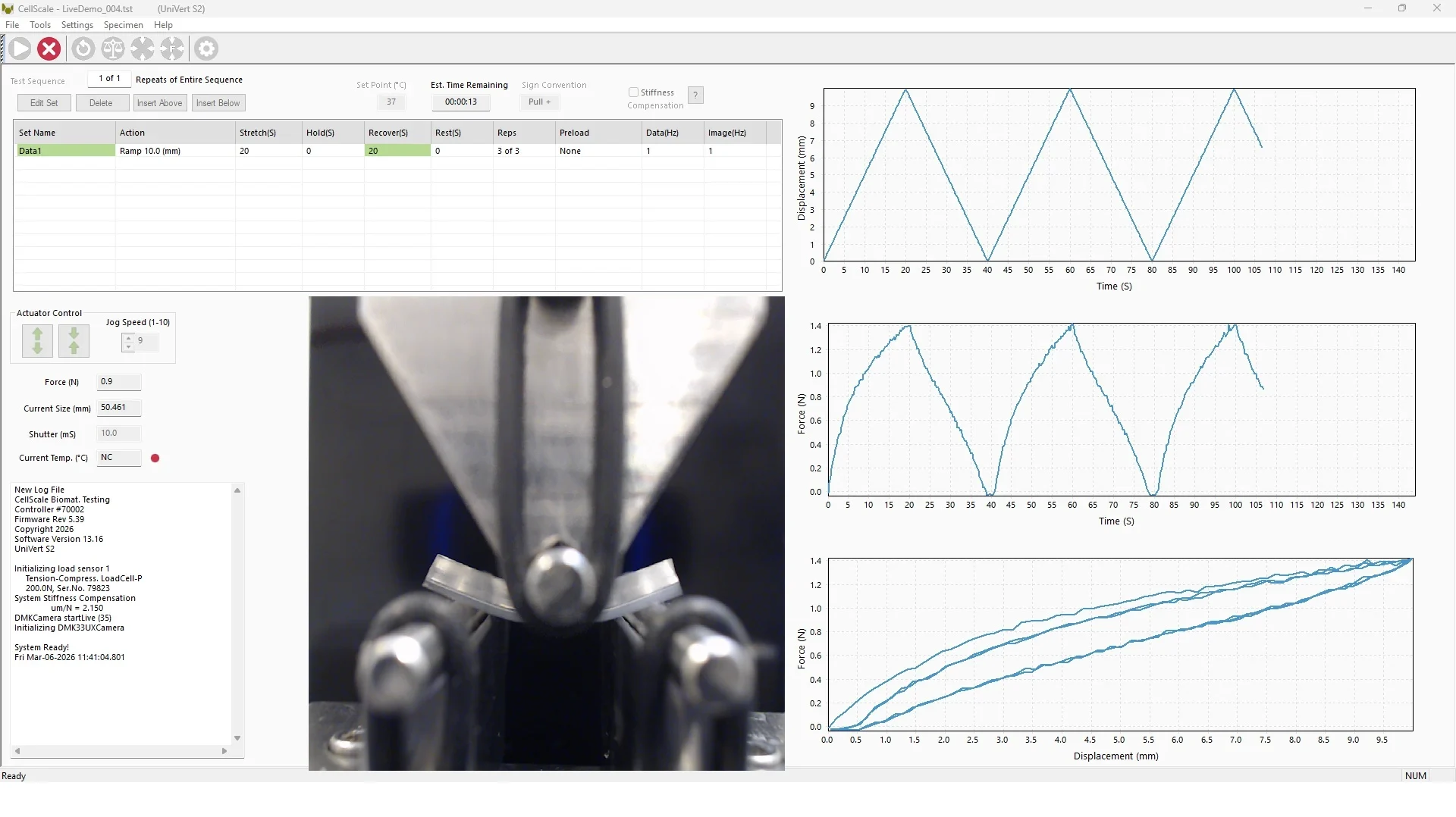
Flexural Testing in Biomaterials Research
Flexural testing is widely applied in biomaterials and tissue engineering research to evaluate:
- Engineered scaffolds and constructs
Scaffolds and printed constructs often experience bending during handling, implantation, or physiological loading.
- Soft polymers and elastomers
Elastomeric materials used in biomedical devices and soft robotics must maintain performance under repeated bending.
- Layered and composite biomaterials
Bending tests reveal interlayer adhesion and structural integrity in multilayer constructs.
- Miniaturized and delicate samples
Flexural testing enables mechanical characterization of thin or fragile samples that are difficult to grip for tensile tests.
Common Sample Types for Flexural Testing
- Soft polymer strips and beams
- Hydrogel slabs and thin constructs
- Tissue engineered scaffolds
- Printed lattice and beam structures
- Composite and layered biomaterials
- Membranes and thin films
- Small scale or microfabricated samples
How Flexural and Bending Testing Works
Flexural testing applies load through one or more contact points while supporting the specimen at defined locations. A dedicated bending test machine controls load application and support geometry to ensure accurate and repeatable flexural measurements.
Three Point Bend Test
In a 3 point bend test, the specimen is supported at two points and loaded at the center, producing a simple and widely used bending configuration.
MicroTester 3-Point Flexural Testing
For testing small materials and structures where traditional tensile gripping may be difficult
Low Force Flexural Testing
Soft and delicate materials require precise force control and sensitive load measurement during bending.
Recommended CellScale Instruments for Flexural Testing
CellScale systems provide versatile flexural test equipment for bending experiments across a wide range of force scales and sample geometries.
UniVert
Relevant Research Applications
Flexural and bending testing supports research in:
Featured Publications Using Flexural Testing
Related Testing Methods
Biaxial testing is often combined with imaging and time-dependent methods.
Ready to Perform Flexural Testing?
CellScale provides precise biaxial testing systems for soft tissues, biomaterials, and engineered constructs.
